

























































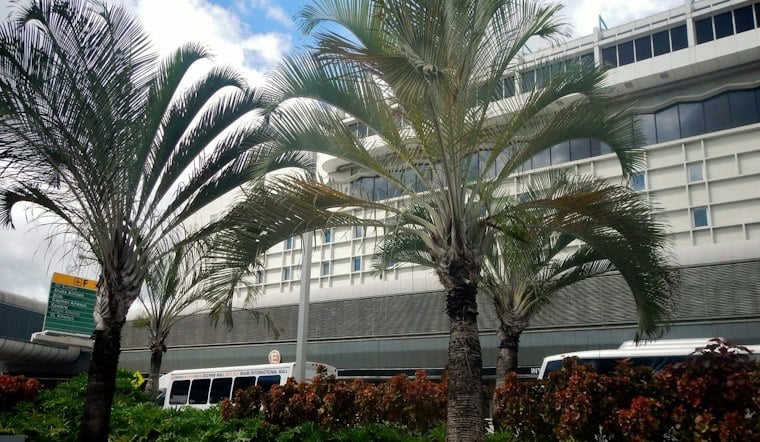
Stephen Ross and Jeffrey Soffer have scrapped plans to build a 451-room Westin hotel at Miami International Airport after nearly two years of failed negotiations with the Federal Aviation Administration over a radar blind spot the agency said the building would create. The collapse leaves MIA without any new on-site lodging for more than six decades, and it sends Miami-Dade County back to square one on a project that has already dragged on for years.
The decision was confirmed by Ralph Cutié, Miami-Dade's aviation director and MIA's CEO, at a county meeting, according to Bisnow. Cutié said the FAA rejected the hotel plans over safety concerns and that the developers worked on a redesign before concluding they could not make the project economically viable on the 1.8-acre site. The county is now terminating the lease, and Cutié expects that process to wrap up within the next month.
The planned hotel, designed by Arquitectonica, would have risen 150 feet and included two restaurants, a pool with a terrace, event space, a spa, a fitness center, and a pedestrian bridge connecting to Concourse D, per the outlet's report. Ross and Soffer submitted those plans to the FAA in August 2024, only for the agency to determine the structure would create a radar blind spot that posed a safety issue at the airport. The aviation department proposed an alternative approach to address the concern, but the FAA rejected that too, and the two sides spent nearly two years negotiating a shorter building before talks collapsed entirely.
A Six-Year Chase That Started With a Bidding War
Ross, CEO of West Palm Beach-based Related Ross, and Soffer, CEO of Fontainebleau Development, won the 50-year ground lease in 2023 after a three-year bidding process. Under the terms reported by Bisnow, they were expected to pay the greater of $2.5 million annually or 3.5% of annual gross revenue once the hotel opened. That win came only after Mayor Daniella Levine Cava paused the original selection process for seven months starting in December 2022 to renegotiate labor union agreements on local hiring, according to Miami Today, with FDR Miami Hotel LLC eventually securing union agreements before commissioners signed off.
The win wasn't uncontested. FDR Miami had beaten out a rival $241.7 million bid from Parmco Airport Hospitality LLC, which had proposed a Zyscovich Architects-designed Hilton, as Florida YIMBY reported at the time. Whether Parmco or another bidder re-enters the field now that the county plans to restart the bidding process remains an open question.
Ross and Soffer weren't strangers to teaming up before this deal. The pair had previously co-developed a private jet service center at Miami-Opa Locka Executive Airport, part of a broader business relationship that also included a Boston hotel project, according to the Commercial Observer. Related Ross and Fontainebleau Development both declined to comment when asked about the collapsed airport project, per Bisnow's reporting.
Commissioners Frustrated, Costs Still Unresolved
Even before the FAA rejection became public, the project had been sliding. County reviews and ongoing negotiations had already pushed the hotel's expected opening from 2026 to at least 2029, Miami Today reported in November 2025, with commissioners repeatedly pressing officials over the lack of visible construction progress. Commissioner Juan Carlos Bermudez criticized county officials for failing to keep the commission informed, calling the airport hotel discussion among the board's most difficult, and urged officials to provide updates so commissioners can weigh in at the proper time, per Bisnow.
Commissioner Oliver Gilbert raised a separate concern: the county could be on the hook for costs the developers already incurred on the now-dead project. Gilbert said he wasn't opposed to covering incurred costs in principle, but he questioned why the county should pay for a proposal that ultimately couldn't be built, according to the same report.
MIA's Only Hotel Keeps Getting Older
While the Westin plan unraveled, MIA's sole existing lodging option, the 259-room Miami International Airport Hotel attached to Terminal E, kept aging in place. The hotel opened in 1959 and turned 67 this year, and county officials have criticized its outdated conditions for decades, Miami Today reported. With no replacement in sight, commissioners voted 11-1 in May to approve a five-year operating contract extension, with a five-year renewal option, just to keep the legacy property running. Bermudez cast the lone dissenting vote, citing ongoing guest complaints.
In the meantime, Miami-Dade has leaned on a smaller fix inside the terminal itself. The county's 2024 contract with Wait N Rest brought short-term sleeping suites and shower facilities to Concourse D, which opened in a project Hoodline covered and is projected to generate $10 million over five years, offering travelers hourly room bookings and flight-tracking touchscreens while the bigger hotel question stays unresolved.
Why the FAA's Height Concerns Carry So Much Weight
The radar dispute reflects just how tightly the FAA polices airspace around MIA. The agency enforces strict altitude and flight path safety controls across the county, including a maximum building height of 1,049 feet in Downtown Miami to protect flight corridors, as Hoodline has reported in coverage of the Waldorf Astoria tower project. Those same kinds of constraints applied to the much shorter, 150-foot airport hotel design, underscoring why even a modest building near the runway can become a non-starter.
Private hotel development keeps marching ahead just off airport property, even as the on-site project stalls. Hotel owner-operator MCR filed plans in June to add 1,000 rooms across two 14-story towers at the Hilton Miami Airport Blue Lagoon property, a 20.6-acre site, according to The Real Deal, which cited a Marcus & Millichap projection of a 4.6% rise in local hotel demand tied to events like the FIFA World Cup. That expansion comes as MIA pushes forward with a $14 billion capital improvement plan meant to carry the airport from more than 50 million annual travelers today to a projected 77 million by 2040, a buildout detailed by AVweb, which noted the airfield is already operating near 80% capacity.
For now, Miami-Dade County is moving to expedite a new request for proposals process for the 1.8-acre hotel site, though key questions remain unanswered: whether former bidders will return to the table, how any developer reimbursements will be sorted out, and what design changes a future hotel will need to satisfy the FAA's safety parameters.



