

























































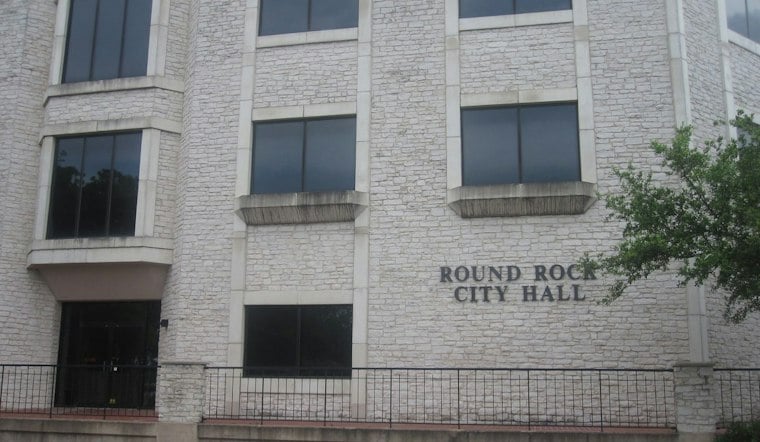
Round Rock City Council is set to vote Thursday on an economic development agreement that would hand semiconductor tool manufacturer PulseForge up to $600,000 in cash grants in exchange for a $20 million expansion and 60 new jobs at its facility within Round Rock city limits. The company, which makes specialized tools for chip packaging, operates at 400 Parker Drive, Ste. 1130 — an address with an Austin postal designation that nonetheless sits inside Round Rock city limits, making its investment subject to the city's property taxes and eligible for its incentive programs.
According to Community Impact, PulseForge plans to put $6 million toward facility expansion and another $14 million into business personal property, including additional machinery, if the agreement moves forward. The company would add 60 new positions in connection with the project. In return, the city would pay out $600,000 in two installments: a $250,000 payment in 2030 contingent on PulseForge investing $10 million and adding 20 jobs, followed by a $350,000 payment in 2032 once the company reaches the full $20 million investment and 60 total new jobs.
Danielle Morrissey, vice president of the Round Rock Chamber, said PulseForge has already identified a 20,000-square-foot space adjacent to its existing facility, though the chamber is also helping the company scout other Round Rock properties in case it decides to build elsewhere to scale up manufacturing. Morrissey said the project can support a local company's expansion, create high-paying jobs, and strengthen Round Rock's position in the semiconductor industry, per the same Community Impact report. The council meeting is scheduled for 6 p.m. Thursday at Round Rock City Hall.
How the Incentive Gets Funded
The cash grants would come from Type B funding generated by sales taxes, according to city documents cited by Community Impact. That revenue stream flows through a dedicated half-cent sales tax administered by the Round Rock Transportation and Economic Development Corporation, a Type B entity authorized under Texas law specifically to fund primary job creation, according to the Round Rock Chamber. Under Texas statute, primary jobs are defined as positions at companies that export a majority of their products or services outside the local economy, per the Texas Comptroller of Public Accounts.
This wouldn't be the city's first time using that funding mechanism to retain a semiconductor supplier. In November 2022, Round Rock City Council approved a similar Chapter 380 agreement that used $750,000 in Type B sales tax funds to support a $30 million facility expansion by KoMiCo, a South Korean semiconductor equipment cleaning and repair vendor, according to the Round Rock Chamber. That expansion added 40,000 square feet and 70 employees to KoMiCo's facility on Michael Angelo Way.
What PulseForge Actually Builds
PulseForge specializes in photonic processing tools used in advanced chip packaging, a niche that's become increasingly critical as manufacturers move from traditional silicon scaling toward 2.5D and 3D integration, chiplets, and High Bandwidth Memory for AI hardware. In April, the company announced it had demonstrated photonic debonding on ultra-thin silicon wafers thinned below 10 micrometers for HBM architectures, working alongside a South Korean memory manufacturer, according to PulseForge. In February 2026, the company announced a flux-less photonic soldering breakthrough.
The company traces its roots to 2005, when its underlying photonic curing flashlamp technology was first developed under the corporate name Nanotechnologies, Inc. PulseForge is a spinoff from NovaCentrix. A strategic partnership between PulseForge and Japan-based Resonac Corporation was in place as of April 2025 to co-develop temporary bonding films and photonic debonding technology for advanced packaging and chiplets — a relationship that illustrates the global supply chain PulseForge sits within as a tool supplier to the industry.
Part of a Broader Regional Push
PulseForge's potential expansion fits into a larger pattern across Williamson County, where Samsung has a foundry project in neighboring Taylor. Roughly 145 Korean firms tied to Samsung's foundry were considering Central Texas locations, Hoodline has previously reported.
Central Texas is now home to more than 200 semiconductor facilities that collectively account for over $17.3 billion in annual chip exports — more than a quarter of all semiconductor exports from the United States, according to Austin Community College. Semiconductor equipment technicians in the Austin area earn average wages between $30 and $35 an hour, the college notes. ACC has built out workforce pipelines to match that demand, including its Semiconductor Technician Advanced Rapid Start program, an accelerated four-week course for incumbent workers that expanded in September 2024 with a $200,000 grant from Samsung Austin Semiconductor.
Round Rock's Tax Pitch
Round Rock's Tax Pitch The proposed PulseForge investment would be subject to Round Rock property taxes.
If approved, the PulseForge agreement would add to Round Rock's use of Type B sales tax dollars for semiconductor-sector employers. Council's vote is scheduled for Thursday evening at City Hall.





