

























































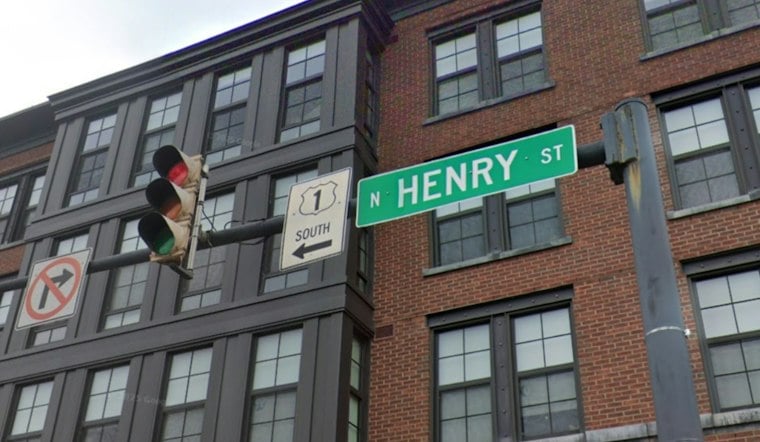
Construction crews in Alexandria's Parker-Gray neighborhood hit a major milestone this month, topping out the structural framework of a $120 million affordable housing redevelopment at 899 and 999 N. Henry Street. The six-story, 295,000-square-foot project will replace the Samuel Madden Homes, a 1945-era public housing community, with 207 affordable apartments, and the building is slated for completion in 2027.
The site traces back to a World War II-era housing effort. Samuel Madden Homes was originally built in 1945 by the Alexandria Redevelopment and Housing Authority in partnership with the federal government, providing 66 public housing townhomes for African American defense workers, according to Fairstead. That original low-density complex is being demolished to make way for the far denser replacement now rising on North Henry Street, as detailed by ALXnow.
At an October topping-out ceremony, Alexandria Mayor Alyia Gaskins said the project would include an opportunity for all original residents of the former 66-unit community to return, per the same ALXnow report. That opportunity gives families displaced by demolition a potential path back to the neighborhood they've long called home.
A Mixed-Use Hub Beyond Housing
The redevelopment is designed to be more than apartments. Along with the 207 affordable units, the complex will include a 500-square-foot ALIVE! community food hub, a Hopkins House early learning and childcare center, a podcast recording studio, and 10,400 square feet of community gathering space, according to the ALXnow report. Those residences are intended for households earning between 30% and 80% of area median income, as reported by Connect CRE.
The new units are intended for households earning between 30% and 80% of area median income.
Construction Timeline and Design Standards
Developers broke ground on the project in November 2025 and completed the structural framework roughly 11 months later this October, keeping the project on pace for delivery by fall 2027, according to The Alexandria Brief. The building was designed by architecture firm Torti Gallas and Partners, with green design strategies contributed by Virginia Tech's Virginia Center for Housing Research, and the project is targeting Department of Energy Zero Energy Ready Home criteria along with Enterprise Green Communities certification, the Alexandria Brief's reporting notes.
Connect CRE's coverage of the topping-out ceremony identified a wide financing and partnership structure behind the project, including the Alexandria Redevelopment and Housing Authority, Harkins, and The Communities Group, alongside financial partners Sterling Bank, Boston Financial, Freddie Mac, Virginia Housing, and the City of Alexandria. That financing combines a U.S. Department of Housing and Urban Development Section 18 transaction with Low-Income Housing Tax Credits and energy efficiency tax credits, per Connect CRE.
Preserving a Historic Site
Because the site carries historic significance tied to its WWII-era origins, the redevelopment is bound by preservation covenants. Those requirements call for recording oral histories from past residents, displaying archaeological artifacts on-site with interpretive signage, and submitting formal Historic American Buildings Survey documentation to the Library of Congress, according to the City of Alexandria.
The North Henry Street building represents just the northern half of a larger vision. It's the first phase of a broader two-block master plan intended to deliver more than 500 total mixed-income housing units across two parcels, according to Torti Gallas and Partners, combining deeply affordable replacement housing with workforce and market-rate apartments on the adjacent site.
Part of a Statewide Push
The project also arrives amid a broader statewide effort to protect affordable housing stock as subsidy restrictions expire across Virginia. In April 2026, the state enacted House Bill 4, effective July 1, 2026, granting cities like Alexandria authority under the Dillon Rule to pass local right-of-first-refusal ordinances for acquiring publicly supported housing properties when affordability restrictions lapse, as Hoodline previously reported. The Samuel Madden Homes project stands as one visible local example of the broader push to preserve and expand affordable housing capacity in a region where those units remain under constant market pressure.





