

























































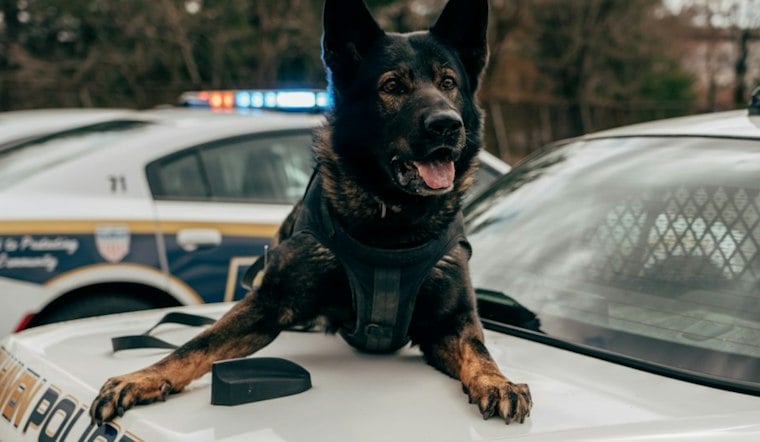
A seven-year-old Belgian Malinois named Donna spent five years sniffing out narcotics for the Northside ISD Police Department in San Antonio. On August 11, 2026, records show she was euthanized and cremated within six hours of her handlers being told what it would cost to save her.
Donna was taken to an emergency veterinarian on August 10 after she began vomiting, suffered diarrhea and could not keep down food or water, according to KSAT. The next day, a veterinarian diagnosed an obstruction in her small intestine and recommended surgery to remove it. The emergency visit alone had already run between $3,000 and $4,000, and the vet estimated the operation itself would cost an additional $7,000.
That price tag mattered because Donna was not a stray pickup. An invoice reviewed by the outlet shows Northside ISD purchased her for $10,000 after she was born in Europe in 2019 and joined the department in 2021. The same vet told the district she could likely return to narcotics work after an appropriate recovery period, and that absent other significant health problems, she could regain a normal quality of life and live a few more years if the surgery succeeded.
A Six-Hour Turnaround
Instead of operating, the department weighed transferring Donna elsewhere or euthanizing her, per records cited by KSAT. Lt. Trello had asked for alternatives to surgery and their costs. Less than six hours after those alternatives were discussed, Donna was euthanized and cremated.
Northside ISD Police Chief Richard Palomo said the call reflected the totality of the circumstances and Donna's welfare, telling the outlet the decision was heartbreaking and not made lightly, and that surgery carried significant uncertainty about whether she would tolerate it, recover successfully or retain a decent quality of life afterward. Palomo did not make himself available for an interview with KSAT.
Jason Johnson, founder and chief executive of Project K9 Hero, offered a starkly different read, saying the decision was based solely on financial circumstances and nothing else. His nonprofit provides medical care and support for retired police K9s and military dogs, and Johnson has recommended that Northside ISD reevaluate its K9 program.
No Second Opinion, No Board Review
The district told the outlet it did not seek a second veterinary opinion or consult the Northside ISD board because Donna's condition was a time-sensitive medical emergency. It also said a K9 subject-matter expert had already recommended retiring Donna in the fall because of declining olfactory acuity, and that the department was preparing for her retirement when the medical emergency hit. Northside ISD now has two K9s, named Gini and Sam, according to the same report.
Bart Sherwood, program director of Train a Dog Save a Warrior — a group that helps veterans train their service dogs — criticized Palomo's decision, arguing that $7,000 was inexpensive compared with saving Donna's life. He recommended that emergency costs for any Northside ISD police dog be covered going forward. Records in the case were initially released with most information in Donna's personnel and veterinary files redacted before the district later re-released them with minimal redactions, the station reported.
A Known Gap In K9 Retirement Care
Donna's case lands inside a wider, well-documented problem. Retired police K9s often receive no pension and no guaranteed help with veterinary care, leaving individual handlers or departments to absorb whatever bills come due, according to KKTV. The Retired Police Canine Foundation estimates roughly 10,000 police K9s retire every year, and veterinarian David Leighr told the station he has seen police-dog surgeries run as high as $40,000.
Some assistance does exist. The station reports that in 2024 the National Police Dog Foundation funded just under $50,000 in care across 13 dogs, and the foundation separately says on its website that it offers grants to help law enforcement agencies and handlers cover emergency medical expenses for retired K9s. Project K9 Hero says on its medical fund page that every dog in its program has medical, prescription food and end-of-duty costs covered for life, averaging about $4,000 a year per dog, though the organization says it often covers emergency bills of $10,000 or more — including one case in which a retired detection dog named Luna needed $18,000 in emergency care for a gastrointestinal obstruction and recovered after surgery.
State-level support remains uneven. Illinois pays up to $1,500 a year for retired-canine veterinary care through a specialty-license-plate fund, while Delaware reimburses up to $1,500 annually and Maryland up to $2,500, per Moneywise. Florida raised its own cap from $1,500 to $5,000 a year in 2025, and a proposed federal K-9 Hero Act of 2026 would authorize $5 million annually from 2027 through 2031 for grants covering veterinary expenses for retired federal and military working dogs, though that measure remains a proposal. It is not established whether Northside ISD sought or was offered any such outside funding before Donna was euthanized.





