

























































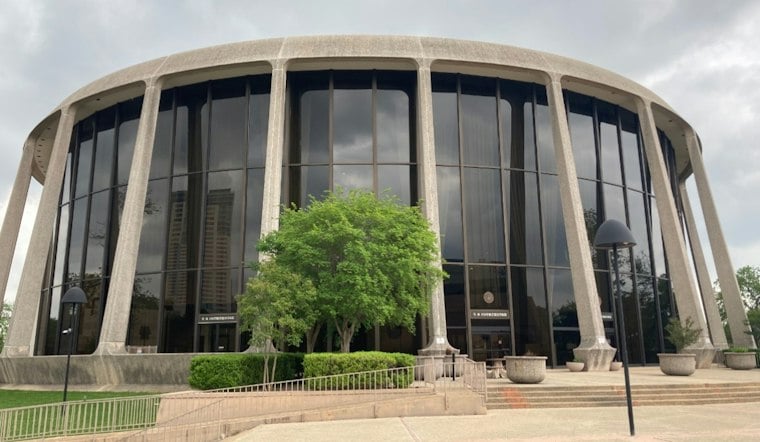
San Antonio federal prosecutors have filed approximately 30 gun-crime cases against defendants in recent months, part of a coordinated push to target what U.S. Attorney Justin R. Simmons calls the “worst of the worst” among repeat violent offenders. Simmons says he directed prosecutors earlier in 2026 to work with local district attorneys and identify the offenders doing the most damage to their communities.
According to KENS 5, the initiative brings together the U.S. Attorney’s Office, the San Antonio Police Department, the Texas Department of Public Safety, the Bexar County District Attorney’s Office and federal agencies to evaluate defendants’ criminal histories and determine whether federal law was violated. Simmons has separately confirmed through his office that assistant U.S. attorneys filed the roughly 30 gun-related cases, according to the Western District of Texas. Simmons said he specifically asked local prosecutors to flag the worst offenders for federal review.
Simmons has said a small percentage of violent criminals disproportionately affect San Antonio residents, and he has pointed to FBI data showing violent crime in the city dropped 11.1% from 2024 to 2025. He said his ultimate goal is the lowest crime rates in San Antonio history, framing the gun-case push as part of achieving that. Federal gun cases generally require a connection to interstate commerce among other legal requirements, which shapes which defendants end up in federal rather than state court.
Stash Houses and Organized Crime
Simmons has also raised concerns about criminal organizations using residential neighborhoods as stash houses, which he said may hold drugs and smuggled migrants while traffickers demand additional money from their families. He said authorities are actively pursuing organized crime in San Antonio as part of the broader effort. The Department of Justice, per the same reporting, is taking a more coordinated approach nationally to investigating drug cartels, human smuggling, human trafficking and violent or extortionate criminal networks.
Federal prosecutors have highlighted several cases to illustrate the kinds of defendants the initiative is targeting, including a domestic-dispute shooting, a handgun-and-cocaine arrest, and allegations of illegal AR-style firearm sales. As with any criminal case, the charges described below are allegations, and unconvicted defendants are presumed innocent unless proven guilty beyond a reasonable doubt.
Cases Prosecutors Point To
Joseph Ybarra was indicted in March on a charge of being a felon in possession of a firearm. Federal officials said he was arrested after a joint investigation into reported gunfire during a San Antonio domestic dispute. Ybarra’s criminal history includes convictions for driving while intoxicated, aggravated assault with a deadly weapon, drug possession, domestic assault and unauthorized vehicle use; he was sentenced in August to 57 months in federal prison.
Demitre Pollard was arrested in January by the U.S. Marshals Service Lone Star Fugitive Task Force. Authorities said he was found with a .380-caliber handgun and more than 13 grams of cocaine. Pollard, who had prior convictions for multiple burglaries and for possessing a firearm in furtherance of drug trafficking, was sentenced on September 22 to 72 months in federal prison for being a felon in possession of a firearm.
Norberto Xavier Palomo, identified as a Tango Blast gang member, was arrested by New Braunfels police in May. Investigators said Palomo had been selling AR-style firearms, with the ATF learning about the sales during an investigation. Palomo, who has prior convictions for robbery and engaging in organized criminal activity, pleaded guilty in July and is expected to be sentenced before the end of 2026. Prosecutors say additional defendants from the broader initiative still await sentencing, and officials describe the effort so far as having produced multiple convictions and prison sentences.
A Similar Push Underway in Austin
San Antonio’s effort mirrors a comparable initiative in Austin, where federal prosecutors filed about 40 gun-related cases in recent months, according to KXAN. That effort likewise paired the U.S. Attorney’s Office with state, local and federal law enforcement agencies as well as the Travis County District Attorney’s Office. Charges in the Austin cases have included felon-in-possession counts, drug trafficking, possessing a firearm in furtherance of drug trafficking and illegal possession of machine guns, with convictions carrying minimum sentences of 10, 15 or 30 years — and in some cases, the possibility of life in federal prison.
Simmons told the station that moving cases into federal court often makes it easier to keep defendants detained pending trial than under the state system. One Austin case cited in that reporting involved 13 guns, roughly 700 grams of cocaine, 15,000 rounds of ammunition and cash found at a residence. Another involved a man charged by Travis County in October 2025 with aggravated assault with a deadly weapon after a drive-by shooting at a three-year-old’s birthday party; a November 2025 search of his apartment turned up a .40-caliber handgun, a 31-round magazine and a machine-gun conversion device that investigators determined had been used in the shooting.
A Pattern of Federal Gun Cases in San Antonio
The San Antonio push follows a string of federal gun prosecutions in the district over the past two years. In August 2024, federal defendants in San Antonio were indicted on charges including firearm trafficking, possession of a stolen firearm and possession of a machine gun, according to the Western District of Texas. That June, a separate operation led to 19 arrests of alleged gang members and associates, with five additional defendants already in federal or state custody, per the same office’s announcement on 24 federal indictments.
More recently, a San Antonio man was sentenced in June 2025 to 151 months in federal prison for firearms trafficking, and another was sentenced in April to 40 months after firing a machine gun near Lackland Air Force Base in 2024. Those earlier cases, combined with the roughly 30 new filings Simmons has announced, point to a sustained federal focus on gun crime in San Antonio heading into the end of 2026.





