

























































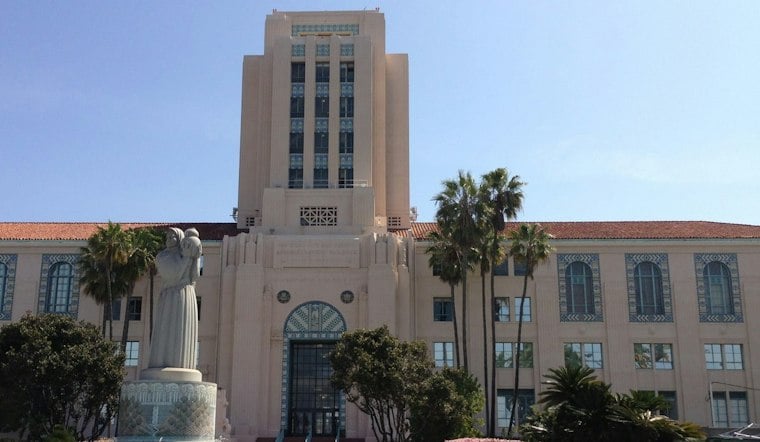
San Diego County supervisors voted unanimously Tuesday to advance an anti-corruption measure that would bar former county staff from lobbying their old offices for two years and crack down on employees using inside information to bet on prediction-market apps like Kalshi and Polymarket. The vote directs staff to draft formal policy language, with county officials expected to return in December with the details.
No Cooling-Off Period Existed Before
The proposal, unveiled by Board of Supervisors Chair Terra Lawson-Remer in August, targets what she calls San Diego County's revolving door between government service and paid lobbying. As reported by The San Diego Union-Tribune, the county currently has no duration-based ban preventing former employees from lobbying their former offices — unlike the city of San Diego, which bars former staffers from lobbying the city for one year, or Los Angeles County, which imposes a two-year ban on former staff lobbying the agency or department where they worked. Current California state law imposes only a one-year paid-lobbying ban on a limited group of county officials after they leave office, according to Lawson-Remer's office.
“You shouldn't be able to leave government on Friday and get paid to lobby your former coworkers on Monday,” Lawson-Remer said, according to a statement posted on her official site. As of June, 10 former county employees were registered as lobbyists, and seven of them began lobbying the county within two years of leaving its employ, the Union-Tribune reported.
Betting Apps Draw Scrutiny After High-Profile Cases
The second half of the proposal addresses prediction markets, the betting-style platforms where users wager on real-world outcomes. Lawson-Remer has pointed to a U.S. Army soldier who was arrested for allegedly making more than $400,000 on Polymarket using classified government information, and to nine Polymarket accounts that reportedly made $2.4 million betting on recent U.S. military action in Iran. She has also cited a White House teleprompter operator who allegedly used advance access to President Donald Trump's speeches to bet on what he would say, making more than $100,000 before federal regulators ordered the operator to forfeit profits, pay a $65,000 penalty and stop trading for three years.
“You shouldn't be able to learn something confidential because you work for the public — then use that information to place a bet and make yourself richer,” Lawson-Remer said, per her office's statement. She added that public service should never become a private payday.
Per inewsource, the county is not aware of any officials placing bets using nonpublic or sensitive information. The outlet reports that Chief Administrative Officer Ebony Shelton is expected to return with a formal plan within 60 days of being directed to amend the county's conflict-of-interest code.
What the Policy Would Cover
According to Lawson-Remer's office, the proposed policy would prohibit former employees from trading on matters they personally worked on for two years after leaving, require disclosure of potential conflicts, and cover trades made through certain family accounts. The prediction-market restrictions would begin with unclassified county employees and ultimately extend to all county workers, with classified employees added after required labor negotiations.
Comparable restrictions have spread quickly across government this year. The U.S. Senate barred senators and Senate employees from participating in prediction markets, a move that followed reports that users won hundreds of thousands of dollars by anticipating U.S. military action, as detailed by The New York Times. At least 16 prediction-market accounts made more than $100,000 after correctly forecasting a February strike on Iran shortly before a U.S. and Israeli attack, the Times reported. The U.S. House Committee on Oversight and Government Reform has also investigated potential insider trading on prediction-market platforms, and Gov. Gavin Newsom banned state gubernatorial appointees from using confidential information to profit on the same markets.
Election Offices and Other Counties Moving Too
San Diego County is not alone among local governments racing to close this gap. Maricopa County adopted a resolution banning about 13,000 county employees from trading on nonpublic information, covering topics from weather events to elections to court hearings, according to CNBC. Arizona Gov. Katie Hobbs signed an executive order banning state workers from insider trading on prediction markets, and an election office in Delaware County, Pennsylvania, banned roughly 2,200 employees from trading on election-related prediction-market contracts. Election officials nationwide have said the restriction is the tightest measure available to ensure employees with access to ballots cannot trade on nonpublic information, per the same CNBC report.
San Diego County lobbyists currently must register with the Clerk of the Board of Supervisors Office before contacting officials, or within five calendar days afterward, according to the county's own rules. Supervisors are expected to take up a formal lobbying-ban policy and the first phase of prediction-market restrictions on December 8, when county staff return with completed language, as first reported by KPBS.





