

























































Sanjeev Acharya, the 58-year-old San Jose developer who once ran SiliconSage Builders and a web of related companies, has been sentenced to 18 months in federal prison for defrauding investors who poured money into his Bay Area real estate projects. A federal judge also ordered him to pay $2.25 million in restitution and serve two years of supervised release once his prison term ends.
Acharya pleaded guilty in January to wire fraud and to engaging in a monetary transaction involving property derived from fraud, according to the Justice Department. As stated in his plea agreement, Acharya served as president and CEO of SiliconSage Builders and a number of related entities that supported investments in large real estate developments across the Bay Area. He is scheduled to begin serving his sentence on January 9, 2027.
Federal prosecutors said Acharya solicited investments to fund the projects, but failed to disclose that SiliconSage was heavily in debt and facing serious cash-flow problems, according to NBC Bay Area. Per the plea agreement, SiliconSage struggled financially in part because of the COVID-19 pandemic and needed new investments just to stay afloat. Prosecutors said Acharya misled more than 20 investors between March 2020 and October 26, 2020, and that those investors lost more than $2.2 million as a result of the fraud.
A Much Larger Fraud Allegation From Regulators
The criminal case covers a narrower slice of conduct than what securities regulators had previously alleged. Back in December 2020, the Securities and Exchange Commission filed an emergency action against SiliconSage Builders and Acharya over what it described as a roughly $119 million fraudulent securities offering, according to the SEC's own announcement. The agency alleged that Silicon Sage Builders had raised approximately $119.2 million from approximately 250 investors through misrepresentations, omissions and other deceptive conduct, as reported by the Mercury News in its coverage of the SEC complaint.
The SEC's complaint also alleged that Silicon Sage and all but one of its real estate development projects had not been profitable since at least August 24, 2016, and that the company used new investor funds to pay earlier investors. The evidence does not fully explain how the $2.2 million figure tied to the criminal case relates to the SEC's much larger $119 million offering figure, and the two should not be treated as describing the same scope of conduct.
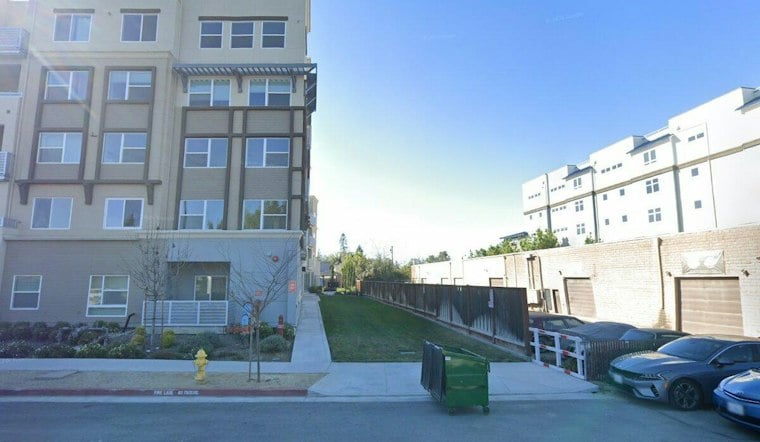
Regulators painted a dire financial picture in their filings. As of the end of October 2020, the Silicon Sage Bridge Fund had just $19.58 in its bank account while owing Bridge Fund investors approximately $40 million, the SEC alleged. The agency separately claimed Acharya raised roughly $17.4 million from at least 50 investors, about 30 of them new, in the months leading up to that point — even as an Acharya-controlled affiliate spent $9 million on 2.5 acres near 2101 Alum Rock Avenue in San Jose that same October.
Investigators Describe Families' Financial Security at Risk
John Abram, acting special agent in charge of the IRS Criminal Investigation San Francisco Field Office, said individuals and families had retirement plans, educational opportunities, and financial security put at risk by the scheme. The SEC's complaint had sought injunctions, the appointment of a receiver, asset freezes, disgorgement with prejudgment interest, financial penalties, document-preservation measures and an accounting, according to the Mercury News.
Years of Property Sales Have Yielded Mixed Recovery
A court-appointed receiver, David Stapleton, was granted authority by a federal judge to oversee and sell off properties linked to SiliconSage in an effort to recover money for investors. The results have been uneven. The receiver's sales have included a downtown San Jose apartment complex that sold for $53.5 million but netted only about $10.7 million, and a separate $5.5 million San Jose property sale whose proceeds went entirely to the lender, according to The Real Deal. A Fremont development site also sold for $13.5 million but generated only about $2.6 million, while six of seven office and retail condo units in a Santa Clara mixed-use project were slated for sale.
More recent reporting shows some larger paydays alongside continued delays. The receiver completed the 91-unit Osgood development in Fremont in early 2024 and had sold every unit by that June, bringing in $62.7 million, the outlet's more recent reporting found. In San Jose, the Almaden project was finished in late 2024, but sales there have moved more slowly than expected; a receiver's report cited in that reporting found 45 Almaden condos sold, another 12 in escrow and 39 still on the market, with $28.8 million collected so far.
The receiver's counsel has pointed to pandemic-related economic fallout and supply-chain issues as reasons completion costs ran over original estimates and projects took longer than planned. Investigators have also noted the sheer scale of the financial maze they had to untangle — Silicon Sage and Acharya held 77 different bank accounts and made at least 130,000 banking transactions over an eight-year span, according to the same reporting. The evidence does not establish what final amount or percentage individual investors will ultimately recover.





