

























































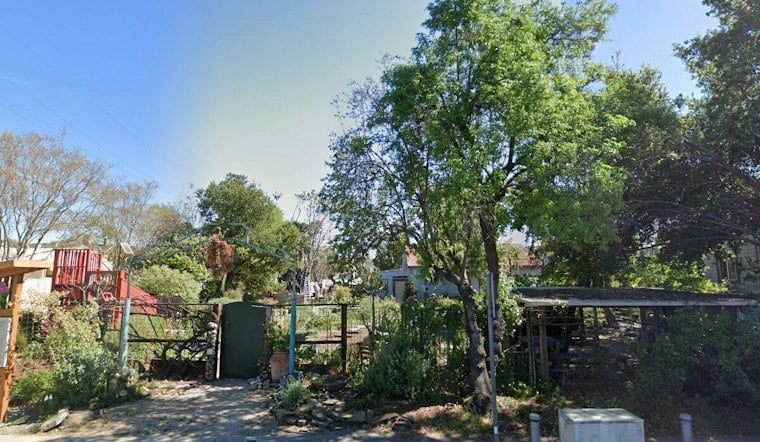
A community garden that has grown native plants, edible herbs and elderberries on Race Street in San Jose for 27 years is facing its final days there, after the property owner notified gardeners that the land was headed to a new buyer and gave them just 20 days to clear out. Plant & Soul California, the nonprofit that runs the garden, now has until Tuesday to vacate the half-acre site it has tended for nearly three decades.
According to CBS News, the property owner sent gardeners a letter on September 30 stating the land was in escrow to be sold to a developer. That gave the group 20 days to figure out what happens next to a site that includes rows of fennel flowers, French sorrel, salt bush, nasturtiums and elderberry bushes, with volunteers also involved in the garden. Board member Jessicka Chamberlin told the outlet that no other place like the garden exists in San Jose, and that volunteers use the elderberries to make pies, custard and syrup.
A Living Laboratory Built From Asphalt
The 76 Race Street site is home to ELSEE, short for Environmental Laboratory for Sustainability and Ecological Education, a half-acre native plant teaching garden and living laboratory, according to ActivityHero. The property was chosen as a Sustainable SITES Initiative pilot project in 2009 and earned SITES certification in 2014, making it the only SITES-certified sustainable urban landscape in Santa Clara County, per Alrie Middlebrook Design. Over the years, the garden also partnered with the San Jose Evergreen Community College District's Workforce Institute, offering student certifications in fossil-free careers, the same ActivityHero listing notes.
The organization running the garden has deep roots of its own. Plant & Soul California operated for more than two decades under its original legal name, the California Native Garden Foundation, before adopting its current name during a 2025 rebranding, according to a post on bvnasj.org. Co-founder Alrie Middlebrook and her associated design team created more than 1,000 native, sustainable gardens in the Bay Area and provided design grants to nearly 100 schools before her retirement in August 2024, per AAUW Morgan Hill.
Volunteers Rally as the Clock Runs Out
With time running short, gardeners have leaned on each other and the wider community. The garden held a yard sale to raise money and awareness about its situation, CBS News reported. Delmar Duldulao, a professional landscaper who grows edible plants in his own front yard, began volunteering at the garden just a few weeks before news of the eviction broke, telling the outlet the space had inspired him.
Melissa Blum, chair of the garden's board, said the group's best-case scenario would be an angel investor stepping in, or the sale escrow falling through entirely, per the station's report. Short of that, Plant & Soul California hopes to secure another location in San Jose, with the goal of keeping the community it has built together, even if it has to move. Chamberlin added that the garden offers a respite from the pressures of a technological era, a framing that underscores what organizers say is at stake beyond the plants themselves.
A Second Site, and a Wider Pattern in San Jose
Plant & Soul California is not left entirely without ground to stand on. The nonprofit has also operated Hester Farm, a regenerative organic agriculture project at 1460 The Alameda in San Jose, since 2017, according to the organization's own Hester Farm page. The group's design legacy extends into private development as well; in 2019, the California Native Garden Foundation served as an urban agriculture consultant on Santa Clara's Agrihood project, a 361-unit housing development built around a 1.5-acre regenerative farm, according to The Core Companies.
A UC Davis study examined San Jose home gardens, according to research published on PubMed.





