

























































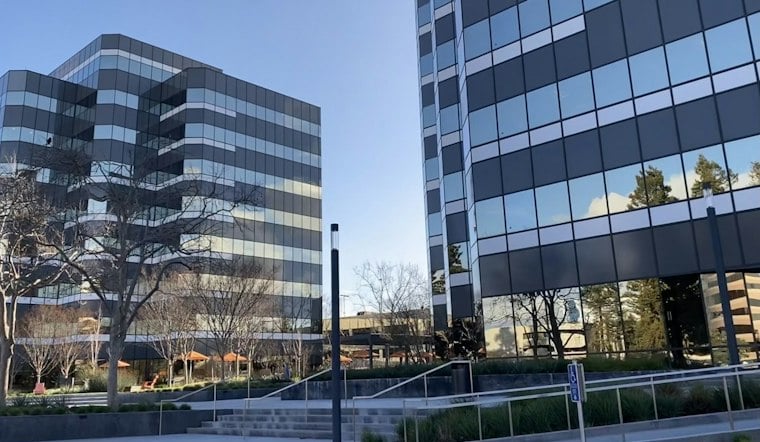
QuantumScape has set its sights on 2028 for the start of cell production at a newly planned 100 megawatt-hour solid-state battery line, aiming to supply markets as varied as AI data centers, aerospace and defense. The San Jose company says the new line builds directly on lessons from its existing pilot facility, and it has lined up a European manufacturing partner to help get there.
QuantumScape announced the plans Wednesday, saying in a release carried by ir.quantumscape.com that it has partnered with Muehlbauer Group, a German automation and manufacturing technology firm, to supply cell-assembly equipment for the project. StreetInsider reported that the start of cell production is targeted for 2028 — a goal the company frames as a plan subject to execution risk rather than a guarantee.
The partnership grew out of work already happening at QuantumScape's Eagle Line, a highly automated solid-state battery pilot facility the company operates in San Jose. According to the company's release, Muehlbauer evaluated the Eagle Line's processes and developed design enhancements meant to carry the technology toward mass production, with engineers from the firm working on-site in San Jose to help map out a scale-up plan.
Executives Point to Eagle Line as Proof of Concept
Dr. Siva Sivaram, president and CEO of QuantumScape, said Muehlbauer brings the “system integration capability, engineering depth, and scalability mindset” needed to help push the company's technology toward gigawatt-hour scale, per the same company release. Josef Markus Mühlbauer, CEO of Muehlbauer Group, said the Eagle Line demonstrated that QuantumScape's solid-state technology is ready to scale to the next level.
Muehlbauer Group brings scale of its own to the table: the firm employs roughly 4,500 people across 40 locations worldwide, has 45 years of experience in automation, and has an established presence in the semiconductor industry, per QuantumScape's announcement. The company also claims to serve 90 percent of worldwide demand for RFID technology, according to that same release.
Separately, on the company's third-quarter earnings call, QuantumScape said the Eagle Line is fully operational and is producing increased volumes of its QSE-5 cells for customer sampling, with that sampling now flowing into customer billings, according to a transcript published by fool.com. The company also reported $819.8 million in liquidity to support ongoing development and the planned mass-production scale-up, per the same earnings call.
Funding Plan Leans on Outside Money, Not New Equity
QuantumScape estimates the mass-production equipment for the new line will cost less than $100 million, and the company said it intends to fund that buildout through nondilutive sources, including customers and government grants, the transcript shows. Engineering work on higher-throughput processes and equipment for the new line is already underway, according to the company's release.
The push for scale comes against a backdrop of real skepticism about how close solid-state batteries actually are to volume manufacturing. Scientific American reports that researchers and industry observers see a significant gap between what the technology can theoretically do and where it stands commercially today, even as Chinese manufacturers — who already produce more than 80 percent of the world's lithium-ion batteries — have begun shipping semisolid-state cells.
QuantumScape has framed its Eagle Line less as a factory and more as a proof point, intended to show that licensing partners could eventually manufacture its technology at gigawatt-hour scale in their own facilities, according to a QuantumScape announcement posted in February. InsideEVs reports that this points to a licensing business model rather than a traditional manufacturing one, with the company envisioning its batteries entering low-volume, high-performance vehicles by the end of the decade. Volkswagen remains a significant backer of QuantumScape, and the two companies have already rolled out a demonstration Ducati motorcycle running on QuantumScape cells, per InsideEVs.
Rivals Are Moving Fast on Solid-State Production
QuantumScape isn't alone in chasing this milestone. Factorial Energy is pursuing a different route with polymer solid-state cells designed to run on about 80 percent of existing lithium-ion manufacturing equipment, according to Scientific American's reporting. And in China, Greater Bay Technology commissioned what Gasgoo described as the industry's first gigawatt-hour-scale all-solid-state battery production line earlier this month, by retrofitting portions of an existing 4 GWh liquid lithium battery line.
That Chinese line went from A-sample cells in April to a commissioned gigawatt-hour-scale operation just six months later, Gasgoo reported, with batteries built on a deep-eutectic-based composite solid electrolyte offering specific energy between 260 and 480 Wh/kg. QuantumScape's own cell, by comparison, has been reported to reach up to 301 Wh/kg and 844 Wh/L by volume, according to Scientific American. For now, QuantumScape's 100 MWh line remains a target on paper — one the San Jose company says its Eagle Line and its new partnership with Muehlbauer are meant to turn into reality by 2028.



