

























































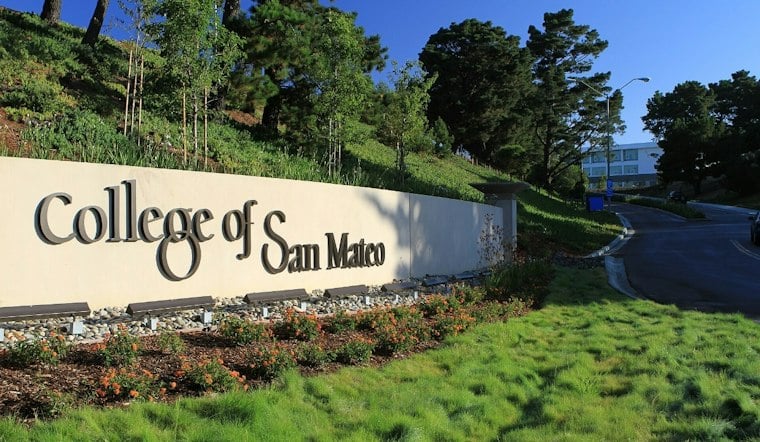
San Mateo County Community College District trustees and staff spent a recent board meeting digging into a stubborn problem: not enough students who start at Skyline College, College of San Mateo or Cañada College are making it to a four-year university. At the October 15 study session, staff presented a transfer rate of around 35% of students transferring within three years of beginning coursework, alongside a stated goal of hitting 50% by 2030.
A Five-Year Plan With Big Numbers Attached
The push is tied to the district's 2025-2030 strategic plan, which guides the district and its three colleges through the decade's back half, as reported by the San Mateo Daily Journal. According to San Mateo County Community College District, the plan outlines seven strategic goals and six targeted initiatives designed to expand access through Free College and strengthen student success. Leaders focused particularly on expanding dual enrollment and the Promise Scholars program.
The district's own dual-enrollment report covers CCAP enrollment. A report filed with the district's board says the district allocated $2.5 million in fiscal year 2021-22 specifically to expand dual enrollment across its three colleges. The district has CCAP agreements with five school districts and the county office of education.
Not Every Student Who Takes College Credit Enrolls Later
The Daily Journal reported a separate, more recent figure from a presentation by district staffer Aaron McVean: that about 40% of dual-enrollment participants now go on to enroll in the district afterward, and that over 3,500 students took part in dual enrollment during the 2025-26 school year.
Dual enrollment lets high schoolers take college courses and earn credit toward both diplomas at once, but what's available to a given student depends heavily on geography and staffing. Cañada College, based in Redwood City, serves many schools in the Sequoia Union High School District, but Cañada College President Kim Lopez noted the district's colleges offer courses across the county and sometimes beyond, the Daily Journal reported. Skyline College offers a biotechnology course taught to hundreds of students at Sequoia High School — a course Cañada does not currently offer.
The Workforce Bottleneck Behind Expansion Plans
McVean told trustees the ability to expand dual enrollment depends largely on the workforce available to teach it, according to the Daily Journal's account of the meeting. Some high school teachers already meet the minimum qualifications to teach dual-enrollment courses, which vary by academic discipline, while some district faculty members travel to teach courses directly at high school campuses. Trustees shared interest in building educator pathways with local high schools and partners to help more high school teachers earn those qualifications — a move McVean said could also reduce the need to budget for district faculty traveling to teach at high schools. He added that further growth will require additional resources and investment.
Statewide, dual enrollment has exploded even as transfer outcomes have lagged. In 2025, more than 150,000 California high school students were earning college credit through dual-enrollment courses, and the number of students in these courses tripled between spring 2015 and spring 2024, according to CalMatters. About 30% of California's 2024 graduating class took at least one dual-enrollment course. Yet only about one in five California community college students who intended to transfer actually did so within four years, the outlet reported separately — a gap that helps explain why SMCCCD trustees are treating transfer, not just enrollment, as the harder target.
Promise Scholars: A Decade-Old Program Trustees Want to Grow
The district also plans to expand its Promise Scholars program, which began at Skyline College a decade before this month's meeting and is now offered at all three campuses, the Daily Journal reported. The program currently enrolls 2,701 students this semester and supports participants completing degrees within three years through counseling, waived fees, textbook vouchers and other assistance. Skyline College's own description of the program, per Skyline College, says scholars receive up to three years of financial, counseling, community and academic support.
A presentation by Richard Storti, cited by the Daily Journal, indicated that full-time community college students in the program complete degrees within three years at nearly twice the rate of peers outside it. Part of that gap may come down to attention: Promise Scholars students get one counselor for every 150 students, compared with a general counselor ratio of roughly one counselor for about 400 students districtwide. Program participants are also required to meet regularly with their counselor, building in a level of accountability for course progress that general advising doesn't guarantee.
That disparity caught the attention of Trustee John Pimentel, who said he wants the district to prioritize funding for counselor positions at all three colleges, according to the Daily Journal's reporting. The district's Free College initiative, meanwhile, began as a pilot in 2023 and has already served more than 35,000 students, the San Mateo Daily Journal reported separately, with California approving a state measure this year allowing the program to continue.
San Mateo's Numbers Against a Tough Statewide Backdrop
The district isn't trying to close this gap in isolation. Transfer enrollment at the University of California and California State University systems declined 7.6% between 2021 and 2022, according to the Public Policy Institute of California, and transfers to UC and CSU kept slipping between 2021 and 2025, resulting in 5,057 fewer community college transfer students reaching those systems statewide, per EdSource. PPIC also found that about 19% of transfer-intending community college students statewide transfer within four years, and just 10% within two years — though the share completing within two years has risen, from 21% among 2015-16 transfers to 31% among 2021-22 transfers.
Locally, Skyline College posted a 14.7% transfer rate in 2021 and College of San Mateo reported 14.1%, according to San Jose Inside — both trailing Irvine Valley College's statewide-leading 16.7% that same year. California's community college system, for its part, never hit its own statewide goal of lifting annual transfers from about 80,000 to just over 100,000 by 2022, CalMatters has reported. Against that backdrop, SMCCCD's push to pair dual enrollment growth with expanded counseling support reflects a bet that early college exposure and closer advising, not broad policy shifts alone, offer the clearest path toward its 2030 target.





