

























































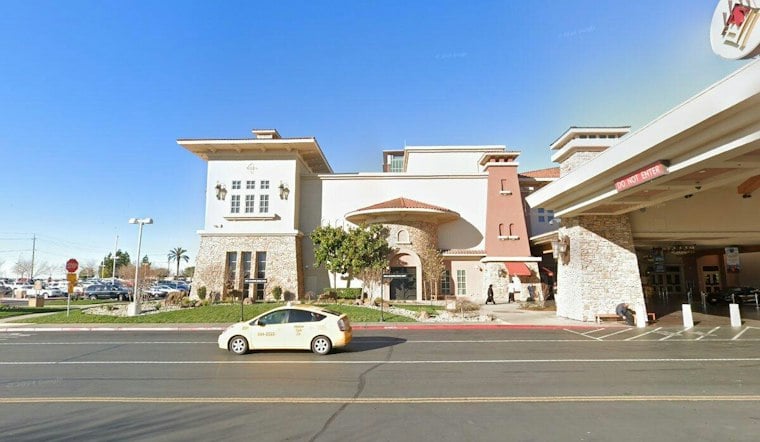
Dos Coyotes Border Café served its final plates at 3191 Crow Canyon Place in San Ramon on Thursday, September 24, closing the door on what had been the chain's last remaining restaurant in the Bay Area. The fast-casual Mexican spot, known for its tacos, burritos, enchiladas and quesadillas, had been a Crow Canyon Place fixture since 2017, and its exit leaves the entire region without a Dos Coyotes for the first time in nearly a decade.
According to Patch, the San Ramon restaurant was San Ramon's last location in the Bay Area for a chain that describes itself as serving Southwestern and Californian fusion food. The company confirmed the closure in a statement that read, “It has been a privilege to serve this community. Thank you for every meal, every visit, and every friendly face over the years,” according to the New York Post. Dos Coyotes also told TheStreet that Thursday, September 24 was the last day of service at the location, and that the chain has not filed for bankruptcy.
A Chain Built on Affordable, Southwestern-Style Dining
Dos Coyotes traces its roots to Davis, where founder Bobby Coyote, a former Los Angeles restaurant manager, opened the first location with the goal of creating what the chain called a people's restaurant — an affordable option for families and college students, per the same TheStreet report. The company's own website states that the original Dos Coyotes opened in The Marketplace in North Davis on January 5, 1991, though a 2017 Mercury News article describing the San Ramon opening instead described the chain as having been founded in Davis back in 1981. That same Mercury News piece noted the San Ramon restaurant was the chain's 10th location when it opened in May 2017.
The San Ramon closure wasn't an isolated retreat. Dos Coyotes has also closed three Sacramento-area locations and one Turlock location in recent years, and the chain's Concord restaurant at the Willows Shopping Center shut down back in 2019, TheStreet's report notes. Those losses have left the company concentrated in and around its original Sacramento-region stronghold.
Sacramento Region Remains the Company's Home Base
Dos Coyotes says it continues to operate in the Sacramento area, with locations including two in Sacramento, two in Davis, two in Folsom, one in Citrus Heights, one in Elk Grove, one in Roseville and one inside Thunder Valley Casino in Lincoln. TheStreet's report put the current total at 10 locations in the Sacramento area, while a Folsom Times article from late December described the chain as serving thousands of guests daily across 12 Sacramento-area locations — a discrepancy the available reporting does not resolve.
Online reaction to the San Ramon closure has included fans mourning the loss of the location, with comments praising its green salsa, its paella burrito and margaritas, and at least one customer recalling having hosted roughly 10 dine-in fundraisers there over the years, according to the Post's report.
Mexican Chains Face a Rough Stretch Nationwide
Dos Coyotes' contraction fits a broader pattern of trouble among Mexican restaurant chains. On The Border Mexican Grill & Cantina filed for Chapter 11 bankruptcy in March 2025 with 60 company-operated restaurants, and by June 2026 it had closed all of its company-owned U.S. locations entirely, shuttering more than 70 restaurants in total, according to USA Today. Franchise locations in California and a handful of other states and territories were expected to remain open since they operate independently of the parent company.
Chevy's Fresh Mex offers another cautionary tale: the chain once grew to more than 100 locations nationwide before shrinking to just nine restaurants, and its former parent company, Real Mex Restaurants, filed for Chapter 11 bankruptcy in 2018, per TheStreet's reporting. Industry data compiled by Restaurant Dive shows U.S. restaurant locations actually hit an all-time high of more than 860,000 in November 2025, even as both openings and closures slowed consistently throughout the year — a sign that high-cost markets like California are shifting into what analysts described as stabilization or even shrinkage mode.
That outlet also reported that 9% of tracked full-service restaurants lost 30% or more of their peak sales between 2019 and 2025, and that eat-in dining has fallen from 56% of U.S. foodservice dollar sales in 2011 to just 35% in 2025. Morningstar, Restaurant Dive noted, sees few signs of a meaningful turnaround in 2026 — a backdrop that helps explain why a 35-year-old chain known for its Mexican-inspired comfort food found it easier to hold ground in Sacramento than to keep a foothold in the pricier Bay Area.





