

























































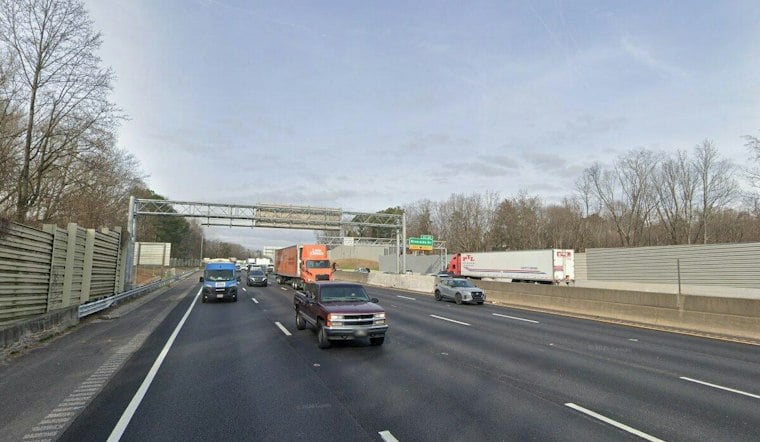
A drone stationed at a Sandy Springs fire station can now beat the trucks to an emergency scene, streaming live video back to crews still minutes away. The Sandy Springs Fire Department says the docked system can save responders up to 15 to 20 minutes before they physically arrive, giving commanders a head start on everything from building fires to crash scenes near one of the busiest interchanges in the region.
The program makes Sandy Springs the first fire department in Georgia to adopt a drone-as-a-first-responder model, according to Route Fifty. The drone is housed at a fire station near the intersection of Interstate 285 and State Route 400, about 13 miles north of Atlanta, placing it close to one of the metro area's most crash-prone corridors.
The technology leans on RapidSOS data to pin down a 911 caller's approximate GPS coordinates, then launches and streams footage directly to responding personnel in their trucks, the outlet reports. Fire officials say that head start lets crews size up a scene, including spotting smoke in parts of a building that personnel on the ground cannot see, before a single firefighter steps out of the truck.
Tracking Results As the Program Gets Off the Ground
Sandy Springs plans to measure whether the investment pays off by collecting data on the drone's flight hours, analyzing 911 calls and geomapping where drone-enabled responses actually occur, per the same Route Fifty account. That kind of scrutiny matters in a city that logged 27,502 reported crashes between 2018 and 2022, according to a 2025 city report cited by the outlet — a volume of incidents that helps explain why a tool promising even a few minutes of advance warning has drawn department interest.
CBS News Atlanta also highlighted the rollout, describing the Sandy Springs drone as a top-of-the-line system that arrives at scenes ahead of first responders and gives them, in the station's words, a head start on helping residents, according to CBS News Atlanta. The segment places Sandy Springs' launch within a broader wave of drone adoption spreading across metro Atlanta fire and police agencies.
Atlanta's Drone Unit Just Hit a Milestone of Its Own
Just north of the city, Atlanta Fire Rescue is marking its own drone milestone. The department's unit, founded in late summer 2025, has responded to more than 880 calls in its first year, according to Atlanta News First. Atlanta's fleet includes the Skydio X10, a drone equipped with infrared imaging that can spot hotspots and locate people trapped inside buildings, the station reports.
Atlanta keeps two pilots on shift around the clock out of Station 22, and officials say the real value is perspective: incident commanders can watch changing conditions unfold from an elevated vantage point rather than relying solely on reports radioed up from the ground, per Atlanta News First's account. It is a similar philosophy to the one driving Sandy Springs' new system, even though the two departments run separate programs.
Sandy Springs Police Have Flown Drones Since Earlier Years
The fire department's drone is not the city's first brush with the technology. Sandy Springs police previously accepted a donated DJI Mavic Pro drone from InterDev, the city's IT contractor, intending to use it for aerial surveys of crash scenes, crime-scene photography and video, assistance with high-risk warrants, searches for missing people, tracking suspects on the run and surveillance of special events, according to The Atlanta Journal-Constitution.
Part of a Fast-Growing National Trend
Sandy Springs and Atlanta are riding a wave that extends well beyond Georgia. At least 1,400 U.S. public safety agencies were using drones in some capacity as of 2023, according to an ACLU assessment cited by ASIS International, and by 2025 roughly 30 percent of surveyed agencies reported using drones specifically for emergency response. That same reporting notes agencies expect their daily reliance on drones and robotics to jump from 15 percent in 2025 to 48 percent by 2030, with 48 percent of first responders surveyed by Verizon saying they expect to fly drones daily within five years.
Research backs up the time-savings argument departments are making. A study published in Resuscitation found that drones beat emergency responders to the scene in 90 percent of incidents, with a median arrival time of 3 minutes and 49 seconds compared with 5 minutes and 51 seconds for traditional responders, per the ASIS International summary. DroneResponders founder Charles Werner has said the number of public safety drone programs nationally has grown from about 2,000 in 2019 to more than 10,000 today, as reported by CBS News Sacramento.
How Other Cities Are Deploying the Same Playbook
Georgia's Brookhaven Police Department has already deployed drones citywide to cut response times and sharpen situational awareness, per the ASIS International report. In Texas, Dallas launched a joint police and fire Drone as First Responder program on May 21, deploying eight remotely operated drones stationed at Dallas Fire-Rescue facilities that can respond within a two-mile radius and are equipped with thermal cameras and loudspeakers, according to FireRescue1. Dallas Police Chief Daniel Comeaux said pilots cleared three holding calls in a single hour using just one drone during training, the outlet reports.
In California, departments like Mountain House French Camp Fire — led by Captain Shane Duburg's three-pilot team, with plans to expand to six by year's end — have used drones to feed live overhead images to commanders, including during the Tracy Medline warehouse fire, according to CBS News Sacramento. Federal rules still govern all of it: the Federal Aviation Administration requires public safety drone operations to comply with Title 14 of the Code of Federal Regulations, with pathways involving waivers under Part 107 or Part 91 for agencies that need expanded flight authority.



