

























































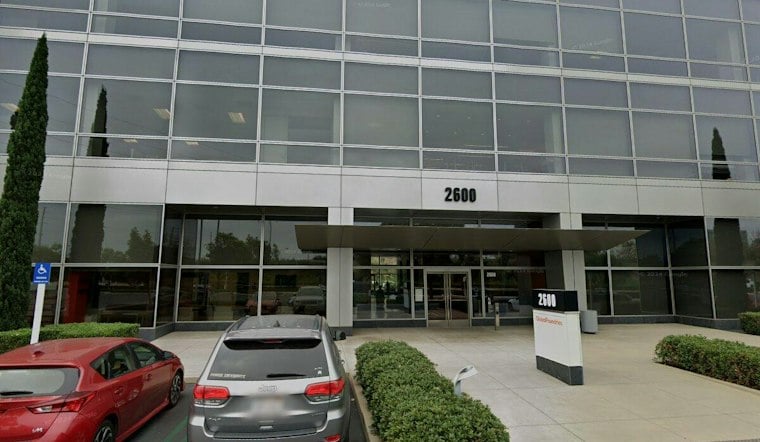
Tenstorrent has raised $1.5 billion in a funding round that pushes its valuation to $6.2 billion, more than doubling where the AI chip startup stood after its last major raise less than two years ago. The Santa Clara, California-based company plans to pour the new cash into scaling production of its Galaxy servers, machines that combine dozens of Tenstorrent's AI chips to power chatbots, coding assistants and video-generation tools.
According to Bloomberg, the Series E round was led by Trace Capital alongside Innovation X. The financing arrives after Tenstorrent attracted takeover interest earlier this year, Bloomberg reported, though the details of that interest have not been independently confirmed elsewhere. Reuters reported that backers in the round included Ark Invest, SanDisk, Morgan Stanley, T. Rowe Price and Tether Investments.
Tenstorrent builds specialized hardware and software for AI workloads using RISC-V, an open-source chip architecture that, per Reuters, lets companies design processors without paying license fees and reduces reliance on proprietary ecosystems such as Arm. The company's Galaxy technology is built to run the large language models behind chatbots and AI agents as well as video generation, according to The Globe and Mail. Tenstorrent also licenses its AI and RISC-V intellectual property to customers that want to own and customize their own silicon, the company has said in a newsroom release.
A Toronto Startup That Moved West
Tenstorrent was founded in Toronto before relocating its headquarters to Santa Clara in 2023, but the city remains central to its operations. Toronto is still Tenstorrent's largest office, housing 200 of the company's 1,000 employees, according to a report from BetaKit. The outlet described the new valuation as more than double the $2.6 billion figure tied to the company's late-2024 financing, while other reporting ties that same round to a lower pre-money figure, a discrepancy the available reporting does not fully reconcile.
What is consistent across sources is the scale of that earlier raise: Tenstorrent closed more than $693 million in its Series D round on December 2, 2024, at a pre-money valuation of $2 billion, according to HPCwire. That round was led by Samsung Securities and AFW Partners, the same pairing Tenstorrent credited in its own announcement of the deal.
Jim Keller's Pitch Against Nvidia
Tenstorrent is led by chief executive Jim Keller, a prominent chip architect who has previously designed chips for AMD, Apple and Tesla, where he led the automaker's self-driving chip development efforts, per the Globe and Mail's reporting. The company is positioning its open RISC-V approach as an alternative to Nvidia and other established AI chipmakers, whose GPUs the Globe and Mail describes as the industry standard for AI computing.
Tenstorrent is not alone in that bet. Cerebras Systems went public earlier this year and has partnered with OpenAI, the Globe and Mail also noted, underscoring how crowded the race to challenge Nvidia has become. Elsewhere in the RISC-V world, EE Times reports that startups SiFive and Axelera have together raised $650 million as the architecture matures and expands into data centers, edge AI and even space exploration hardware.
RISC-V's Broader Push Into Data Centers
EE Times has called 2026 the “year of the RVA silicon,” noting that a wave of companies are launching new server-class processors built on the architecture this year. The research firm SHD Group projects RISC-V could capture 33.7% market share across all hardware segments by 2031, the outlet reported, as the open architecture increasingly positions itself as a serious alternative to proprietary designs from Arm and x86 for hyperscalers and data-center operators.
For Tenstorrent, the fresh $1.5 billion is aimed squarely at turning that broader industry momentum into manufacturing muscle. The company plans to use the funds for volume manufacturing of its Galaxy servers, next-generation hardware and intellectual property, and additional hiring, according to BetaKit's report on the round. With a $6.2 billion valuation now behind it, the Santa Clara-based company is betting that an open alternative to Nvidia's dominant GPUs can find real traction in a market still defined by one company's chips.





