

























































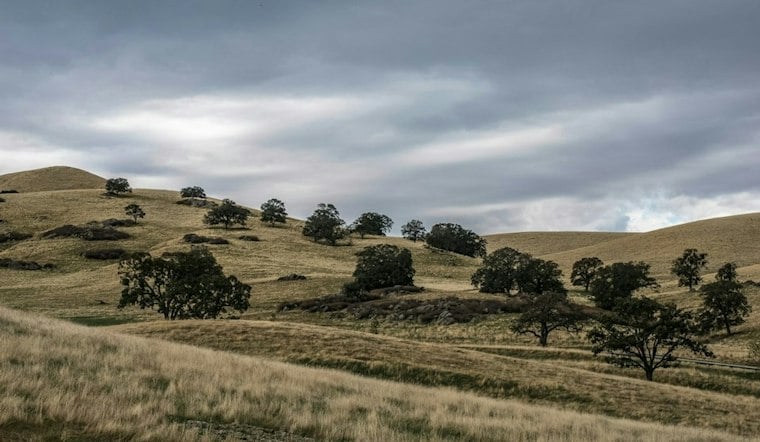
A 51-acre stretch of land along the Pacific Crest Trail above Santa Clarita now belongs to the Fernandeño Tataviam Band of Mission Indians, more than a century after the tribe lost every acre it once called home. The couple who owned the property had marketed it as a potential glamping site before deciding instead to sell it to the tribe. Tribal citizens gathered on the land last Wednesday to celebrate with a ceremony that mixed spiritual tradition with plain relief at having ground to stand on again.
According to the Los Angeles Times, the tribe traces its history to villages that once spread across the San Fernando, Santa Clarita and Antelope valleys, territory the tribe says once spanned more than 1.5 million acres according to the Fernandeño Tataviam Band of Mission Indians. By 1900, the tribe had been rendered landless, and it stayed that way for generations. Jesus Alvarez, board president of the tribe’s land conservancy and a tribal citizen, said the tribe had been known simply as a landless tribe.
A Ceremony Among the Three Sisters
At the heart of the new property sits a rock formation the tribe calls Páhi Yëëyt Tëtá, meaning three large rocks, also known as Three Sisters Rock. Small caves tucked into the formation provide refuge for owls and bees, the paper's report notes. Alan Salazar, a Chumash and Tataviam elder, performed a spiritual cleansing ritual to mark the occasion, and tribal citizen and ethnobotanist Julia Samaniego said she had never seen so much native chia growing anywhere else in Los Angeles County.
Alvarez said he envisions a future where five-year-olds can learn by simply roaming the hills on land that is, for the first time in generations, their own to walk. Government officials and neighbors joined the celebration, and the report describes tribal members reconnecting with the plants, birds and bugs scattered across the San Gabriel foothills.
State Money Behind the Return
The acquisition was made possible by a $1.9-million grant from the California Natural Resources Agency, funded through the state's tribal nature-based solutions program. It marks the tribe's second land return, following the 2018 creation of the nonprofit Tataviam Land Conservancy to acquire property on the tribe's behalf. In January 2024, an environmental offset company donated more than 500 acres near Elizabeth Lake to the tribe — a gift the tribe calls, per the Fernandeño Tataviam Band of Mission Indians, its first-ever land donation to the conservancy and its first return to ownership and stewardship of part of its original territory in more than a century. Roughly 200 tribal citizens later joined the tribe's annual family reunion on that donated land.
California Natural Resources Secretary Wade Crowfoot attended the celebration and said returning land to tribal stewardship is more than good policy. “This is not only the smart thing to do. This is the right thing to do. … It's key to our future,” he said, according to the same Los Angeles Times account, adding that Native American tribes know best how to manage the lands. Crowfoot said the state's broader land-return initiatives have now brought more than 100,000 acres back to tribes, part of over $200 million the state has invested under Gov. Gavin Newsom's administration in helping tribes reacquire ancestral territory.
Part of a Statewide Push
The Santa Clarita acquisition fits into a larger California policy announced earlier this year aiming to place at least 7.5 million acres of land and coastal waters under Indigenous tribal care, roughly 7% of the state's land and water, the paper's report notes. The California Natural Resources Agency estimates more than 1.7 million acres are already under tribal stewardship, though the agency has not set a deadline for reaching its larger goal. Elsewhere in the state, the Tule River Indian Tribe of California recently reclaimed more than 17,000 acres and reintroduced tule elk onto ancestral land, according to the Office of Governor Gavin Newsom.
The Fernandeño Tataviam Band has built other partnerships in recent years even while continuing to seek federal recognition, which the tribe notes does not by itself grant sovereignty, per its own federal recognition page. The tribe signed an agreement with California State Parks in 2023 to formalize cooperation in managing and protecting natural and cultural resources at state parks within its ancestral lands, according to California State Parks. In 2022, the tribe also created a Tribal Conservation Corps offering hands-on training for Native youth and young adults in ecology, climate resilience and human well-being.
Looking Ahead to a Native Tree Nursery
The tribe is also establishing a native-tree nursery in Pacoima, intended to help restore native trees, build an urban tree canopy and improve air quality over time, according to the San Fernando Sun. A $5 million grant from the U.S. Department of Agriculture's Urban and Community Forestry Program will support planting 750 trees in disadvantaged communities across the northeast San Fernando Valley. For a tribe that spent more than a hundred years without a single acre to call its own, the 51 acres above Santa Clarita are one more step toward a presence on the land that matches its history on it.





