

























































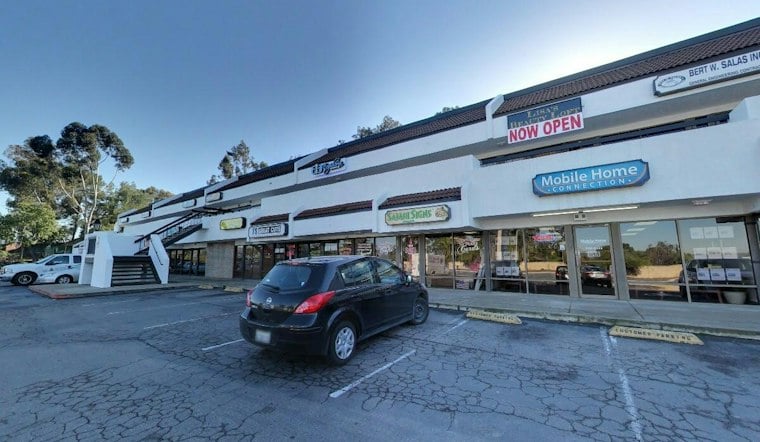
A Las Vegas man who owned a Santee trucking company pleaded guilty this week to running a credit card “bust-out” scheme that stole the identities of nearly 100 people and caused more than $2,103,000 in losses to two banks before he fled the country for a year and a half. Hasan Korkmaz, 45, admitted to all 18 counts against him, including bank fraud, money laundering and aggravated identity theft, in federal court in San Diego.
The case followed an investigation led by the Federal Bureau of Investigation, according to the U.S. Department of Justice. The prosecution was handled by Assistant U.S. Attorney Kevin Mokhtari and Special Assistant U.S. Attorney Katherine Rookard. As reported by Townhall, Korkmaz owned and operated San Diego Logistics Group Inc., and some fraudulent charges were made at the company.
How the Bust-Out Scheme Worked
A bust-out scheme typically involves opening credit card accounts in other people's names, building up trust with prompt payments, and then maxing out the lines without any intent to repay, Townhall's report notes. Prosecutors say Korkmaz used names, dates of birth, Social Security numbers and other personal information belonging to real people to open numerous fraudulent accounts, then charged those cards for thousands of dollars at businesses including his own trucking company.
Per Townhall, Korkmaz made charges as high as $18,500 in a single transaction. To keep the scheme going, he submitted bad checks drawn on insufficient-funds or nonexistent bank accounts to temporarily reset the maxed-out balances, enabling repeated rounds of fraudulent transactions, the Justice Department said. The bad checks temporarily restored available credit, allowing further fraudulent transactions.
Financial compliance research from FluxForce AI indicates that bust-out schemes like this one typically unfold across multi-stage cycles lasting six to 24 months, with fraudsters making strategic early payments to mask criminal intent and delay detection until the accounts are fully defaulted. Korkmaz's scheme ran through 2022 and 2023, according to Townhall's reporting.
Nearly 100 Victims, Two Banks, Millions Lost
Colin M. McDonald, cited in Townhall's report, said Korkmaz stole nearly 100 victims' identities. The Justice Department put the losses to two banks at more than $2,103,000.
The Federal Trade Commission reported that U.S. consumers lost more than $15.8 billion to fraud in 2025.
Fled to Türkiye, Returned to Face Arrest
After the scheme unraveled, court filings show Korkmaz wired fraud proceeds directly to a bank account he controlled in Türkiye before fleeing the United States. He spent 18 months there before returning and being arrested in June 2025, according to McDonald's account relayed by Townhall. What prompted his return after a year and a half abroad remains an open question.
Korkmaz pleaded guilty on October 16, 2026, the day Townhall's report was published, and is scheduled to be sentenced by Judge James E. Simmons, Jr. on January 8, 2027. He faces a maximum penalty of 30 years in prison on the bank fraud counts, which cover counts 1-12 under Title 18, U.S.C. Section 1344(2) and carry a maximum fine of $1 million. The money laundering counts, covering counts 13-14 under Section 1957, carry up to 20 years and a fine of $500,000 or twice the amount of monetary instruments involved, whichever is greater.
Guaranteed Extra Prison Time
Regardless of how a judge handles the bank fraud and money laundering sentencing, Korkmaz cannot avoid additional time behind bars. Under Title 18, U.S.C. Section 1028A, aggravated identity theft carries a mandatory minimum sentence of two years in federal prison that must be served consecutively to any sentence imposed for the underlying felonies, the Justice Department said. Those identity theft counts cover counts 15-18 of the indictment, meaning the two-year floor is added on top of whatever sentence Korkmaz receives for the fraud and laundering charges.




