

























































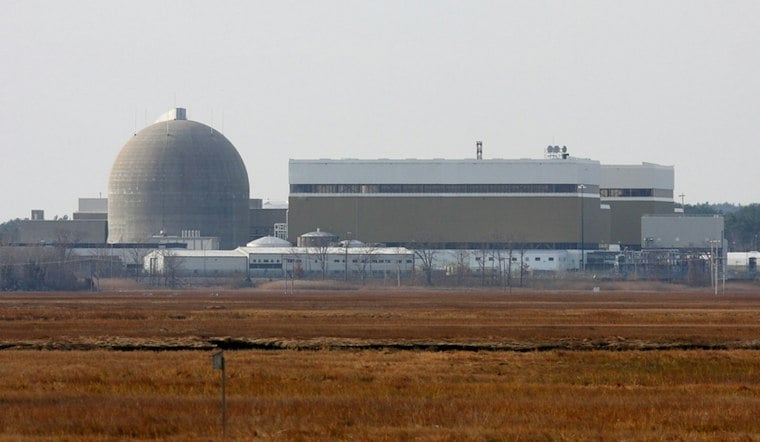
A longtime nuclear watchdog group says the concrete inside Seabrook Station is deteriorating faster than the plant's owner has acknowledged, and it wants federal regulators to step in before the damage gets worse. C-10 Research and Education Foundation sent a letter to the five commissioners of the U.S. Nuclear Regulatory Commission demanding federal intervention over concrete degradation at the Seabrook, New Hampshire plant, arguing that testing conducted by owner NextEra understated the true risk.
C-10, based in Amesbury, Massachusetts, has monitored Seabrook Station for decades. In its letter, detailed by InDepthNH, the group said alkali-silica reaction — sometimes called concrete cancer — is affecting safety-related structures at Seabrook, including the reactor containment building. The organization says its findings show the reaction is advancing faster and more extensively than NextEra predicted ten years earlier, and that the company's testing program has not demonstrated the plant can continue operating safely.
Projected Timeline Raises Alarm
According to C-10, the concrete degradation could exceed the safety limit set in Seabrook's operating license as early as 2034. The group says some structures may have less than ten years before cracking becomes extensive enough to exceed what the current license allows. The Eagle-Tribune reported that, per C-10, this projected 2034 threshold would arrive well before the plant's license expires — though accounts differ on the expiration date itself: the Eagle-Tribune's reporting cites 2030, while a 2023 report from seacoastonline.com states NextEra was re-licensed in March 2019 to operate Seabrook through 2050. The dossier does not resolve which figure is accurate.
Driving the dispute is a technical assessment from Victor T. Saouma, a structural engineering professor and prominent alkali-silica reaction expert who has testified before NRC safety oversight bodies. Saouma found that NextEra's original testing relied on unrepresentative specimens — simple beams rather than more representative structures such as shear walls or shear panels. He also said the testing used the same 28-day-old beams as the control baseline instead of comparing them with companion specimens of the same age that had not undergone the chemical expansion. Those shortcomings, Saouma said, led to conclusions that understated the true risk of damage throughout the plant's concrete structures. C-10's submission to the NRC included his credentials, his technical assessment and associated peer reviews.
Watchdog Says Retesting Won't Fix the Problem
C-10 also raised concern that NextEra intends to largely repeat the same flawed tests going forward. The group argues Seabrook is operating without the complete technical basis needed to demonstrate the continued structural adequacy of its safety-related concrete under design-basis seismic loading.
NextEra pushed back firmly, telling InDepthNH that safety is its highest priority and that its long-term monitoring and management program for the reaction is effective and comprehensive. The company said its initial large-scale testing program established structural monitoring criteria confirming its buildings are strong and robust, and that the program was developed by qualified, credentialed national structural engineering experts using accepted monitoring methods. NextEra further said its monitoring program has been approved by the NRC, and it characterized C-10's account as false, saying it misrepresents the company's monitoring and testing program.
A Known Issue That Has Kept Spreading
The alkali-silica reaction at Seabrook isn't new. The NRC issued industry-wide information about the reaction on Nov. 18, 2011, after it was first identified at the plant. The chemical process manifests as micro-cracking, staining, expansion and deformation of concrete when moisture is present, according to the NRC. Per seacoastonline.com, the number of affected structures expanded from seven to 10 by late 2022, with three additional structures added that year to the group already requiring physical modification and further analysis.
Earlier NRC reporting found the plant operated safely from Jan. 1 through Dec. 31, 2022, and that all 10 affected structures were performing their functions safely at that time, the same report noted. NRC officials have said their inspections and oversight of Seabrook's structural monitoring program supported continued safe operation of the plant. Separately, the NRC has said its staff review to date determined there were no immediate safety concerns, citing existing safety margins, the localized and slow-moving nature of the reaction, and ongoing monitoring.
Whether C-10's latest letter prompts a fresh NRC response remains to be seen. For now, the dispute leaves Seacoast-area residents with two starkly different pictures of the same aging containment structures — one from a regulator and utility pointing to years of monitored, managed decay, and another from a watchdog and its expert consultant warning the clock may be running out faster than anyone has admitted.





