

























































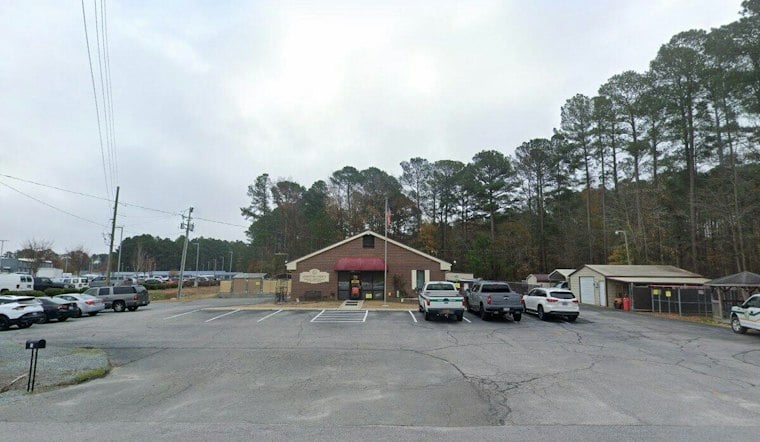
Inside a 100-year-old brick cotton mill in Selma, North Carolina, 30 formerly stray cats roam freely among antique dressers, stained-glass windows, and flea market trinkets, waiting for someone to take them home for nothing more than the cost of a kind word. The woman behind it all, 68-year-old Raylene Jessup, has placed 4,411 orphaned cats into new homes over the past 20 years, all without charging a single adoption fee.
Jessup owns the Selma Cotton Mill, a sprawling flea market and cat adoption center on Anderson Street that she bought after selling her house in Raleigh, according to the News & Observer. An unnamed CEO fronted the money that allowed her to purchase the aging building, which had a sagging roof and a skylight that needed replacing when she took it over, per the same report. Jessup, who previously worked as a social worker in Wake County, eventually started a 501(c)(3) nonprofit to formalize the rescue work — an organization now registered as Street Dogs and Stray Cats Inc. and headquartered in Selma, according to Charity Navigator.
A Mill With Nearly a Century of History
The building itself has lived several lives since it was built as a 19th-century brick mill, according to the News & Observer. It once had eight sets of railroad tracks running through its original operation, and during World War II, workers there made parachutes. Later tenants included a furniture store that manufactured wrap-around desks for public schools and a soap factory that produced cleansers for washing transfer trucks, the paper reports.
Today, items tagged with a cat symbol inside the flea market send 100% of their proceeds back to the rescue — a solid-wood dresser recently sold for $125 and a stained-glass window went for $99, per the same account. Every cat that leaves the mill departs vaccinated, spayed or neutered, and rehabilitated, the outlet notes, and Jessup refuses to put a price on any of them. “I’m not about to charge for cats,” she said, according to the News & Observer. “There’s cats everywhere.”
Johnston County's Shelter Crisis Looms Large
Jessup's free-adoption model exists against the backdrop of a dire countywide animal welfare crisis. Johnston County's public shelter euthanized 62% of the dogs and cats it took in during 2025, a rate more than twice the statewide average, according to NC Pet Project as cited by the News & Observer. The nonprofit tracking group separately found that the Johnston County shelter euthanized 2,145 of the 3,459 animals it handled last year — a 62.0% total rate that topped all 63 reporting counties in North Carolina, according to NC Pet Project.
Cats bear the brunt of that crisis. Roughly four out of five felines taken in by Johnston County Animal Services in 2025 were euthanized, a gap NC Pet Project attributes to the lack of countywide trap-neuter-return options and alternative intake pathways. That pattern isn't new: state records show that in 2024, the county shelter took in 2,047 cats, adopted out just 363, and euthanized 1,635, according to the North Carolina Department of Agriculture and Consumer Services. Statewide, the picture is grim but less severe — North Carolina's 63 reporting counties euthanized 26.2% of the 147,882 dogs and cats they admitted in 2025, with cats dying at a higher rate than dogs, per NC Pet Project.
Taking In the Toughest Cases
Jessup doesn't turn much away. She's taken in litters of kittens left abandoned in boxes, and she once collected dozens of pregnant cats from a hoarding situation, along with ferrets, rabbits, and even a turtle, according to the News & Observer. Some animals, like a cat named Nitro, have bounced back to the mill more than once — Nitro was returned twice by owners citing allergies or difficult circumstances before coming back to the mill a third time, the paper reports.
North Carolina does fund a statewide Spay/Neuter Program under General Statute Chapter 19A Article 5, partly through $20 contributions from specialty “Animal Lovers” license plates that reimburse local governments for low-income pet sterilization, according to the NC Department of Agriculture and Consumer Services. But with limited local infrastructure to match that funding, private efforts like Jessup's have become a crucial, if informal, safety net for Johnston County's cats.
Keeping the Lights On Without Adoption Fees
Running a free-adoption operation takes money, and Jessup's nonprofit leans on more than flea market sales to cover veterinary bills. Street Dogs and Stray Cats has held $1 yard sales and an annual “Spay-getti & No Balls” spaghetti plate fundraiser to help pay for medical care, according to The Grey Area News.
The mill, located at 1105 West Anderson Street near Interstate 95 Exit 98, draws both flea market browsers and highway travelers, functioning as a regional stop as much as a rescue, according to a Facebook post describing the site. Jessup's work has also drawn formal recognition closer to home — she and the mill's rescue efforts were featured in the 2021 book “12 Stories of Activate Selma,” published by the downtown advocacy initiative Activate Selma to honor influential community figures, according to a separate Facebook post from the organization.
Security has occasionally been a challenge for an operation housing dozens of animals at once. In January 2025, two teenagers broke into the mill, stole $60 from an animal rescue donation jar, and released 12 rescue dogs, touching off an extensive community search for a missing dog named Buddha, according to JoCo Report.
For Jessup, the math has never been about profit. Asked to sum up two decades of pulling cats out of boxes, hoarder homes, and shelter waiting lists, she offered a simple explanation to the News & Observer: “I guess I’m just a social worker.”




