

























































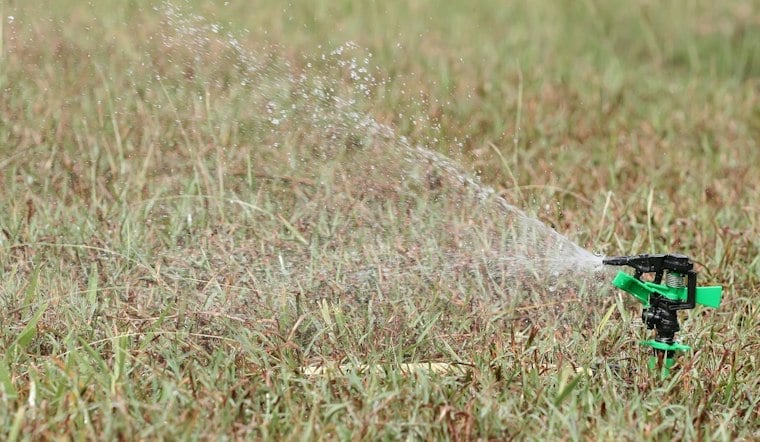
Silverthorne has imposed Phase 4 Water Restrictions this fall, ending town irrigation and watering for the season and prohibiting specified outdoor uses. The rules prohibit hose-washing a structure, motor vehicle, or boat on property used for residential purposes, as well as hose-washing paved areas, while allowing certain water-conserving commercial activities. The mandatory Phase 4 Water Restrictions took effect September 14, and anyone caught breaking them now risks real money out of pocket.
According to the Town of Silverthorne, the rules apply to both residential and commercial customers across the town's water utility service area. Enforcement follows a warning-first structure before penalties kick in: a first conviction costs $100, a second $250, and a third $500, per the town's published restrictions.
The Western United States has faced drought conditions. Silverthorne, a high-alpine Summit County municipality that runs its own water distribution system, is far from alone in reaching for emergency measures this year.
A Statewide Emergency Since Spring
Colorado Governor Jared Polis declared a statewide Drought Emergency on June 4, activating Phase 3 of the state's Drought Response Plan — the highest activation level in Colorado's framework — after an earlier Phase 2 activation back in March, according to the Colorado Department of Agriculture. Phase 3 instructs state agencies to coordinate emergency resource allocation statewide, a step Hoodline covered in Polis Hits Panic Button back in June.
The department's Drought Task Force, activated this year, is working to elevate agricultural impacts to state leaders and is offering free behavioral health resources to farmers and ranchers affected by the dry spell, since farming and ranching account for the majority of diverted water in Colorado. Nearby, the Willow Brook Metropolitan District, which serves the Ruby Ranch neighborhood near Silverthorne, approved an emergency drought resolution in May that bans all outdoor watering through the end of 2026 and requires residents to haul in water from outside the district just to fill hot tubs and pools, according to a report from CBS News. District officials can suspend water service for violations involving outdoor watering or unauthorized pool filling.
Snowpack Still Trying to Catch Up
Soil and snowpack telemetry recorded Monday showed South Platte basin precipitation at 94% of the median for this point in the water year, an attempt at recovery after record-low mountain snowpack levels recorded throughout spring, per tracking from Coyote Gulch. U.S. Drought Monitor data released October 15 showed drought conditions in parts of Colorado.
Beneath the surface, the damage may be even harder to reverse. A Virginia Tech study published this month in Water Resources Research found that between 2020 and 2022, groundwater in the Upper Colorado River Basin — which spans Colorado, Wyoming, Utah, and New Mexico — declined at nearly twice the rate of the Lower Basin, driven by severe drought and reduced mountain snowmelt, as reported by KRDO.
Resort Towns Across the High Country Scramble
Silverthorne is hardly the only mountain community rationing water this year. In nearby Eagle County, the Eagle River Water and Sanitation District instituted Stage 3 restrictions limiting outdoor lawn watering to two assigned days per week — a move Hoodline detailed in Vail Slashes Sprinklers. Reduced river flows in high-country streams remain a concern.
Further south, Denver Water temporarily suspended public recreation at Antero Reservoir in April, transferring roughly 5,000 acre-feet of water into Cheesman Reservoir to cut evaporation losses, as Hoodline reported in its own coverage of the state's water providers scrambling to protect municipal supplies. Taken together, the measures in Silverthorne, Eagle County, and across Denver Water's system point to a region still wringing out every available drop while it waits for the mountains to deliver a real recovery.




