

























































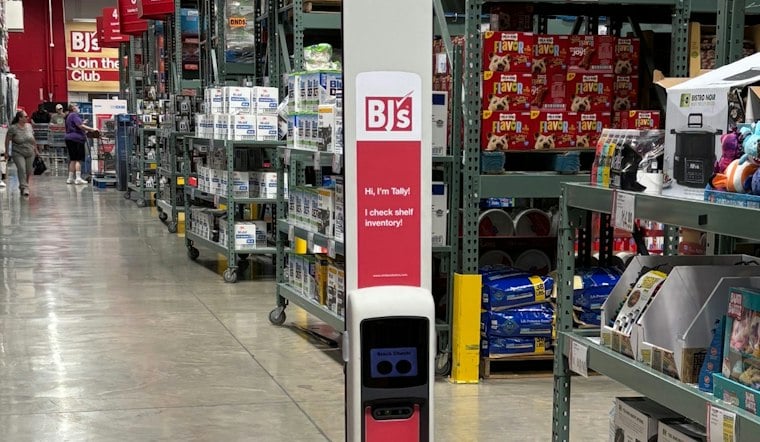
At a Ralphs on Pico Boulevard, Tally’s assignment is shelf inventory: the six-foot sensor tower scans for missing products, misplaced items and pricing errors. Its rounds are part of Kroger’s broader rollout, though the scope of the deployment in Los Angeles remains undisclosed.
Built by Burlingame-based Simbe Robotics, Tally scans grocery shelves, tracks stock levels and checks prices, alerting employees to misplaced or out-of-stock items, according to the Los Angeles Times. The newspaper reports that Kroger, Ralphs’ parent company, is now using hundreds of the robots after pilot projects that began in Indianapolis and Cincinnati spread to California. Simbe says Tally is designed to understand shelf conditions, not identify or track people.
The rollout has moved quickly. A Kroger-operated Smith's store manager posted on LinkedIn that the company deployed its 500th robot across all of Kroger in August, and Simbe says more than 3,000 of its units have now been contracted to monitor shelves worldwide. The company unveiled an upgraded version, Tally 4.0, in January, built with newer Nvidia chips and software meant to speed up shelf scanning and deliver real-time data on what's in stock, how it's priced and where it sits on the shelf, according to Simbe Robotics.
Shoppers React to the New Aisle Companion
The Los Angeles Times reported that Ricardo Valadez, a 62-year-old real estate agent and Ralphs regular from Mid-City, felt followed by Tally until an employee explained that it was checking shelves. Other shoppers have raised concerns that machines could reduce human interaction in stores that have long relied on face-to-face service.
Jennifer Boulanger posted a video on Nextdoor complaining about the new robot at her local Ralphs, telling the Los Angeles Times that AI automation means more jobs could be lost. She said she now plans to shop more often at Trader Joe's instead.
Workers Raise Concerns Over Jobs and Surveillance
Rachel Fournier, who works at the Ralphs on Vermont Avenue and Adams Boulevard, told the Los Angeles Times that Tally appeared at her store a few months earlier. The newspaper also reported that some Ralphs workers worry the robot could eventually be used to monitor employees. Grocery workers and unions more broadly have raised concerns that automation could cut hours, threaten jobs or track staff.
In July, the United Food and Commercial Workers International Union branch representing employees in Washington, northeast Oregon and northern Idaho released a statement opposing Tally's deployment at Kroger-owned Fred Meyer stores, as reported by UFCW 3000. Union members said outsourcing union jobs to robots will erode unity in the workplace, reduce available hours for workers who need them to pay rent, and threaten the stability of their benefits. Kathy Finn said union members already perform shelf checking, out-of-stock identification and store-condition maintenance, and argued employees should be consulted and sign off before more robots are deployed.
Kroger's AI Push Extends to Corporate Cuts
The robots are arriving alongside broader workforce changes at Kroger. The company said it will lay off 3,000 corporate employees over the next three years as it increases its use of artificial intelligence to streamline operations, according to the Washington Post. David Kennerley said in March that Kroger was investing aggressively in artificial intelligence and that it had already helped the company save money.
Reports differ on when Kroger’s robotic pilot began: the Los Angeles Times says the company started using robotic technology for real-time inventory insights last year, while GeekWire reports the pilot began in 2024. A Ralphs spokesperson said the technology helps associates identify and address shelves with low- or out-of-stock products, but declined to say how many Tally units are deployed in Los Angeles. A Simbe spokesperson said its shelf-intelligence technology helps store teams identify low- or out-of-stock products and supports store operations and shoppers. Robot makers and retailers generally say the machines handle less interesting work so employees can focus elsewhere.
What the scans collect—and what remains unknown
Simbe’s published terms define “Tally Digital Data” to include product photos or videos and assessments of products, displays and pricing captured or processed by its services. The terms do not establish whether shoppers are captured or how long any data is retained, according to Simbe Robotics.
A previous shelf-scanning deployment ended differently: The Verge reported in November 2020 that Walmart was ending a separate Bossa Nova Robotics contract covering robots in some 500 stores after finding that humans could do the job just as well. That decision concerned Walmart’s deployment, not Kroger’s plans for Tally.
A Fast-Growing Corner of Retail Tech
Los Angeles isn't the only place encountering these machines. Bristol Farms has introduced Tally in Santa Monica, and the robot has also been spotted at Kroger, Lowe's, Tesco and BJ's locations elsewhere. Rival robot maker Badger Technologies has deployed similar inventory-scanning machines at Woodman's Markets, The Giant Company and Stop & Shop, where the robot goes by the name Marty and was updated in 2023 to monitor on-shelf availability and detect misplaced items, according to Grocery Dive.
The push reflects a fast-growing industry. The retail automation market could jump from $28 billion in 2025 to $77 billion by 2034, based on Fortune Business Insights estimates cited by the Los Angeles Times. Simbe claims its bots can save employees up to 50 hours of work per week, though that figure comes from the company itself. For now, shoppers pushing carts past Tally in Ralphs aisles are left to decide for themselves whether the six-foot sensor tower is a helpful addition to their grocery run or one more sign that the human touch at the supermarket is slowly being automated away.




