

























































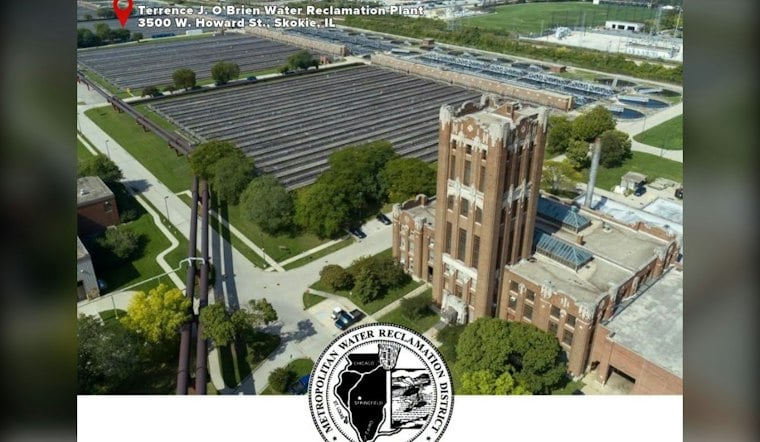
The Metropolitan Water Reclamation District of Greater Chicago held a groundbreaking ceremony Thursday for Battery E, a nearly $400 million addition to the Terrence J. O'Brien Water Reclamation Plant in Skokie that will strip phosphorus from wastewater before it reaches local waterways. The new battery, the fifth at the 97-acre facility at 3500 Howard St., will use a biological process to remove the nutrient rather than relying solely on chemical treatment, protecting downstream water quality and meeting stringent new requirements.
MWRD President Kari K. Steele was set to attend the ceremony alongside leaders from Skokie, Evanston, and the U.S. Environmental Protection Agency, according to CBS News Chicago. The O'Brien plant has operated since 1928, cleaning an average of 230 million gallons of wastewater a day for more than 1.3 million people across 143 square miles — water that arrives after being flushed down toilets, sinks, and drains throughout the service area.
Why Phosphorus Removal Matters
The project comes as the plant faces stricter water-quality requirements. Excess phosphorus can spur algae growth and blooms, deplete oxygen in the water, threaten aquatic life, and impair recreation, as CBS Chicago reports.
Effluent released from the O'Brien plant flows into the man-made North Shore Channel, per MWRD. Excessive phosphorus can contribute to oxygen-depleting algal blooms.
A New Build for Phosphorus Removal
MWRD's approach to biological phosphorus removal is intended to reduce phosphorus in wastewater. Battery E, the plant's fifth battery, is planned to support upgrades to the existing batteries. The project will add new tanks and infrastructure.
Once finished, the new battery will let MWRD complete extensive upgrades to the plant's other four batteries, according to CBS Chicago.
Project Costs and Hiring Goals
Battery E is a roughly $400 million project.
The project also includes participation goals of 20 percent for Minority Business Enterprises, 10 percent for Women Business Enterprises, and 3 percent for Veteran Business Enterprises, according to Chicago Build.
A Century of Service
The O'Brien facility, one of seven wastewater treatment plants MWRD operates, spans 97 acres with 14 buildings and 187 employees, compressing natural biological purification into a treatment cycle that can take hours before discharging treated water, per the Pioneer Press. The plant opened in October 1928 as the North Side Water Reclamation Plant and will mark its 100th anniversary in 2028 — meaning Battery E's groundbreaking comes as the roughly 98-year-old facility prepares for treatment modernization and upgrades.



