

























































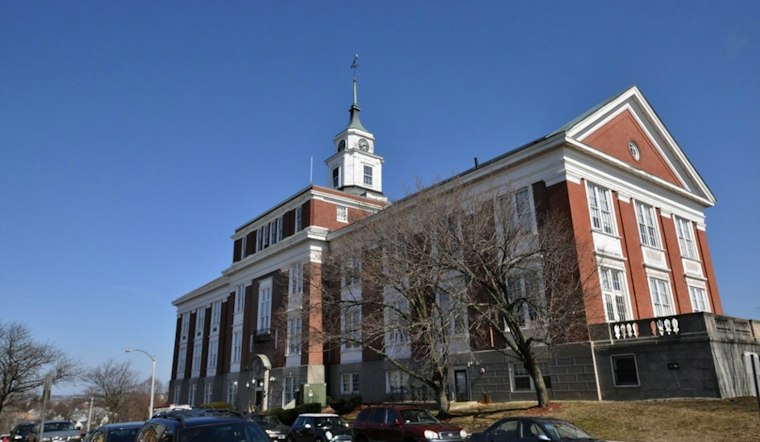
Somerville is preparing a home rule petition for a proposed municipal cultural trust, which could give the city a way to support long-term arts space. The city hopes to submit a draft to the Somerville City Council and send it to the state legislature by the end of 2026.
A Fund Built to Outrun the Market
The city’s proposed Somerville Municipal Creative Space Trust could raise and hold money, accept donations and development-related fees, and use funds to buy or protect buildings for long-term arts use, according to WBUR. The proposal could also support arts nonprofits seeking to buy buildings or help build new arts space, the report said. Mayor Jake Wilson has described the petition as a limited test case for allowing municipalities statewide to create cultural trusts and has pledged to advocate for it.
The Somerville Arts Council says the proposed trust’s board would include city officials, artists and community members. The proposal remains under legal and financial review as part of a two-phase planning process. Senior arts planner Michael Rosenberg told WBUR that the trust could make funds easier to access for arts-building purchases and that community members would help shape how funds are allocated.
Why the City Says It's Losing the Race
Somerville’s planning materials describe a widening gap between the loss of art production spaces—including studios, rehearsal rooms, performance venues and galleries—and the city’s ability to replace them through existing regulations. Large buildings used by artists and musicians face development pressure. The city’s 2022 Art Space Risk Assessment found that creative spaces were being lost faster than current regulations could keep pace, according to the Somerville Arts Council.
The risk assessment grew out of a partnership that began in 2020, when the Metropolitan Area Planning Council started working with Somerville to map neighborhoods where development pressure could displace artists. MAPC describes Somerville as having one of the highest concentrations of artists per capita of any city in the country and as a regional hub for arts and culture jobs, according to MAPC. MAPC arts and culture director Annis Sengupta told WBUR that artists have sought government solutions to displacement for decades.
The EMF Building and a Pattern of Displacement
The proposal’s origins trace to 2018, when tenants of Cambridge’s EMF music rehearsal complex were told to leave after the building had been sold to a developer two years earlier. New Alliance and other artists vacated the building after efforts to stop the sale, WBUR reported. New Alliance had previously been based in Boston’s Fenway neighborhood.
Ethan Dussault, who told WBUR that artists and musicians were displaced from Fenway after the 2004 Red Sox World Series win, said losing arts space can harm communities, health, friendships and careers. He argued a cultural trust could improve artists’ wellbeing. Cleo Brigham, a Milk Row studio renter, described the proposal as exciting and necessary for Somerville’s creative economy, according to the same report.
Zoning Rules and a Possible Opt-Out
Somerville's zoning code already requires developers in arts and creative enterprise zones to dedicate between 5% and 10% of commercial space to the arts, a mandate that MAPC separately confirms applies to future commercial development in transit-oriented districts. The city hopes the new trust could let developers opt out of that space requirement by donating money to the trust instead, the station's report notes.
Somerville’s contribution of $600,000 helped the Arts & Business Council of Greater Boston purchase Central Street Studios, an 8,500-square-foot building serving around 25 artists. A land-restricted deed secured the property as permanent artist studio space, according to WBUR’s earlier coverage. The example illustrates one way the city has supported a specific property; the proposed trust would establish a broader funding mechanism.
A Long Road Through the State House
Massachusetts municipalities currently lack the legal right to establish cultural trusts without state authorization, which is why Somerville needs the home rule petition approved by both its city council and mayor, and why the city still needs to find state legislators willing to sponsor it. The council will likely hold a public hearing on the petition, following a series of public meetings the city held last month to gather community feedback.
Advocates have also been pushing a separate but related piece of legislation, the Creative Space Act, which has been reported favorably out of committee twice but has not yet reached the floor for a vote, according to WBUR's reporting. An attempt to attach the act to an economic development bond bill also failed, the station notes. Cultural trust legislation broadly is likely to take years to pass, per the same report — a timeline Somerville officials seem to be bracing for even as they push forward with their own, city-specific petition. If approved, Somerville would become the first city in Massachusetts to attempt a cultural trust of this kind, following the same playbook it used in the 1990s when it launched its affordable housing trust.
How the proposal fits other public tools
Somerville has a separate institutional precedent in its housing work: city records show that the Affordable Housing Trust Fund was created by ordinance in 1989 and began its first programs in 1991, according to the City of Somerville. That history concerns a housing-focused trust, not the proposed cultural-space trust. Statewide, the Massachusetts Cultural Facilities Fund announced 91 grants totaling $9.1 million for municipal and nonprofit cultural organizations in fiscal year 2025, according to MassDevelopment and Mass Cultural Council; it is a grant program, distinct from a trust that could hold property.
A different approach was proposed in New York: a state bill introduced on Jan. 8, 2025, would change real-property-tax law to encourage affordable studio, rehearsal and performance space for eligible nonprofit arts organizations. The proposal, described by the New York City Council, is a tax-law approach, not a municipal property-acquisition trust.



