

























































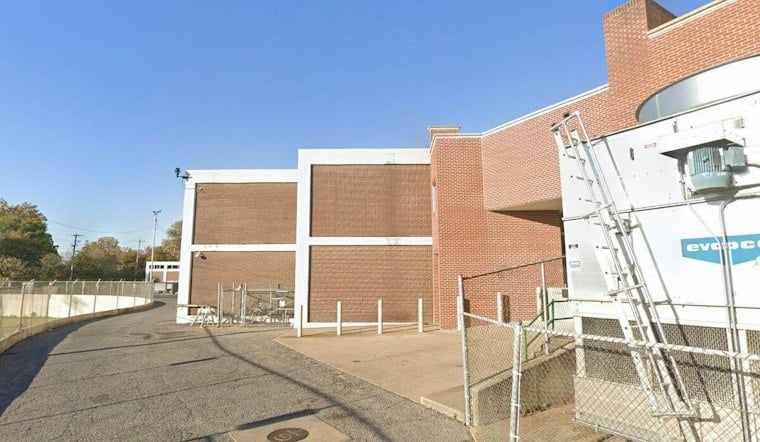
Spectators lined the streets of South Memphis to cheer on alumni and current students as Booker T. Washington High School celebrated its 100th anniversary, with a parade featuring floats, dancers, cheerleaders and band members stretching several blocks from the school's stadium. The Memphis Police Department took part in the procession, which drew the surrounding community out near downtown Memphis to mark a century tied to the current Lauderdale Street building.
As reported by WREG, the celebration began at the school's stadium before winding through nearby streets. But the centennial being celebrated traces back much further than the 1926 building itself. The school's roots reach back to 1873, when it was founded as Clay Street School, becoming the first public high school built for African American students in Memphis and graduating its inaugural class in 1891, according to Memphis-Shelby County Schools.
A Name Won Through Protest
The school's name itself carries a history of civic struggle. When Memphis city leaders initially planned to open the new 1926 Lauderdale Street building as the Memphis Negro Industrial High School, public outrage from Black residents organized one of the city's earliest sustained Black political protests, forcing officials to adopt the name Booker T. Washington High School instead, per the Delta Review. The dispute centered on the school's planned name.
That early leadership tradition began even sooner. The school's first Black principal in 1873 was J.H. Barnum, who successfully petitioned for an all-Black teaching staff and later became the city's first Black Superintendent of Colored Schools, according to the same Memphis-Shelby County Schools account. He was followed by Oberlin College graduate Benjamin Kellogg Sampson, who delivered a speech welcoming former President Ulysses S. Grant to Memphis in 1880, per that district record.
Civil Rights Figures and Cultural Icons
Among the school's most notable graduates is civil rights pioneer Maxine Smith, who helped desegregate Memphis public schools and served 33 years as executive secretary of the Memphis NAACP after graduating from Booker T. Washington High School at age 15, according to the NAACP. Smith was later elected to the Memphis Board of Education, where she served from 1971 to 1995.
The school's alumni roster also includes W.W. Herenton, the first elected Black mayor of Memphis, along with music legends Booker T. Jones, David Porter, Rufus Thomas, and Earth, Wind & Fire founder Maurice White, the district notes. Porter co-wrote the iconic R&B hit Soul Man with Isaac Hayes at Stax Records. The campus itself grew over the decades following the 1926 completion of its main building, including the dedication of a gymnasium in 1950, according to Wikipedia.
From a Presidential Visit to National Recognition
The school's national profile peaked in May 2011, when President Barack Obama delivered the commencement address at Booker T. Washington High School after it won the national Race to the Top Commencement Challenge, celebrating a graduation rate increase from 55% in 2007 to 81.6% in 2010, according to The White House. After hundreds of applications, Obama selected the winner from the top three publicly rated schools.
Alisha Kiner was the school's principal during the 2011 presidential visit.
That turnaround appears to have continued. In September 2023, the Center for High School Success designated Booker T. Washington High School a national Demonstration School after it maintained 9th-grade on-track graduation rates between 91% and 96% over four consecutive years, according to the Center for High School Success. Those rates remained between 91% and 96% over four consecutive years.
Today's Campus
As of the current school year, Booker T. Washington Middle & High School serves grades 6 through 12 under the Memphis-Shelby County Schools district, enrolling over 400 students in South Memphis, according to Public School Review. The campus continues to serve the surrounding South City neighborhoods that turned out in force for the centennial parade, a stretch of South Memphis that Hoodline has covered before in connection with other neighborhood news.




