

























































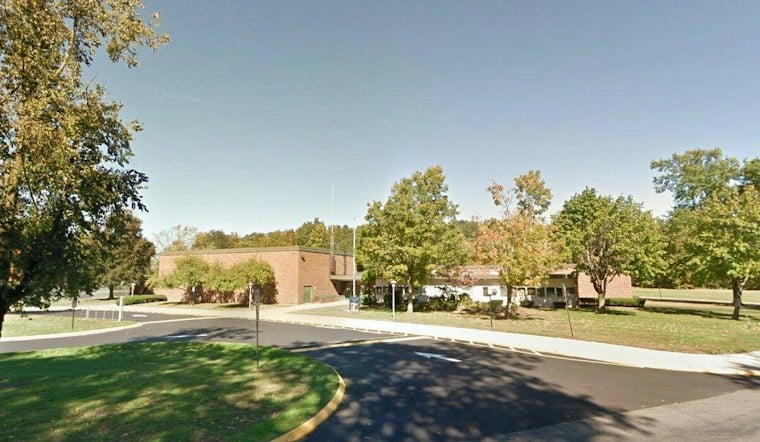
Southington voters head to the polls on November 3 to decide whether the town should borrow up to $86,675,560 to rebuild Kelley Elementary School, expand South End Elementary, and shutter Flanders Elementary School as part of a long-debated overhaul of the district's aging buildings. Town officials have said the buildings are in dire need of repairs, and the referendum asks residents to approve an ordinance funding what's known as the elementary facilities plan.
The ballot question is the product of months of local wrangling, according to CT Insider. The Southington Town Council approved the referendum date and question back in April, setting up what's known as Phase 1 of a larger, two-phase plan recommended by Southington Public Schools. Phase 1 covers construction of a new Kelley Elementary School, five additional classrooms at South End Elementary, and the closure of Flanders Elementary, with Kelley also serving pre-kindergarten students alongside the kindergarten-through-fifth-grade population at all three schools.
If voters approve the measure, construction at Kelley and South End would begin in 2028 and wrap by fall 2030. The new Kelley building is slated to rise on open field space behind the existing school, with the old building to come down once the new one is ready, according to The Southington Outsider.
Why Kelley and Flanders, Specifically
Kelley and Flanders were both built in 1966 and have gone six decades without comprehensive modernization, even as five other Southington elementary schools have undergone major renovations or rebuilds since 2002, per the Outsider's reporting. Flanders also operates at just 63% of building capacity — the lowest utilization rate of any elementary school in the district — which has kept overall district elementary usage below the state's 85% to 90% efficiency target, the Outsider reported.
District officials argue that doing nothing would cost more in the long run. A 2025 facility condition assessment by engineering firm StudioJAED estimated that simply maintaining and repairing Kelley, Flanders, and Derynoski elementary schools under a status-quo approach would run Southington between $105.8 million and $116.4 million over 10 years — without fixing the district's underlying space deficiencies, according to Southington Public Schools.
What Happens to Flanders
Under the referendum, the Flanders building would be repurposed for municipal and community use rather than closed outright, and the town cannot sell the property or develop it into residential housing. The plan requires Southington to retain the Flanders property for municipal use, with that preservation language added after public feedback at a meeting, per CT Insider's reporting.
One possibility floated for the site: town Community Services Director Janet Mellon has expressed interest in relocating her department into the Flanders building, according to town council chair Paul Chaplinsky. Mellon's proposal has not been approved or put to a vote, but officials have noted that the school's kitchen, cafeteria, and classrooms could support community services programming, including the Prom Shop and Operation Stay Warm.
Closing Flanders is also projected to offset some of the project's cost to taxpayers, with the district estimating nearly $900,000 in annual operating savings once the school is shut down, per the same CT Insider account.
Tax Impact Starting in 2029
Southington taxes are not expected to rise in 2027 or 2028 while the project moves through design, but the first annual tax increase is expected in 2029. For a homeowner with a property assessed at $140,000 — a fair market value of roughly $200,000 — the estimated impact works out to about $4.57 per month in 2029, climbing to $6.52 per month in 2030, according to The Quinnipiac Post.
Phase 1 carries an estimated total cost of $86.4 million, with the town's share pegged at $33.9 million to $39.7 million, officials have said. That estimate already accounts for recent increases in material and labor costs along with escalation costs, and Chaplinsky has said the price tag would only grow if the referendum fails. Southington has also contracted a professional firm experienced in planning and building schools to help manage the project.
The State Reimbursement Question
A major piece of the town's financial calculus hinges on Connecticut's school construction grant program. The Quinnipiac Post reports that Southington qualifies for a base 50% state reimbursement rate if enrollment targets are met within eight years, plus an additional 15% incentive if early childhood care is included — potentially lifting total state aid to 65%. Phase 1 includes early-childhood space.
Getting to the ballot took its own detour. The Southington Board of Education voted 8-1 in February to request a June referendum, aiming to meet Connecticut's June 30 state grant application deadline, but the Board of Finance voted 4-2 in March to push the vote to the November general election instead — a delay district leadership warned would push the town's state grant application to June 2027 and expose the project to further construction cost inflation, per the Outsider.
The project also cleared a mandatory land-use hurdle in March, when the Southington Planning and Zoning Commission unanimously approved an 8-24 municipal referral finding that the plan aligns with the town's 2016 Plan of Conservation and Development, according to Patch. The Town Council voted 6-3 along party lines in March to advance the plan to public hearings and Planning and Zoning review, with all six Republican members in favor and three Democratic members opposed amid concerns over total municipal debt following recent townwide property revaluations.
Redistricting and What Comes Next
If Phase 1 passes, the school district would begin redistricting the seven remaining elementary schools by fall 2029 as construction nears completion, with all students transitioning at the same time rather than in stages, per CT Insider. Redistricting would affect elementary students across the district.
Phase 2, which is not expected to include further redistricting, would bring a new Derynoski school for pre-K through fifth grade along with a new Karen Smith Academy — an alternative high school program — built on the Derynoski property. That phase is estimated to cost $94.4 million, with the town's share estimated at $60.5 million, and officials anticipate putting it before voters in a 2030-31 referendum if Phase 1 passes. Those schools would be completed by 3034-35 if approved.





