

























































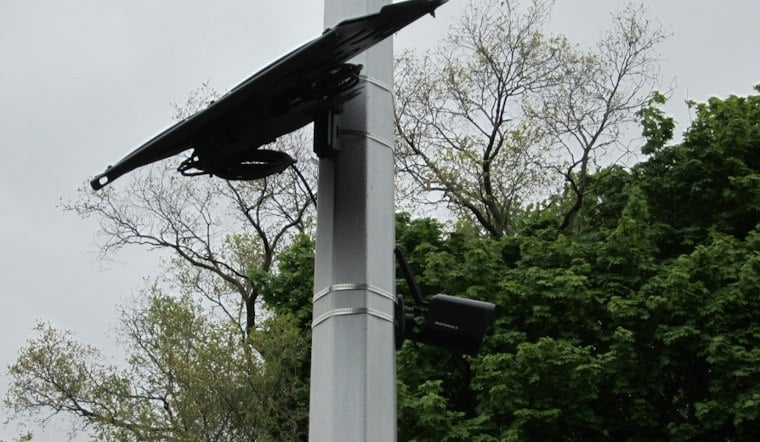
Spartanburg County Council has unanimously approved the first reading of an ordinance that would regulate who can access Flock and other automatic license plate reader cameras, setting a $500 fine for each violation of the rules. County officials say the penalty, while modest, is the maximum they are legally allowed to impose, and they are now counting on state lawmakers to go further when the legislature reconvenes in January.
County Administrator Cole Alverson told council members the ordinance makes clear that Flock-type systems are meant only for legitimate law enforcement purposes, according to WSPA 7News. Sheriff Bill Rhyne said any misuse of the cameras by his deputies would result in termination, and he has separately pushed for mandatory jail time as a consequence for ALPR abuse — a step the county itself cannot take. Assistant County Attorney Monier Abusaft explained that the $500 cap exists because South Carolina counties cannot criminalize conduct before the state legislature does, and under state law, local ordinance penalties are capped to match the jurisdictional limits of magistrates' courts, per the South Carolina Legislature.
Why County Officials Say Their Hands Are Tied
Abusaft urged Spartanburg residents who want stronger penalties to contact their state senators and representatives directly, noting that he and Sheriff Rhyne both hope lawmakers will take up ALPR misuse legislation when the General Assembly returns to session in January 2027. The Sheriff's Office owns only two ALPR cameras in the county; the rest belong to private property owners, and deputies may access those privately owned cameras only with permission. Abusaft said he does not want Flock cameras in the county.
The ordinance cleared its first reading unanimously but still needs two additional readings before it becomes official county policy, giving council members and the public more opportunities to weigh in before final passage.
Resident Flags Gaps In Data Rules
Spartanburg resident Angela Adams said the ordinance as written has no limit on how long the county can retain ALPR data, even though the cameras record every passing vehicle — not just suspects' cars. She asked that the ordinance include a firm deletion deadline for stored footage and require officers to confirm an actual camera hit before initiating a traffic stop.
Adams also pointed out that the draft contains no audit logs or required case numbers tied to searches, meaning there is currently no built-in way to review who queried the system or why. She said some ALPR companies allow law enforcement agencies nationwide to search local data, and she wants the ordinance to spell out exactly how vendors can access Spartanburg's information. Adams argued that Spartanburg's data should stay under county control and only be shared through formal county agreements.
A Regional Pattern Of Camera Misuse
Spartanburg's debate follows a string of ALPR misuse cases across the Upstate. In nearby Greenville County, a Mauldin Police Department officer was fired in August after an internal audit found 166 unauthorized Flock camera searches over five months targeting a former romantic partner, with false justifications including warrant and welfare checks, according to The Washington Times. The City of Greer went further, suspending its entire Flock network for 90 days and physically covering its cameras after an audit revealed two officers had tracked ex-partners and personal acquaintances, as reported by the Post and Courier. As of August, the South Carolina Law Enforcement Division was actively reviewing Flock misuse allegations involving personnel at multiple departments statewide.
Hoodline has previously reported on Greenville officers fired over camera misuse and on a Anderson County deputy's resignation amid a similar SLED probe. Spartanburg's own camera network has featured in several recent missing-persons cases, including the search for Woodruff girl, where Sheriff Rhyne noted that a critical Flock camera along Highway 101 had been inoperable due to vandalism since July, complicating the initial tracking effort before the 12-year-old was found safe in Arkansas.
Debate Over Oversight Extends Beyond Spartanburg
The push and pull between investigative value and privacy risk is not unique to Spartanburg County. In August, Flock Safety itself shortened its default national data retention window from 30 days to seven and added mandatory case-code tracking for user queries, according to Police1. That same month, Asheville, North Carolina's City Council voted 5-2 to terminate its contract with Flock Safety entirely and dismantle all 11 of its license plate readers following community opposition, per WNCW.
The American Civil Liberties Union has argued that vendor-provided audit tools do not solve the underlying problem, since compliance enforcement still depends entirely on internal police leadership rather than external judicial oversight. A separate analysis cited by the ACLU found that South Carolina law enforcement ALPR databases collect nearly 150 million vehicle scans annually, with more than 99.8 percent of those reads involving vehicles not connected to any crime or warrant. South Carolina Senate Bill 447, advanced by the Senate Judiciary Committee in April, would create a statewide framework allowing certain non-governmental entities, as well as government bodies, to use ALPR systems, while setting mandatory retention limits and audit protocols — the kind of statutory backstop Spartanburg officials say they are waiting on before they can impose tougher local penalties.


