

























































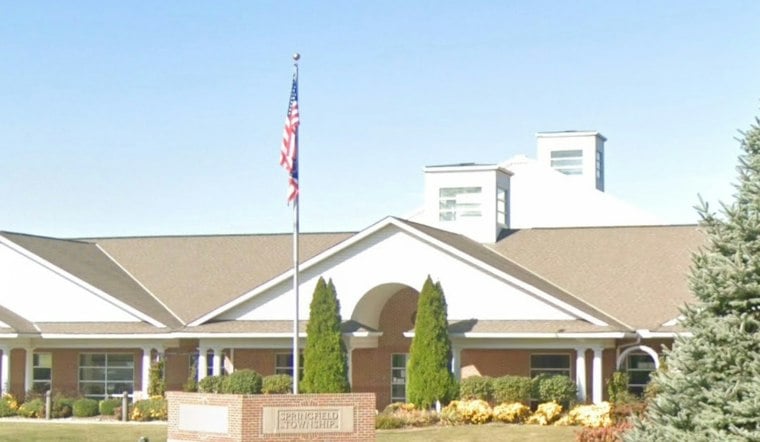
Springfield Township voters will head to the polls on Nov. 3, 2026, to decide whether to approve a new 0.5-mill, five-year property tax levy dedicated to police protection — the same basic proposal that township voters have already rejected twice in the past three years. If it fails again, the Clark County township stands to lose the one dedicated sheriff's deputy currently assigned to patrol its streets.
What the Levy Would Fund
According to the Springfield News-Sun, township officials are proposing the additional 0.5-mill levy to continue a contracted patrol with the Clark County Sheriff's Office, which currently assigns one dedicated deputy to Springfield Township. Per the Clark County Board of Elections, the levy would cost property owners $18 per $100,000 of property value and would first appear on tax bills in 2027, according to the same report. A separate filing described in a Springfield News-Sun roundup of Clark and Champaign counties tax issues for the November 2026 election similarly lists an additional 0.5-mill, five-year property tax at $18 per $100,000 of value, earmarked to provide and maintain police vehicles, equipment, buildings and salaries. A weaker search snippet tied to that same filing listing described the proposal differently, as a 1-mill levy costing $35 per $100,000 — a discrepancy that remains unresolved in the available reporting.
The levy is projected to collect $245,685 annually, the Springfield News-Sun reports, with proceeds going toward motor vehicles, communications equipment, buildings and building sites used directly in police department operations, and salaries for permanent police personnel. Springfield Township sits in Clark County and has more than 12,300 residents, per 2020 census data cited in the same report.
A Levy Voters Have Already Turned Down Twice
This isn't the first time township officials have asked. The current proposal was first presented to voters in November 2023, where it was rejected by a 58% to 41% margin, the Springfield News-Sun reports. Voters rejected it again in 2024, with 59.47% opposed in final, unofficial results, according to a separate Springfield News-Sun report on county tax levy outcomes — a result described elsewhere as a roughly 59% to 40% defeat.
The Clark County government website notes that the sheriff's office has a contract with Springfield Township to assign one deputy to ensure a vigilant presence within the township — the arrangement officials say is at stake if voters reject the levy a third time. Under Ohio law, a township police district's trustees are authorized to levy a tax on taxable property within the district to pay all or part of the costs of providing police protection, according to the Ohio Revised Code.
How It Compares to Other Township Levies
Springfield Township isn't alone in asking residents to pay more for local law enforcement. In Franklin County, Jefferson Township residents approved Issue 25, a 1.9-mill continuing levy that will cost property owners $67 annually per $100,000 of appraised value, funding a contract with the Franklin County Sheriff's Office for a dedicated patrol unit, according to NBC4. That coverage is expected to begin Jan. 1, 2027, and officials there say it should help shorten emergency response times that currently average eight to 10 minutes. NBC4 also reports that Jefferson Township saw an average annual growth rate of 8.8% between 1990 and 2020, compared with 1.7% for the broader Columbus area — part of the backdrop officials cited in pushing for dedicated coverage.
In the Dayton area, Washington Township residents were asked to approve a 0.9-mill levy that would cost $32 annually per $100,000 of property value and generate an additional $1.7 million a year, according to Dayton 24/7 Now. Plans for that levy called for adding one detective and two road-patrol deputies, along with two additional cruisers. Those comparisons underscore how Springfield Township's proposed cost — at $18 per $100,000 — sits on the lower end of what neighboring communities have asked voters to pay for expanded or dedicated police coverage.





