

























































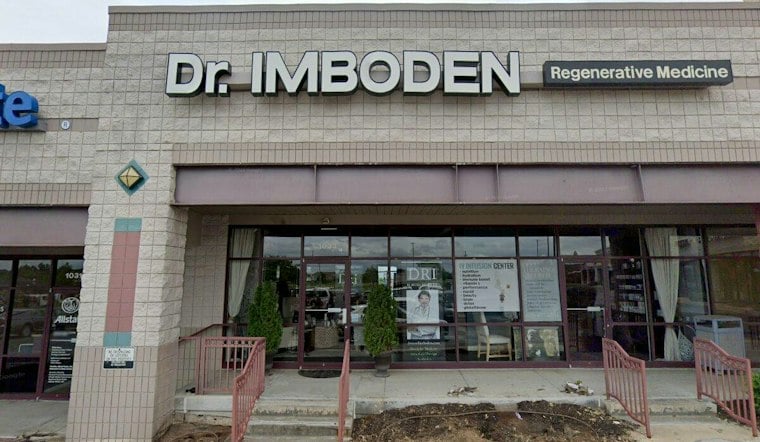
A St. Charles County doctor has lost his medical license after state investigators found he kept prescribing hormone therapy years after he was explicitly barred from doing so — including testosterone given to a 13-year-old boy whose test results and physical exam showed no sign of the condition the doctor diagnosed him with.
The Missouri medical oversight board announced it revoked the license of Dr. Russell Imboden, according to STLtoday.com, finding that he violated a disciplinary order that prohibited him from prescribing or practicing hormone therapy. The outlet reports that Imboden diagnosed the 13-year-old with a sex-hormone deficiency and treated him with testosterone, but the state's investigation found the boy's test results were normal and his physical exam showed no indicators supporting that diagnosis.
Investigators also faulted Imboden for failing to conduct a physical exam of the boy to check for puberty markers before starting hormone treatment, the report notes. Imboden has said he understood his settlement with the state barred only reproductive hormone therapy, and that he continued prescribing thyroid hormone therapy believing it fell outside that restriction — even hiring another physician, per the same account, to handle reproductive hormone work he believed was closed to him.
A Restriction Dating Back to 2019
The hormone therapy ban wasn't new. Imboden was placed on probation in 2019 and barred from five areas of practice, including hormone therapy, the outlet's report states. That followed an earlier case in which the Missouri Board of Registration for the Healing Arts placed his license on three years of probation and barred him from providing alternative therapies, stemming from care he provided to nine patients at Body Solutions, a Chesterfield clinic where he worked between 2011 and 2014.
At a July hearing, Imboden admitted under oath that his earlier settlement with the state broadly restricted him from hormone therapy, the article notes. He estimated that thyroid care made up roughly one-tenth of his practice over 10 to 15 years, treating about 10 thyroid patients a week.
A Bouillon-and-Shakes Regimen Tied to Heart Trouble
The case against Imboden also centered on a 50-year-old man who was directed to drink four servings of bouillon and two shakes daily, according to the report. The man ended up consuming 5,000 milligrams of sodium a day — more than twice the recommended daily maximum of 2,300 milligrams — and was admitted to an emergency room in March 2014 with a heart rate of 150 beats per minute. A cardiologist confirmed he was in atrial fibrillation.
Imboden had told the patient the drinks contained healthy sodium that takes fluid off the body, the report states, and advised him to continue the bouillon regimen months later, even after the hospitalization.
Imboden Fighting the Revocation in Court
Imboden has not commented on the board's ruling, and his lawyers did not respond to a request for comment, per the same account. He has filed a lawsuit arguing the board's decision was unsupported by evidence and arbitrary, and that he received too little notice of the hearing and of the board's expert witness. That lawsuit remains ongoing. Katy Linnenbrink said the board could not comment on pending or active litigation, the outlet reports.
The Broader Fight Over Hormone Treatment in Missouri
The case lands amid an ongoing statewide fight over who can access hormone therapy and under what conditions. Missouri's 2023 restrictions on gender-affirming care for minors carried a sunset provision, and legislation introduced in 2026 sought to make those restrictions permanent, according to the Missouri Independent, which notes that the American Medical Association and other major medical organizations continue to support puberty blockers and cross-sex hormones for people under 18 seeking to medically transition. PBS NewsHour has described Missouri's restrictions as part of a broader national push by conservatives to restrict transgender and nonbinary people. Separately, MedPage Today has noted that physicians in states with such bans face medical board discipline as a risk of practicing in the space, though some state restrictions allow doctors to continue puberty blockers or hormones for a limited period to help patients discontinue therapy.
Imboden's case centers on hormone prescribing and the scrutiny it draws from Missouri regulators. The outcome of his lawsuit challenging the board's revocation has not yet been determined.


