

























































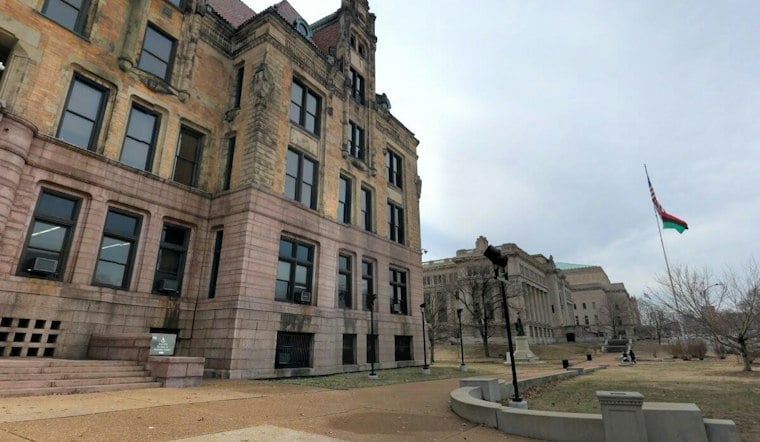
St. Louis voters will soon decide whether the city should stop holding partisan special elections to fill vacancies on the Board of Aldermen, replacing them instead with the same nonpartisan approval voting system already used for mayor, comptroller and other citywide offices. The measure, known as Proposition 1, would delete a section of the city charter that currently requires partisan elections whenever an aldermanic seat opens up mid-term.
As reported by St. Louis Public Radio, the inconsistency dates back to 2020, when city voters approved Proposition D with 68.15% support, establishing nonpartisan approval voting primaries and top-two runoffs for municipal offices including mayor, comptroller, Board of Aldermen president and aldermen, according to Ballotpedia. Under that system, voters can select as many candidates as they want in a primary round, and the top two finishers advance to a runoff. Proposition D said its approval-voting system applied to special elections for aldermanic vacancies, but a separate charter provision required partisan elections for those contests.
Proposition 1 would close that gap by deleting the charter language requiring partisan special elections, per the station's report. The measure is sponsored by 6th Ward Alderwoman Daniela Velázquez, who said it aims to resolve a conflict within the city's laws. Velázquez was elected to represent the newly drawn 6th Ward in April 2023 with 65.2% of the general election vote, according to Ballotpedia.
A Costly Workaround Since 2020
St. Louis election officials have reported that each round of a single-ward special election costs the city about $30,000, per the same account from St. Louis Public Radio. That expense can be avoided when only two candidates file for a vacancy, since a first round of voting isn't required in that scenario. Still, the city has held five single-ward special elections to fill vacancies since approval voting took effect, and all five relied on the existing partisan nominating process.
Velázquez's push to streamline vacancy elections follows her broader record of proposing charter reforms. In January 2025, she introduced a separate charter amendment to transfer executive operational powers from the mayor to a new appointed city administrator role, as Hoodline reported in January 2025.
8th Ward Fight Over Party Labels
The debate over partisan labels in special elections isn't new. In 2025, St. Louis decided not to place party labels on the 8th Ward special-election ballot, prompting the St. Louis City Democratic Central Committee to file a lawsuit over the decision. That lawsuit, which sought to force election officials to include party affiliation labels on the ballot, was unsuccessful, according to the St. Louis American.
Sean Fauss, chair of the St. Louis Democratic Central Committee, said removing party labels reduces transparency for voters. He noted that the committee may endorse its preferred candidate in a race — it endorsed Mayor Cara Spencer in 2025 — and argued that voter education to make up for the loss of party labels comes at a cost. Fauss also said expanding approval voting could run afoul of a Missouri constitutional amendment restricting the practice statewide.
St. Louis's Unique Legal Standing
That constitutional backdrop is significant. Missouri voters passed Amendment 7 statewide in November 2024 with 68.4% of the vote, enacting a ban on ranked-choice and approval voting while explicitly grandfathering St. Louis's existing nonpartisan system, according to KCUR. The exemption makes St. Louis the only city in the state — and one of very few nationally — still actively using approval voting, especially after North Dakota Governor Kelly Armstrong signed a law in April 2025 banning the system statewide and ending Fargo's approval voting system, which Fargo used in local elections from 2020 to 2024, per Ballotpedia.
Approval voting has already reshaped at least one marquee St. Louis race. During the city's first municipal election using the system in March 2021, mayoral candidates Tishaura Jones and Cara Spencer advanced from a four-candidate primary with 57% and 46% voter support, respectively, before Jones won the April general election with 51.7%, according to Wikipedia.
Any charter change in St. Louis, including Proposition 1, requires a 60% majority to pass. Whether Fauss's legal concerns about the measure's constitutionality become a formal challenge, similar to the committee's unsuccessful 8th Ward lawsuit, remains to be seen.





