

























































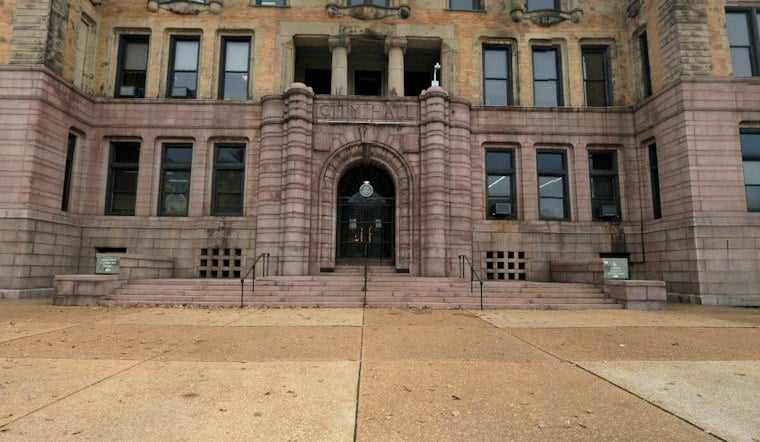
A St. Louis board of aldermen committee voted Thursday to send the full board a bill that would tax marijuana sales to permanently fund Code Blue, the city's cold-weather homeless shelter program that relied on one-time settlement money during its first winter. The Health and Human Development Committee advanced the bill with a do pass recommendation after a packed hearing drew roughly 50 residents and more than two dozen public speakers, all of whom spoke in favor.
A Tax Floor, Not a Ceiling
Ward 7 Alderwoman Alisha Sonnier introduced the bill, which would apply the city's existing 3% tax on marijuana sales toward emergency shelter, transportation and outreach, according to St. Louis Public Radio. Sonnier said Code Blue has proven itself but still lacks a consistent funding source, and she described the proposed tax revenue as establishing a floor rather than a ceiling, since the board could still appropriate additional money on top of it. She also urged the city to identify available funds as early as possible rather than scrambling each winter, per the same report. Separately, KSDK reported the hope is that the tax would generate at least $1.5 million in predictable funding for Code Blue operations, covering shuttle services so people do not have to walk in freezing temperatures and paying the staff who keep shelters running. KSDK also noted the funding legislation remains in its early stages.
What Code Blue Has Delivered So Far
Last winter marked the first time Code Blue was implemented citywide, and the bill itself cites a core problem: unpredictable funding prevents shelters, hospitals and health workers from confidently planning staffing, facilities and services. St. Louis spent more than $3 million in Rams settlement funds to stand up Code Blue infrastructure during that first winter, and the city funded the program with $2 million from the general budget this year, according to the bill's underlying facts. The program made hundreds of extra shelter beds available once temperatures dropped below freezing and opened even more beds at 25 degrees or below, providing nearly 600 beds on the coldest nights last year. The city also activated bus routes and rally points to help people reach safe locations during the worst cold snaps.
Those figures track with earlier reporting. St. Louis activated its Code Blue plan more than four dozen times over the 2025-2026 winter, and St. Louis Public Radio reported that Peter and Paul Community Services alone offered shelter for 13,000 people during activation nights across seven sites. St. Louis Magazine reported the city says more than 1,000 people were helped overall, and officials and service providers also reported fewer frostbite cases at local emergency rooms that winter. St. Louis Magazine also noted officials have floated a companion program for extreme heat, sometimes called Code Red, though that idea has not advanced into legislation.
Homelessness Keeps Climbing
The need has only grown. The city's 2026 Point-in-Time count identified 1,790 St. Louis city residents experiencing homelessness, an increase of nearly 9% from 2025, with 323 of those individuals unsheltered, St. Louis Public Radio reported in a separate story on the citywide crisis. Homelessness in the city has climbed 25% since 2020. City officials previously acknowledged they will need to find funding sources beyond the one-time settlement dollars that paid for Code Blue's first winter, since that money will not recur indefinitely.
Emotional Testimony and Policy Debate
Christina Sterman, a housing specialist at Gateway Housing First and an early advocate for Code Blue, told the committee that fewer people died last winter because of the program and argued that people should not need luck to survive. Some speakers at the hearing wanted the city to activate Code Blue at a higher temperature threshold, while other supporters pushed for the city to fund permanent housing rather than emergency shelter alone. Anthony Pulliam asked why the city could build shelters to save lives when it could also build bombs to destroy them, a comment that underscored the emotional tenor of the public comment period.
As written, the bill would also allow emergency help to be activated during dangerous heat or natural disasters, not just winter cold, and it requires that at least one shelter be able to accommodate people with pets. The measure is scheduled for a second reading before the full Board of Aldermen on Friday and is expected to receive further discussion in the coming weeks.
Missouri's Cannabis Windfall
The push to tap marijuana taxes for shelter funding comes as Missouri's legal cannabis industry has far outpaced expectations. The industry generated $255 million in tax revenue in 2025, including $151.72 million for the state and $103.84 million for local governments, according to KCTV5, shattering the State Auditor's original projections by 600%. The station also reported Missouri was expected to surpass $5 billion in total legal marijuana sales early this year.
Kansas City is pursuing a similar strategy. A city committee there voted unanimously to redirect nearly half a million dollars in marijuana sales tax revenue into its Extreme Weather Program, with the Housing Department requesting $485,424 to cover cold-weather shelter costs this winter, KCTV5 reported. Kansas City typically splits its marijuana tax revenue in equal thirds among neighborhood cleanup, homelessness response and violence prevention, and officials there said the shelter funding would maintain last year's service levels while they anticipate an increase in unsheltered homelessness this winter. That measure now heads to Kansas City's full city council for a vote.





