

























































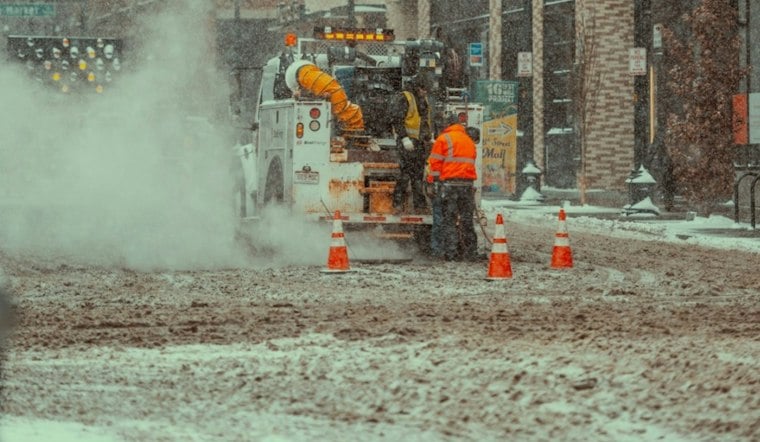
The Monkey Barrel, a longtime bar and restaurant in Denver's Sunnyside neighborhood, expects to lose between $3,000 and $5,000 in revenue when it is forced to shut down for an entire day so Denver Water can replace lead pipes running to the building. The closure is scheduled for Monday, and owner Jimmy Nigg says he was given little choice in the matter.
According to CBS Colorado, Denver Water sent The Monkey Barrel a letter about the project and warned that the business's water would be shut off completely if it did not comply with the contractor and approve the work. A Denver Water contractor is scheduled to replace lead pipes in the area starting first thing Monday morning, and the utility requires businesses needing line replacement to shut down for the day. Nigg was told the bar must close for the entire day, and he said employees could also lose work hours because of it.
A Business Stuck Covering the Side Costs
Beyond the lost sales, Nigg must hire a company to remove the bar's ice bin, which is connected to all of the soda guns, at a cost of $500. The ice bin is described as complicated equipment that cannot simply be moved aside for the day. Nigg will also be the one paying for any construction damage to The Monkey Barrel's walls or floor tiles, since property owners — not Denver Water — hold legal ownership of service lines running from the street main into the building, under the utility's own operating rules.
Those same rules specify that Denver Water is not liable for property damage or revenue losses tied to temporary shutoffs required during service line switchovers. Nigg told CBS Colorado that nothing changed after he spoke with the utility directly, and he said the issue is still not being handled properly. He said he believes The Monkey Barrel is in an unfair situation and that the bar is essentially at the mercy of Denver Water. “Businesses should have a say in when they open and close,” he said, according to the station’s report.
Denver Water Says It’s Trying to Work With the Business
CBS Colorado contacted Denver Water about the issue, and the utility said it works with businesses and customers to minimize construction inconvenience. The utility told the station it was working with The Monkey Barrel to identify accommodations and address its concerns, though Nigg says he has not seen that play out so far. The Monkey Barrel normally opens at 11 a.m. and serves food and drinks seven days a week, making any forced closure a direct hit to its regular operating schedule.
Denver Water has said the lead pipes it is targeting could contaminate drinking water, and the utility’s broader Lead Reduction Program, which began in 2020, is now more than 60 percent complete across both residential homes and businesses. The program operates under a Safe Drinking Water Act variance that was renewed in November 2022 to run through January 1, 2035, letting Denver Water replace lead lines and hand out free water filters rather than treat its water supply with orthophosphate, according to Denver Water. The effort traces back to the EPA’s October 2024 Lead and Copper Rule Improvements, which set a nationwide mandate requiring public water systems to identify and replace all lead service lines within 10 years.
A $700 Million Project With a Human Cost
The scale of the undertaking is significant: Denver Water’s $700 million Lead Reduction Program received $76 million in federal funding from the 2021 Bipartisan Infrastructure Law to help cover removal costs, as Smithsonian Magazine reported. Colorado health officials estimated in May 2024 that up to 111,900 lead service lines exist statewide, with Denver Water’s territory accounting for the largest share at an estimated 64,000 to 84,000 lines when the program launched, per Colorado Newsline. Between January 2020 and December 2023, the utility replaced more than 22,000 customer-owned lead lines with copper pipes at no direct charge to property owners, exceeding its annual requirement of at least 4,477 replacements a year.
For comparison, a standard lead service line replacement nationwide typically costs between $8,000 and $15,000 per connection, a cost Denver Water is absorbing for enrolled customers rather than billing property owners directly, per earlier Hoodline reporting on the national rollout of similar mandates. Private water line replacements done independently in Denver average $2,338 per project, ranging from $1,079 to $3,597, according to Angi — a cost The Monkey Barrel avoids on the pipe itself, even as it absorbs the ice bin removal and potential damage repairs on its own.
A Business Already Familiar With Upheaval
This isn’t the first time The Monkey Barrel has had to adapt to forces outside its control. The bar previously faced major operational displacement in 2015 when its original venue on Platte Street was sold to developers, forcing Nigg to relocate to its current site at 4401 Tejon Street in Sunnyside, according to Westword. The business was officially named a Denver “Legacy Business” by Denver Economic Development & Opportunity in April 2024; the designation has a 10-year-in-business eligibility criterion.
That recognition hasn’t shielded the bar from next week’s disruption. As Denver Water races to meet its federal deadline and protect residents from lead exposure, Nigg and other business owners caught in the project’s path are left footing the bill for the parts of the process the utility’s rules don’t cover.





