

























































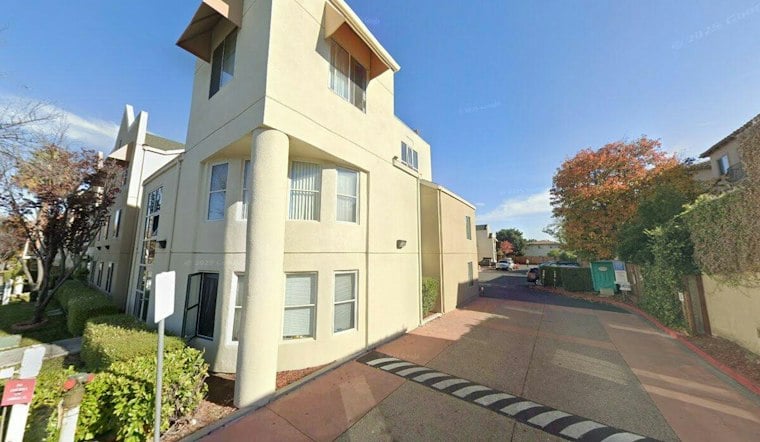
Residents of Carroll Inn in downtown Sunnyvale are feeling cool air inside their apartments for the first time since the building opened in 1994. A $2.7 million, multi-phase renovation swapped out gas appliances for electric heat pumps, added solar panels, and gave all 122 affordable homes air conditioning for the first time in the property's history.
MidPen Housing, which owns and operates the 174 Carroll St. property, completed the all-electric conversion in October 2025, according to MidPen Housing. The work replaced every gas appliance in the building with electric alternatives, installed heat pumps that handle heating, cooling and water heating, and added electric dryers. The nonprofit says the new systems run on clean electricity Carroll Inn generates through its own solar panels and receives from Silicon Valley Clean Energy.
As The Mercury News reports, resident Alicia Prioste said the difference is noticeable inside her studio apartment, describing how the air conditioning feels much better now that cool air circulates instead of hot air. Prioste first moved into Carroll Inn in March 2003, left in May 2009 because of a medical condition, and returned in December 2021. She now rents a studio at the property while studying music at San Jose State University, and told the outlet that affordable rent has helped her pursue her education.
Utilities Rolled Into Rent as Costs Stay Controlled
Because Carroll Inn's utilities are included in residents' rent rather than billed individually, the property's operating costs carry extra weight for the people who live there. Lyn Hikida, MidPen Housing's vice president of corporate communications and public relations, said the upgrades are designed to improve energy efficiency and help control the property's operating costs over time, according to the same report. Lower operating costs, Hikida added, help keep rents lower for residents.
Sunnyvale Mayor Larry Klein said the benefits of electrification should be felt by everyone, including residents, per the same account. MidPen Housing and Silicon Valley Clean Energy marked the completed renovations at a rededication ceremony on Sept. 18, where Matthew O. Franklin, MidPen Housing's president and CEO, said the project reflects the organization's long-term commitment to preserving healthy, sustainable communities.
Interior Overhaul Added Accessibility Upgrades Too
Beyond the electric systems, a second phase of interior improvements wrapped up in May 2026, bringing new flooring throughout the building and individual apartments, upgraded kitchen cabinets and countertops, a new community garden, and security cameras. Carroll Inn's reading room got new furniture, and its common-area kitchen was fitted with ADA-compliant cabinets, countertops and appliances, according to MidPen Housing.
The first-floor communal bathroom received an ADA-compliant sink, accessible parking spaces were restriped and fitted with new signage, and luxury vinyl tile planks were installed in hallways, the computer lab and amenity rooms to ease mobility around the building. The property, built in 1994 and located at 174 Carroll St. in downtown Sunnyvale, provides 122 single-room apartments, according to SV Voice.
A Patchwork of Public and Utility Funding
Paying for the retrofit required stitching together support from multiple government and utility sources. The City of Sunnyvale facilitated $490,000 in Community Development Block Grant funds from the U.S. Department of Housing and Urban Development, while a collective $1.8 million came from the Bay Area Regional Energy Network, the California Department of Community Services and Development, California Energy Smart Homes and TECH Clean California. Silicon Valley Clean Energy separately contributed $450,000 to close the remaining funding gap for the electric upgrades, per MidPen Housing's announcement.
The retrofit arrives as the Bay Area grapples with a cooling gap that leaves many low-income residents exposed to rising heat. An analysis of air conditioning, temperature, income and home-age data at the Census-tract level by the San Francisco Chronicle found that climate change is bringing more frequent heat waves to a region not built for them. In Concord's Four Corners neighborhood, the Chronicle found, about a third of households lack air conditioning, while about 88% of households in similarly hot places have air conditioning. In San Francisco, only about 34% of households have air conditioning, with rates as low as 20% in some neighborhoods.
Carroll Inn's transition mirrors a broader push to electrify older affordable housing stock across California. At Foothill Farms, a similar retrofit swapped gas water heaters for heat-pump units and replaced old air conditioners with heat pumps capable of both heating and cooling, according to Canary Media. That $2.6 million project, covered almost entirely by state and utility grants, cut natural-gas use by 93%, with modeling estimating residents would save more than $200 per unit annually. BRIDGE Housing is already working with Carbon Zero and Bright Power on similar retrofits at other California properties, the outlet reported.





