

























































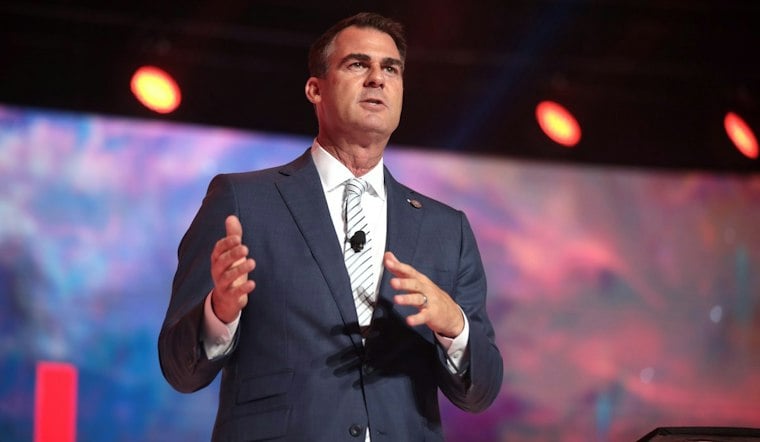
A divided federal appeals court has handed Oklahoma Governor Kevin Stitt a major win in the state's long-running fight with tribal nations over who controls environmental regulation on reservation land. On October 16, a 2-1 panel of the U.S. Court of Appeals for the Tenth Circuit ruled that the Environmental Protection Agency was within its rights to let Oklahoma administer dozens of federal environmental programs in Indian country without seeking tribal consent or consultation.
The ruling in Pawnee Nation of Oklahoma v. Zeldin came down 2-1, with Circuit Judges Timothy Tymkovich and Robert Bacharach forming the majority and Judge Richard Federico dissenting, according to Reuters. Oklahoma Governor Kevin Stitt called the decision a clear victory for Oklahoma and its rule of law, according to KOKH.
A 2005 Highway Bill Rider at the Center of the Fight
The state's legal footing traces back to an obscure provision: Section 10211(a) of the 2005 federal transportation law known as SAFETEA-LU, inserted by then-Senator James Inhofe. Per CaseMine, the uncodified rider mandates EPA approval of state environmental requests in Indian country without further demonstrations of state authority, and it sat largely dormant for 15 years before Oklahoma invoked it.
That changed weeks after the U.S. Supreme Court's 2020 McGirt v. Oklahoma decision recognized much of eastern Oklahoma as reservation land. Stitt first invoked the rider that July, seeking to ensure state agencies retained environmental oversight over those areas, the Reuters report notes.
26 Programs, Six Federal Statutes
The scope of what's at stake is significant. The Tenth Circuit's ruling affirms Oklahoma's administration over 26 federal environmental regulatory programs spanning six major statutes, including the Clean Air Act, Clean Water Act, Safe Drinking Water Act and Resource Conservation and Recovery Act, according to Environment+Energy Leader. Those programs give state agencies permitting and enforcement authority across areas designated as reservation land.
There's an important carve-out, though: environmental regulatory jurisdiction under Section 10211 specifically excludes tribal trust lands and individual Indian allotments, which remain under federal or tribal oversight rather than state authority, the outlet reports. The same provision, per the National Tribal Air Association, does not strip Oklahoma tribes of their right to seek “Treatment as a State” status under federal environmental statutes for land under their own direct jurisdiction.
Three Administrations, Three Different Answers
The case reached the Tenth Circuit only after years of federal flip-flopping. The EPA initially approved Oklahoma's request in October 2020 under the Trump administration, reconsidered the matter under the Biden administration, then re-approved the request in January 2025 — this time with a mandatory tribal consultation condition attached. In May 2025, under EPA Administrator Lee Zeldin, the agency rescinded that consultation requirement, prompting the Pawnee Nation to sue.
Earthjustice attorney Michael Freeman represented the Pawnee Nation in its challenge to the EPA's removal of the tribal consultation protection. Earthjustice maintained that unconditional state authority undermines local tribal environmental protections, per the same Reuters account.
The tribe also argued that Section 10211(a) had expired in 2009 alongside the broader highway spending authorizations tied to SAFETEA. The panel unanimously rejected that threshold argument, ruling that the environmental rider represents permanent, unexpired statutory law that remains active unless Congress repeals it, according to Justia's record of the opinion.
A Sharp Dissent Over Tribal Sovereignty
Judge Federico's dissent struck a notably different tone than the majority. He argued the court failed to apply established Indian law canons of construction, writing that courts should not interpret an uncodified transportation rider to cause a vast upheaval of tribal sovereignty without explicit congressional intent, according to Native News Online. His dissent emphasized the federal government's trust responsibility to sovereign tribes.
The Pawnee Nation is considering its next steps after the split decision.
Stitt's Response: 'Rule of Law' and 'One Set of Rules'
For Governor Stitt, the ruling confirms a position his administration has pushed since McGirt. He warned that extending McGirt beyond criminal law would tear Oklahoma apart, and said McGirt does not erase Oklahoma's civil, tax or environmental authority, according to KOKH. Stitt added that Oklahoma will continue enforcing one set of rules fairly for everyone across the state's four million residents.
Stitt also said Oklahomans cherish their natural resources and that the state will continue protecting them, per the same report. He said ongoing challenges to Oklahoma's jurisdiction will not succeed.
The ruling lands amid a broader, years-long jurisdictional clash playing out across eastern Oklahoma since McGirt redrew the legal map.




