

























































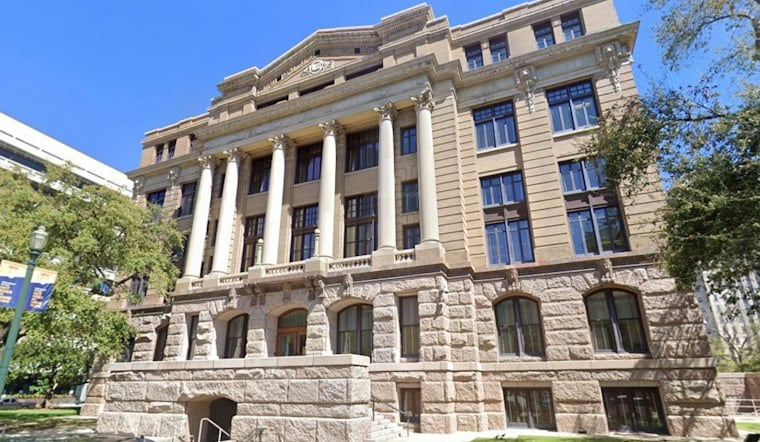
The Texas Business Court had fielded 367 cases through March 31, 2026, roughly one filing for every business day, and the fledgling tribunal has already run its first jury trials to verdict. But with its five funded divisions clustered around Houston, Dallas, Fort Worth, San Antonio and Austin, big stretches of the state, including the oil-rich Permian Basin, still have no access to it at all.
Five Cities Covered, Big Gaps Remain
According to The Texas Lawbook, the court's five funded divisions cover the state's most populous cities, while West, East and South Texas remain without access to the specialized tribunal. The same outlet notes a discrepancy over how much of the court actually exists on paper versus in practice: one Texas Lawbook report states that the Legislature has funded only five of the 11 divisions it created, while a separate legal analysis from gtlaw.com asserts that all 11 divisions have now been created and funded. The Texas Judicial Branch's own court website describes the system as composed of eleven geographical divisions, five of which are currently operational, with two judges assigned to each.
The Texas Lawbook has described the tribunal as capable of resolving complex disputes quickly.
Energy Sector Pushes for a Seat at the Table
Energy has been an early and enthusiastic user of the new court. Roughly a quarter of the Texas Business Court's first-year cases involved oil and gas companies, according to Bloomberg Law, even though the Houston and Dallas divisions are handling most of the overall filings. Yet for companies operating outside those funded divisions, complex oil and gas disputes remain stuck in local district court dockets across large parts of Texas.
For litigants working in the Permian Basin, that gap means the specialized court is not available locally.
Judges and Lawyers Weigh In Before 2027
As lawmakers look toward the 2027 legislative session, expansion of the court remains under discussion.
Those growing pains extend beyond geography. The court faces a shortage of permanent courtrooms and has been using borrowed state district court spaces, law school rooms and even hotel ballrooms to hold proceedings. The court held its first jury trial in February, with Judge Sofia Adrogué presiding over the proceeding, which ended up occupying five different courtrooms after water damage forced parties out of the Family Law Center in Houston.
The Texas Business Court has drawn comparisons to Delaware's Court of Chancery. Unlike Delaware, where judges decide cases without juries, Texas business courts permit jury trials and cover a broader range of large commercial disputes beyond governance matters, according to Bloomberg Law's reporting. Texas has leaned into that distinction as both Tesla and SpaceX relocated from Delaware to Texas, with MercadoLibre also proposing a move of its U.S. legal domicile to the state, as the state positions its business courts as a rival to Delaware's.





