

























































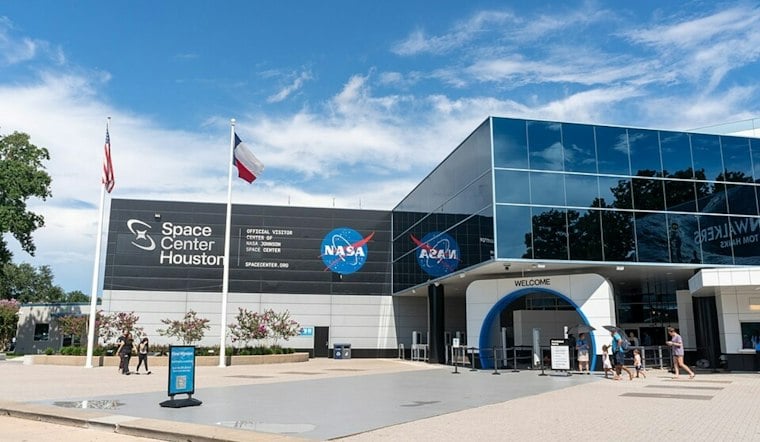
Texas is putting real money behind its pitch to host the nation's newest federal institution, with the Texas Space Commission weighing a pledge of up to $100 million to help land the proposed U.S. Space Academy in Houston. The push comes as state leaders race a fast-approaching federal deadline, and as Texas finds itself up against Florida, Ohio and Louisiana for a prize that could reshape the aerospace workforce for a generation.
A Bipartisan Team Chasing a Federal Deadline
The competition traces back to August 28, when President Donald Trump signed Executive Order 14423, establishing a Presidential Commission on the United States Space Academy, according to The American Presidency Project. The order gives the commission 120 days — until December 26 — to recommend how the academy should be governed, structured, and sited. NASA followed on September 10 with a Request for Information giving states until October 26 to submit a single proposal routed through the governor’s designee, as detailed by Payload Space.
In Texas, Gov. Greg Abbott called on State Rep. Greg Bonnen to lead the team preparing the state's bid, according to Spectrum News. Bonnen, who authored the 2023 legislation creating the Texas Space Commission, is working alongside the commission on the proposal, the outlet reports. His seven-member team also includes Dr. Nancy Currie-Gregg, director of the Texas A&M Space Institute and a former NASA astronaut, and Dr. Heather Wilson, president of UT El Paso and former Secretary of the Air Force, per Strategic Partnerships Inc.
Houston's Case: Mission Control, Bases, and a $200 Million Lab
Texas's pitch leans heavily on what's already built. Houston Mission Control has operated every American human spaceflight for more than 60 years, the state's bid notes, and Texas is home to 15 military bases along with universities conducting space research and what backers describe as the nation's largest aerospace engineering workforce, according to the same Spectrum News report. Sen. Ted Cruz and Rep. Brian Babin have advocated for Texas to host the academy, arguing the state has the talent, institutions, infrastructure and experience to run what they call the premier space academy.
That infrastructure argument gets reinforced by what's rising next to NASA's Johnson Space Center. Texas A&M University broke ground in 2024 on a $200 million Space Institute on 32 acres at the center's Exploration Park, with lunar and Martian landscape simulation facilities slated for completion in late 2026, per Strategic Partnerships Inc.'s reporting. The institute sits on land NASA leased to the university outside the center's restricted security perimeter, the outlet notes — a project Hoodline has tracked since construction topped out in April.
The financial backbone behind all of it is House Bill 3447, which the Texas Legislature passed in May 2023 with a $350 million appropriation — $150 million for the Space Exploration and Aeronautics Research Fund and $200 million for facility construction near Johnson Space Center, according to the Houston Chronicle. That same bill created the Texas Aerospace Research and Space Economy Consortium to align research across the state's universities, the Chronicle reports.
Local Leaders Make the Workforce Case
Harris County Attorney Christian Menefee has framed the bid in generational terms, saying bipartisan work on the proposal could support the next generation of Texas leadership and that the state needs engineers, scientists and astronauts to power future space travel, according to Spectrum News. Menefee has called Texas the best place for the academy outright, the outlet reports.
NASA Administrator Jared Isaacman, who chairs the Presidential Commission, has said states are offering packages and incentives to help cover the academy's costs, and that Texas is one of many states lobbying for the honor, per the same Spectrum News account. Isaacman has said NASA will make a location recommendation, but that Trump will decide the final site. If built as envisioned, the academy would be modeled after West Point and the U.S. Naval Academy, training future leaders of the U.S. Space Force, and could eventually grow to the roughly 1,200-student class size of West Point or the U.S. Air Force Academy.
A Crowded Field of Rivals
Texas is far from alone in chasing the designation. Florida State Senator Ashley Moody filed the STARS Act in September to legislatively designate Florida as the academy's home, with the state agency Space Florida coordinating a bid centered on the Space Coast's proximity to Kennedy Space Center and Cape Canaveral Space Force Station, according to Payload Space.
Ohio Governor Mike DeWine has stood up his own steering group, led by Department of Development Director Lydia Mihalik, pointing to Wright-Patterson Air Force Base and NASA's Glenn Research Center, per Govly. Louisiana, meanwhile, is preparing a bid.
NASA's framework requires any permanent campus to sit on at least 300 acres, with groundbreaking targeted for 2027, an interim cohort of 300 students by 2028, and full capacity of 1,200 undergraduates by 2031 — with room to scale as high as 4,000 students long-term, according to Payload Space. The academy is envisioned as a civilian, NASA-led institution.
The commission tasked with sorting through the competing bids includes Defense Secretary Pete Hegseth, Air Force Secretary Troy Meink, Office of Science and Technology Policy Director Michael Kratsios, and National Economic Council Director Kevin Hassett, according to GovExec. State proposals submitted by the October 26 deadline will feed into the commission's December recommendations, though congressional authorization and budget appropriations will ultimately determine whether groundbreaking actually happens on schedule in 2027.



