

























































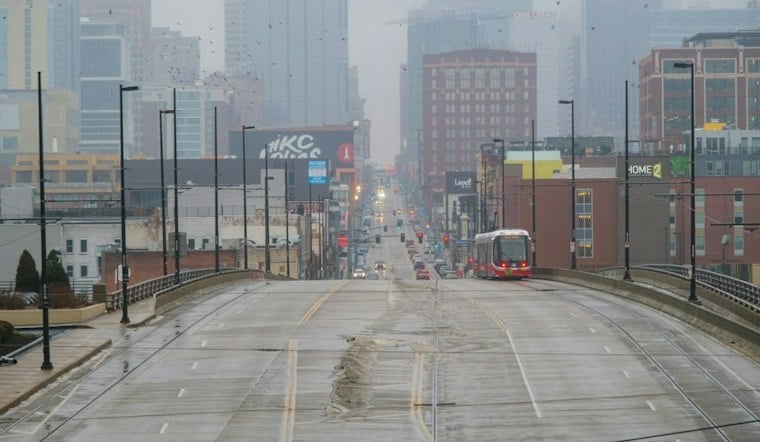
Kansas City skies were thick with migrating birds this week, part of a surge of fall migration that experts say peaks across the region in late September and early October. Thousands of birds were expected to fly over the metro area overnight Wednesday, heading south on long-distance journeys as they have for generations, and scientists who track the phenomenon say the real danger to those birds isn’t the distance — it’s the city lights waiting below.
A Massive, Mostly Invisible Migration
As reported by FOX4KC, migrating birds were expected to be on the move throughout Wednesday night, passing through the eastern plains including the Kansas City area as they headed south. The outlet reported that bird migration was expected to be high in the eastern plains Wednesday while lower on the West and East coasts, with the Kansas City area projected to see less migration activity by Thursday night and the Southeast expected to pick up more activity Friday. Most of this movement happens overnight and out of sight: more than 80% of migratory bird species in North America migrate at night, according to BirdCast, a project of the Cornell Lab of Ornithology, Colorado State University and the University of Massachusetts-Amherst.
BirdCast’s migration tools track the scale of these flights using weather radar that detects the numbers and flight directions of birds aloft, according to BirdCast. The project’s regional dashboard notes that birds usually begin migrating 30 to 45 minutes after sunset, with the greatest numbers in flight two to three hours later, and that most birds pass through the contiguous United States during fall migration from early September through October, per the BirdCast regional dashboard. Birds generally fly between 100 and 10,000 feet above the ground, with altitude shifting based on geography, weather, time of night and season.
Why Kansas Sees So Much Traffic
The scale of fall migration through this part of the country is enormous even in an ordinary year. Each fall, an estimated 700 million to 800 million birds head south through Kansas, with traffic typically peaking in late September and early October, according to KCUR. In one documented stretch of that migration window, scientists estimated more than 450 million birds would take wing countrywide in a single night, with particularly heavy traffic in the middle of the country a few hours after sunset — including roughly 25 million birds crossing Kansas in one night versus less than half a million over Missouri, the station reported.
Bird migration patterns vary seasonally and geographically, with local and regional weather shaping departures from the typical pattern, BirdCast’s migration dashboard notes. That variability is part of why conservationists watch these nights so closely, since a single evening of favorable winds can send an outsized share of the season’s travelers streaming over one metro area.
The Deadly Pull of City Lights
The danger isn’t the flight itself — it’s what waits at the end of it. Along migration routes lies a deadly combination of artificial light and glass, BirdCast warns, since light can attract and disorient birds at night and make them vulnerable to flying into buildings. A study using weather radar data found that artificial light is a top indicator of where migrating birds will land, according to research highlighted by Colorado State University’s Warner College of Natural Resources.
That risk has made Kansas City a recurring name in national rankings of dangerous cities for migrating birds. A 2019 study found Kansas City among seven Midwestern cities — alongside San Antonio, Houston, Dallas, St. Louis, Chicago and Minneapolis — included among the 10 riskiest U.S. cities for migrating birds, as reported by the Lawrence Times. Separately, Cornell University has ranked Kansas City as the seventh-deadliest city for birds during spring migration and eighth-deadliest during fall migration, per KCTV5’s reporting.
Local Volunteers Are Counting the Toll
On the ground, local volunteers have spent years documenting just how real that danger is. Bird Safe KC volunteers have tallied nearly 1,900 bird carcasses in Kansas City and other monitored areas over six years, and most of the dead birds found by volunteers since 2019 have been migrating species, according to KCUR. A 2024 Bird Safe KC report found that T-Mobile Center alone accounted for 222 of more than 2,000 recorded avian deaths that year, KCTV5 reported.
The scale of the broader problem is harder to pin down with a single number. KCUR has reported that scientists estimate more than 1 billion birds die each year in the U.S. after striking human-made structures, while the Lights Out Heartland initiative puts the annual U.S. death toll from building collisions at an estimated 600 million birds. Separately, KCTV5 has reported that bird strikes are considered one of the largest contributors to a documented 29% decline in migratory birds since 1970, while KCUR has cited an estimated 25% decline in North America’s overall bird population since 1970 — roughly 3 billion birds.
What Simple Fixes Can Do
The good news, researchers say, is that the fix is often as simple as flipping a switch. BirdCast recommends turning off or dimming non-essential lighting overnight during migration windows, and in the Kansas City area that has translated into guidance to turn off non-essential lighting from 11 p.m. until 6 a.m. during active migration nights, according to FOX4KC’s reporting.
Evidence from other cities suggests the payoff can be dramatic. A Field Museum study found that turning off lights in a single downtown Chicago high-rise reduced migratory bird deaths by 83%, KCTV5 reported, while bird deaths at Chicago’s McCormick Place were ten times higher when all of the building’s windows were lit compared with when only half were lit, per the Lawrence Times. After a dotted film was installed on McCormick Place’s windows, recorded collisions there dropped from hundreds in a typical fall to just 18 the following fall, the Lawrence Times reported, with a Field Museum tally also finding 33 species among birds killed in collisions at the venue on an October weekend, according to Colorado State University’s research summary.
For now, the message from BirdCast and local tracking groups is the same one repeated every fall: the birds are already overhead, moving through the eastern plains in enormous numbers on their way south, and what happens to them once they reach a lit-up skyline is largely up to the people living under it.



