

























































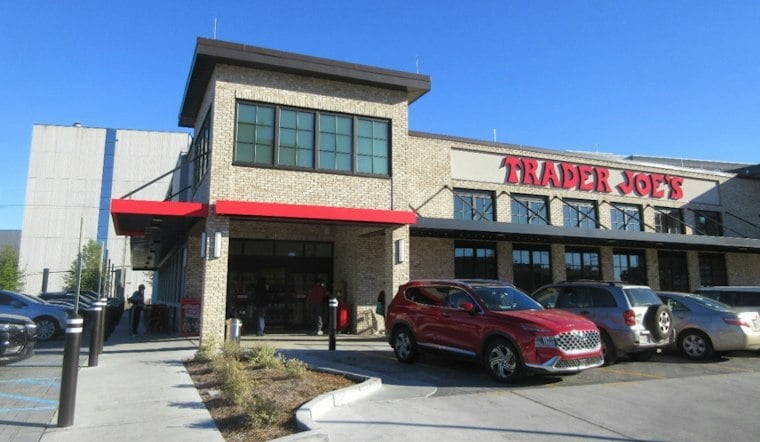
A Somerville woman and a North Carolina woman are suing Trader Joe's after both say they landed in the hospital with E. coli infections following lunch orders of the same tarragon chicken salad wrap. Meaghan Egan Bright bought her wrap at a Trader Joe's in Boston's Allston neighborhood on Aug. 24, ate it that day, and within days was fighting bloody diarrhea and a dangerous bacterial infection. Gayle Gottlieb, who lives in Pembroke, North Carolina, bought three of the same wraps in Myrtle Beach, South Carolina, and ended up hospitalized twice after her symptoms would not let up.
Two Women, Two States, One Alleged Source
Bright and Gottlieb filed their federal lawsuit against Trader Joe's Company on Thursday in the U.S. District Court for the Central District of California, according to patch.com. The case, filed as Gottlieb and Bright v. Trader Joe's Company, No. 2:26-cv-12017, accuses the grocery chain of selling contaminated food and failing to ensure the wraps were safe, per Daily Voice. The complaint pleads strict product liability, negligence, negligence per se and breach of implied warranty under California law, according to the Marler Blog.
Bright began feeling sick three days after eating her wrap, developed bloody diarrhea by Aug. 30, and was sent home once by Cambridge Health Alliance before an ambulance brought her to Massachusetts General Hospital, where she stayed from Aug. 31 through Sept. 6, the same Marler Blog report states. Testing confirmed she had a Shiga toxin-producing E. coli infection, and physicians warned her she was at risk of developing hemolytic uremic syndrome, a serious complication that can cause kidney failure, according to patch.com. Massachusetts and Somerville public health departments told her the illness was part of a broader outbreak, and she has described the pain as the worst she had ever experienced.
A Week In The Hospital, Kept Short Visits With Family
Ilana Korchia, an attorney at the food safety law firm Marler Clark, said Bright spent a week at Massachusetts General Hospital in severe pain and kept her family visits short because she was afraid of infecting them, per the same Daily Voice account. Korchia also said Trader Joe's already knows who made the wrap, what went into it, which stores received it and when the products left shelves — and that she expects discovery in the lawsuit will eventually make that information public.
Gottlieb's ordeal played out almost in parallel roughly 900 miles south. She bought three tarragon chicken salad wraps at a Trader Joe's in Myrtle Beach on Aug. 23 and ate the first one for lunch four days later. Severe stomach cramps set in on Aug. 29, and by Aug. 30 she had bloody diarrhea and was in the emergency department at UNC Southeastern Hospital in Lumberton, North Carolina, according to Marler Blog's reporting. She was discharged the next day, only to return with severe dehydration before being admitted to Scotland Memorial Hospital in Laurinburg on Sept. 2.
State Officials Confirmed The Outbreak Link
Gottlieb tested positive for E. coli, and the North Carolina Department of Health and Human Services classified her as a confirmed case in a multistate outbreak, according to The State. State health records identified a Trader Joe's wrap as the suspected source of her illness, according to the lawsuit. Trader Joe's did not immediately provide a response to the suit, per MyNewsLA.
The lawsuit lands as federal regulators quietly track a growing outbreak that has not yet been tied to any named brand. The FDA first reported the outbreak on Sept. 23, and the patient count has climbed since, according to Food Safety News. The FDA and USDA are investigating ready-to-eat multi-ingredient chicken wraps as the suspected cause, but neither agency has reported what brand is involved or what region the wraps were sold in, the outlet notes.
Outbreak Count Keeps Climbing, Brand Still Unnamed
The Food and Drug Administration has identified at least 50 E. coli cases linked to multi-ingredient chicken wraps, up from 35 just a week earlier by Food Safety News's count — though Marler Blog separately reported the prior week's tally as 38, up from 25 when the FDA opened its file on Sept. 23. The USDA's Food Safety and Inspection Service said the wrap identified in the investigation was past its shelf life and unavailable for purchase, and the agency is working with the FDA to identify the contaminated ingredient and whether it turned up in other products. FDA investigators have initiated traceback, onsite inspection and sample testing, Food Safety News reports, but no recall or public health alert has been issued, and officials have not publicly identified the manufacturer, brand, retailer or states where people became sick.
William Marler, managing partner of Marler Clark, has said the FDA and USDA know the manufacturer, brand and stores involved but have not disclosed them. His firm has drafted two petitions asking the FDA to release more information about foodborne illness outbreaks. The CDC estimates that for every confirmed patient in an E. coli outbreak, 26 cases go undetected, according to Food Safety News, meaning the real toll from this outbreak could run far higher than the official count shows.
Trader Joe's has been linked to foodborne illness outbreaks before. In 2013, a STEC O157:H7 outbreak tied to ready-to-eat salads and wraps sold at the chain sickened 33 people across four states, with at least two developing hemolytic uremic syndrome, according to Marler Clark. Officials at the time identified two salads made by Glass Onion Catering as the likely source, and the company recalled numerous ready-to-eat salads and sandwich wraps that November over possible contamination. That earlier incident led to a recall of roughly 181,620 pounds of food. Separately, Trader Joe's tarragon chicken salad wraps were recalled in October 2024 over possible listeria contamination, a recall that also touched products sold at 7-Eleven, Amazon Fresh, Boston Market, Giant Eagle, Kroger, Target's Good & Gather line, Walmart's Great Value brand and Wegmans.




