

























































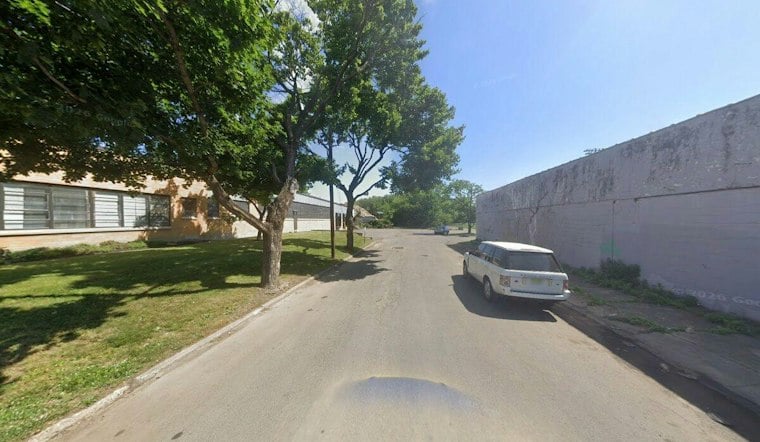
A building that once shook with the sound of the Ramones, Nirvana and Green Day is set to disappear from Trenton this week. Demolition of City Gardens, the punk and alternative music venue at 1701 Calhoun Street, is scheduled to begin Tuesday and is expected to take about two weeks to complete, according to the demolition contractor hired for the job.
Eric Carroll of Carroll Demolition & Recycling confirmed the timeline to the Trentonian, telling the paper, “Demolition starts Tuesday, and it should take about two weeks to complete this job.” Randy “Now” Ellis, the former promoter and DJ who booked the club for years, said he received confirmation directly from the demolition company that the permit was ready and that City Gardens would be taken down Tuesday, according to Shore News Network. Ellis said he was still trying to pinpoint the exact start time and determine whether any preparation work would occur before crews began tearing into the structure.
A Building Long Past Saving
City Gardens opened at 1701 Calhoun St. in 1979 and officially closed in 2001, per the Trentonian's report. The vacant building has since fallen into severe disrepair, with cracked brick walls and a large hole in one ceiling that lets in light and rain, along with signs of vandalism and squatting inside, the outlet reported.
A 2022 engineering report obtained by NJ Advance Media and dated Aug. 8, 2022, classified the building as unsafe and found it in imminent danger of further collapse, according to NJ.com. The site, roughly 50 feet by 200 feet, had sat empty for two decades by that point, and the news outlet reported Randy Ellis worked at the club from 1979 to 1996 as its DJ and booker. Carroll Demolition LLC was hired to carry out the teardown, according to Punknews.org, which also reported that the club ran from 1979 until 2001, though rock shows stopped in 1994 while dance nights continued afterward. Accounts differ on the venue's exact operating span — one report puts it from 1970 to 1991, while another says it opened in 1979 and closed in the early 1990s — and those conflicting timelines have not been reconciled.
From Debuts to Legendary Nights
Before it was a crumbling shell, City Gardens built a national reputation among punk, hardcore, alternative and underground acts, helping put Trenton on the map for underground music during the 1980s and early 1990s. Henry Rollins, Fugazi, Dead Kennedys, R.E.M. and Soundgarden all played the club, alongside the Ramones, Nirvana and Green Day, per NJ.com's account of its history. A Flock of Seagulls, Thompson Twins and Sinéad O'Connor all made their American debuts on its stage, while Danzig played its first-ever show there, Punknews.org reported.
The Ramones alone performed at City Gardens 25 times, according to Trenton Makes Music, a project of The College of New Jersey. At its peak from the mid-1980s through the early 1990s, the club's 90 Cent Dance Night regularly drew 600 to 700 people and sometimes topped 1,000 at the door, the same source reported. Accounts of just how many bands passed through its doors vary widely — one puts the figure at more than 2,000, another at an estimated 4,000 — and those numbers have not been reconciled. Safety codes allotted space for 600 to 700 people, though more than 1,000 dancers often gained entry.
One Last Visit Before the Wrecking Ball
Shore News Network described a recent visit to the deteriorating building, reporting that a figure known as Todd the Mod returned to the former nightclub at 1701 Calhoun Street before its demolition. That outlet characterized the venue as essentially New Jersey's answer to CBGB's, and noted that Ellis built the club's calendar around punk, new wave, hardcore, ska and alternative acts long before many of those bands could fill arenas or major theaters.
Separately, Trenton's municipal building code requires that an issued permit be in place before any structure can be demolished or moved, according to the City of Trenton building code. State guidance from the New Jersey Department of Community Affairs also specifies that a demolition permit cannot be issued until an owner confirms that any friable asbestos has been or will be properly abated. The New Jersey Department of Environmental Protection separately requires a 10-day notification for asbestos abatement to be submitted to the state health department before such work begins.
When the demolition crews finish their roughly two-week job, the physical building that hosted thousands of nights of punk, ska and alternative music will be gone. What remains, as Ellis and others who passed through its doors have long argued, is the music history itself — a legacy built on a rough industrial room, intense crowds, and a booker willing to put unconventional acts on stage before the rest of the world caught on.





