

























































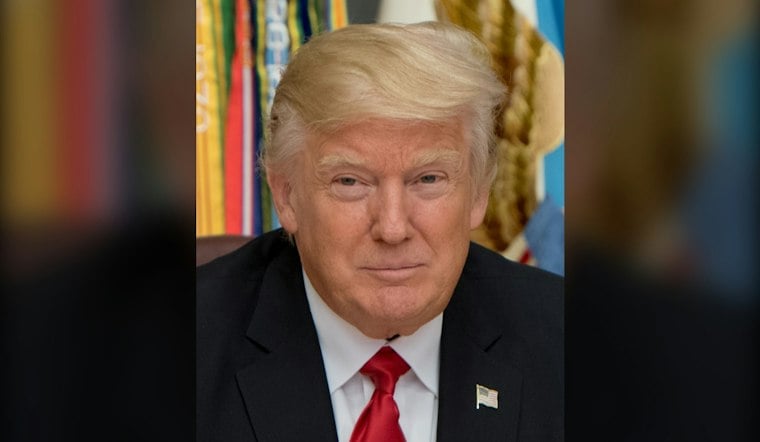
Konstantin Sokolov, a Russian-born businessman and major Trump donor, was named in January to lead a $201 million U.S. government-backed fund with a mandate spanning the South Caucasus and Central Asia, according to incorporation documents reviewed by Reuters. The appointment puts a manager of public investment funds in charge of an initiative that could operate in countries where he has significant business interests: he controls Armenia's largest mobile phone company and recently bought the country's second-largest copper mine.
The Trans-Caspian Enterprise Fund is a nonprofit venture corporation capitalized by the U.S. government. It can make grants, loans, and investments across Armenia, Azerbaijan, Georgia, Kazakhstan, Kyrgyzstan, Tajikistan, Turkmenistan, and Uzbekistan, with critical minerals, energy, and rail infrastructure among its stated priorities, according to the fund's website as reported by Reuters. The enterprise fund model dates to the SEED Act of 1989 and the FREEDOM Support Act of 1992, which authorized government-capitalized nonprofits to encourage private-sector growth in post-communist economies, according to the Center for Strategic and International Studies. The broader U.S. effort aims to develop trade routes that reduce reliance on Russian and Chinese infrastructure, Reuters reports.
Sokolov and business partner Zhe Zhang, a former Chinese commerce ministry diplomat, acquired control of Viva Armenia from Russia's MTS in January 2024, the Reuters investigation found. The company serves more than 2 million subscribers and holds over 60 percent of Armenia's mobile market. Since 2005, it has paid more than 258 billion drams — roughly $660 million — in taxes to the Armenian state, according to Finport.am. Cyprus-registered Fedilco Group Limited, ultimately owned by Sokolov and Zhang, gave the Armenian government a 20 percent stake in Viva Armenia in February 2024, retaining an 80 percent controlling share, according to the Government of Armenia.
A Mine Once Shut by Sanctions
Sokolov's holding company, Dynamic Frontier Holdings, bought Armenia's Teghout copper-molybdenum mine from VTB, the sanctioned Russian state-owned bank that had controlled it, after receiving a special U.S. government permit, Reuters reported. The company said it obtained authorization from the U.S. Treasury's Office of Foreign Assets Control (OFAC) in June. Interfax put the sale price at 4 billion rubles — about $46.5 million — and reported that Armenia's Competition Protection Commission approved the transaction on July 7.
Teghout, Armenia's second-largest copper and molybdenum facility, had been idle since March 2022, when Western sanctions on VTB disrupted access to European export markets and the SWIFT payment system, according to RFE/RL's Armenian Service. OFAC licenses permit transactions that would otherwise be barred by U.S. sanctions; Reuters reported that the review process can take months or years. A Teghout representative said the licenses and approvals followed OFAC's standard independent regulatory process.
Sokolov's telecom expansion has continued beyond mobile service. In July 2025, Armenia's Public Services Regulatory Commission authorized Viva Armenia to acquire Rostelecom's Armenian subsidiary GNC-Alfa, which operates under the OVIO brand, for approximately $40 million, according to Interfax.
Political Donations and White House Ties
Federal Election Commission data cited by Reuters show Sokolov donated about $13 million to Republican political groups. He was also among 37 corporate and individual donors to President Trump's White House ballroom project in 2025. Campaign finance records reviewed by The Armenian Report indicate that Sokolov directed roughly $11 million of his donations during Trump's second term to the MAGA Inc. super PAC. The ballroom donor campaign raised more than $350 million from 36 corporate and individual donors in total, the publication reported.
The appointment lands amid a broader diplomatic push in the region. In January, Secretary of State Marco Rubio and Armenian Foreign Minister Ararat Mirzoyan signed an implementation framework for the Trump Route for International Peace and Prosperity, known as TRIPP, establishing a joint development company split 74 percent U.S. and 26 percent Armenian ownership to manage regional transit infrastructure, per the U.S. Department of State. TRIPP emerged from an August 2025 peace summit between Armenia and Azerbaijan hosted at the White House, and this past August, Armenian Prime Minister Nikol Pashinyan and Azerbaijani President Ilham Aliyev jointly nominated Trump for the Nobel Peace Prize, citing that mediation and the trade corridor's creation.
How TRIPP Differs From the Enterprise Fund
The January TRIPP Implementation Framework describes a proposed joint development company, with 74 percent U.S. and 26 percent Armenian ownership, to manage regional transit infrastructure. The State Department said the framework does not impose, or intend to impose, legal commitments or obligations on either government, according to the framework. The company is a separate proposed vehicle for transit infrastructure; the Trans-Caspian Enterprise Fund is a nonprofit venture corporation that can make grants, loans, and investments across eight countries.
Russian Ties and Ethics Questions
A 2015 brochure for the now-defunct Gotthard Investment Fund, a Liechtenstein-registered operation focused on Russia, listed Sokolov as a fund manager and described his professional and personal connections in Moscow, St. Petersburg and federal government as longstanding, Reuters reported. A former project manager who spoke anonymously said they recognized the brochure as authentic. Sokolov's lawyers disputed its authenticity and questioned whether the fund had used its logo. A representative for Sokolov said he had no relationships with Russian government officials or the Russian government and does not hold Russian citizenship — a claim Reuters said it could not independently confirm. Travel records show Sokolov used a Russian passport for international travel as late as 2016.
Sokolov's biography describes a modest upbringing in St. Petersburg marked by disdain for the Soviet government; he has said the Soviet government sent his grandmother to a gulag, and he immigrated to the United States at age 21, several years after the Soviet Union's collapse. The State Department did not provide details on Sokolov's background check or whether he holds a security clearance. Kremlin spokesman Dmitry Peskov said he did not know who was being discussed when asked about Sokolov.
Two ethics experts told Reuters that the reported Russian government connections merit scrutiny to ensure U.S. interests guide the fund. Richard Painter said he would seek a thorough security clearance review if he were in the U.S. government. Separately, six ethics experts said Sokolov's business interests present a conflict because his role gives him control over government money that could benefit his companies; Ann Skeet said Congress should be asking questions. Reuters found no indication of wrongdoing by Sokolov. U.S. legislation governing enterprise funds does not bar directors from holding investments in the regions where their funds operate.
How Other Enterprise Funds Compare
Reuters found no indication that the heads of the three other active U.S. enterprise funds — focused on Egypt, Tunisia, and Ukraine-Moldova — hold major investments in the countries where their funds invest. Bo Cutter, chairman of the Tunisia-focused fund, said he has no business interests of any kind in Tunisia. James Harmon chairs the Egyptian fund, and Dennis Johnson chairs the Ukraine-Moldova fund.
A State Department spokesperson said the Trans-Caspian Enterprise Fund would meet annual reporting requirements, undergo independent audits, and follow applicable grant provisions, including conflict-of-interest requirements. A representative for IJS Investments said the fund was prohibited from investing in Sokolov's businesses and that Sokolov complied with due diligence and security requirements.





