

























































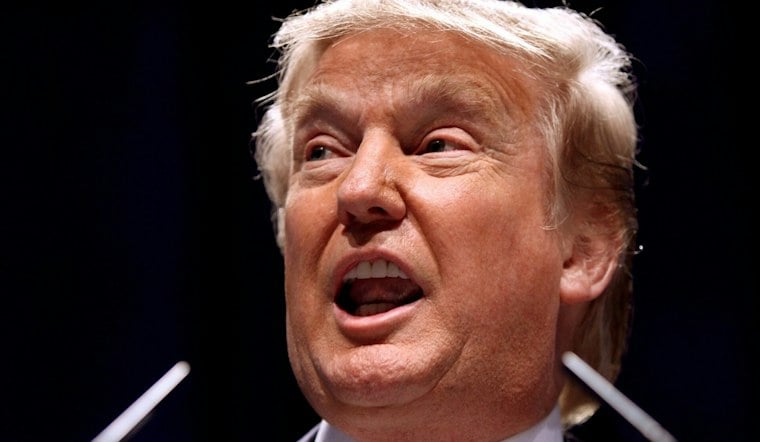
President Trump's holdings in pharmaceutical company stocks rose from a maximum reported value of $1.7 million in 2024 to as much as $56.2 million by the end of 2025, according to congressional Democrats, who say the jump followed a law Trump signed that expanded exemptions shielding blockbuster drugs from Medicare price negotiations. Up to $39.1 million of that portfolio sat in companies benefiting from those exemptions, the Democrats reported, raising new questions about whether the president's personal finances are intersecting with his administration's health policy decisions.
The figures come from a report released Friday by the minority arm of the Joint Economic Committee, as reported by NBC4 Washington. The committee, led by Senator Maggie Hassan, found that Trump's portfolio bought up to $2.55 million in pharmaceutical shares tied to the exemptions across three separate dates before the legislation was signed in July 2025, including purchases of up to $950,000 on July 1, 2025, the day the Senate passed the bill. Another purchase of up to $1 million in AbbVie stock followed in August 2025, after the measure had already become law.
Trump signed the One Big Beautiful Bill Act at the White House on July 4, 2025. The law expanded an existing exemption for drugs developed to treat rare diseases, delaying or excluding eligibility for Medicare price negotiations on certain costly medications. Supporters of the carve-out have argued it encourages continued development of rare-disease treatments, while critics counter that it lets makers of blockbuster drugs dodge negotiations that could otherwise lower Medicare costs.
How the Exemption Expanded Under the 2025 Law
Under the 2022 Inflation Reduction Act, Medicare's negotiation exemption applied strictly to drugs approved for a single rare disease. The 2025 law broadened that exclusion to drugs carrying multiple rare-disease designations and pushed back the timeline for negotiation eligibility until after a drug receives non-orphan approval, according to Jones Day. Drug developers had lobbied for the wider exemption, arguing the original 2022 rules discouraged research into additional rare-disease applications for existing therapies.
A revised Congressional Budget Office estimate from October 2025 found that expanding the orphan drug exemptions will cost Medicare $8.8 billion over 10 years, an increase of $3.7 billion from earlier projections once blockbuster cancer therapies such as Keytruda, Opdivo, and Darzalex were factored in, according to Fierce Healthcare. The CBO noted that total Medicare costs could climb to $10.9 billion if federal officials negotiate all drug formulations together rather than treating certain versions separately.
Specific Drugs, Specific Dollar Figures for Seniors
Specific Drugs, Specific Dollar Figures for Seniors A separate estimate cited in the report found Medicare beneficiaries taking Keytruda or Opdivo could pay roughly $5,000 more annually without negotiated prices. Keytruda is manufactured by Merck, and Opdivo by Bristol Myers Squibb — both companies in which Trump's portfolio holds stock.
Hassan called the findings outrageous, saying they were typical of a president who makes Americans pay for his gains.
White House Denies Any Conflict of Interest
Trump's portfolio continued buying and selling pharmaceutical stocks throughout the first eight months of 2026, adding as much as $3.5 million in pharmaceutical-sector stock wealth during that span, per the committee findings relayed by NBC4 Washington. The White House has denied any ethics issues and accused Democrats of fabricating conflicts of interest. Spokesperson Davis Ingle said Trump's stock and bond portfolio is independently managed by third-party financial institutions, and that neither Trump nor his family can direct, influence, or provide input on the investments or their timing.
That defense echoes a pattern seen elsewhere in the administration. Federal financial disclosures published in May 2026 showed Trump's portfolio had acquired shares in Eli Lilly while his administration pursued a Medicare access initiative for obesity medications, according to PBS News. Separately, the Trump Organization has said that independent financial institutions manage the portfolio's investments.
Thin Ethics Guardrails Around the Presidency
Every U.S. president since the 1970s, prior to Trump, placed personal financial assets into a qualified blind trust managed by an independent trustee or divested from individual stocks entirely to avoid conflicts of interest, according to the Brennan Center for Justice. Formal federal conflict-of-interest statutes exclude the president and vice president, meaning ethical oversight of the office has long relied on voluntary compliance rather than binding trading bans.
What statutory teeth do exist are modest. PBS News reports that senior officials' Form 278 filings are subject to a 45-day disclosure requirement.
Beyond the stock-holdings report, the administration has faced other health-policy scrutiny this year. In June 2026, Hassan sent an inquiry to Health and Human Services Secretary Robert F. Kennedy Jr. demanding answers about reports that the administration granted free access to an experimental weight-loss drug under the FDA's Expanded Access program to a VIP fitting Trump's profile, according to the United States Senate. The inquiry cited concerns over potential improper political influence within federal health programs.
Broader Pattern of Carve-Outs and Deals
Separately, the Department of Health and Human Services finalized a Medicare hospital drug pricing rule this month that exempted manufacturers signing separate agreements with the White House, narrowing the rule's reach to as few as four drugmakers and cutting projected Medicare Part B savings from $11.9 billion to just $440 million, Reuters reported. The sharp drop in projected savings drew criticism from healthcare advocacy groups, who argued the administrative carve-outs undermine broader drug pricing reform. The Trump administration has also struck deals directly with pharmaceutical companies that officials say will make medications more affordable.
The scale of what is at stake for Medicare's negotiation program is substantial: by March 2026, total Medicare spending on the 40 prescription drugs selected across the first three rounds of federal price negotiations reached $125 billion, or 36 percent of all Medicare Part B and Part D drug spending in 2024, according to KFF. The Inflation Reduction Act originally authorized the negotiation program to target top-spending brand-name drugs lacking generic competition. An Associated Press-NORC Center for Public Affairs Research poll found most Americans think Trump profits unethically or illegally from the presidency and prioritizes his own wealth over helping people, a finding cited alongside the committee's report.





