

























































Tucker's City Council is considering asking DeKalb County to take over responsibility for the city's 15 Flock Safety license plate reader cameras, along with the $37,500 annual price tag that comes with them. The move would shift both the cost and the oversight of the surveillance network to the county government that already polices the city.
According to WSB-TV, the council was set to vote on whether to formally request that DeKalb County become the party responsible for the cameras and take over the costs. The station reports Tucker recently asked the county to assume the contract covering the 15 cameras, a cost of $37,500 annually, plus contingency. As 11Alive also reported, metro Atlanta has been debating its broader use of the camera systems.
There's a wrinkle in the timeline, though. Decaturish reports the city has recently asked the county to take over its Flock contract. But WSB-TV reports a DeKalb County spokesman said no such request had actually been sent to the county government yet. The two accounts leave it unclear whether the ask has formally landed on the county's desk.
Why Tucker Leans on the County
The arrangement makes sense given how Tucker is policed. The city does not currently have its own municipal police department and is serviced by DeKalb County police, per WSB-TV's reporting. Tucker first deployed five Flock cameras in 2019 to assist the DeKalb County Police Department, the same report notes, before the city expanded its contract to the current 15 cameras in 2023 after county police found the technology effective.
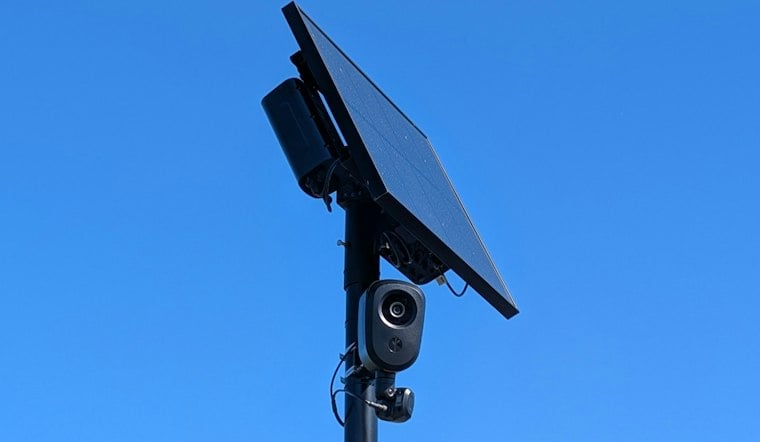
DeKalb County, meanwhile, has been building out its own Flock footprint. The county has expanded its use of the technology to support its Real Time Crime Center, according to WSB-TV's reporting. Elsewhere in DeKalb, the Tucker Summit Community Improvement District has installed 10 solar-powered Flock cameras and planned 10 more before Thanksgiving, according to the Atlanta Journal-Constitution.
Guardrails Already in Place
Tucker has already built in some restrictions on who can use the cameras. The city has disabled the ability of all city employees to search Flock license plate reader cameras, the same Decaturish report notes, which also describes a policy under which only the city manager can adjust camera settings for license plate searches.
Those guardrails arrive against a backdrop of oversight questions playing out across DeKalb and the broader region. The DeKalb County Police Department conducts comprehensive Flock audits every two weeks, according to Decaturish's reporting on license plate reader oversight in Georgia. Those audits identified potential policy violations involving eight employees, including five who had searched for vehicles without a legitimate law-enforcement purpose and three others who had legitimate reasons but failed to follow required procedures, the outlet reported.
Statewide Scrutiny of License Plate Cameras
Tucker's decision lands amid wider unease about how these cameras are used across Georgia. Concerns over automated license plate readers persist across metro Atlanta regarding the information they capture and the privacy safeguards needed, according to Axios. A state task force is examining Georgia's automated license plate reader policies and is expected to make recommendations ahead of the 2027 legislative session, per Decaturish.
Flock Safety itself has rolled out changes in response to misuse concerns, including lowering how long license plate data can be stored from 30 days to seven, according to the Georgia Recorder. The company also announced it would automatically suspend apparent misuse and require case numbers or crime types for searches, the outlet reported. Nationally, the Georgia Recorder notes similar automatic license plate reader laws have already been adopted in 26 cities, including Nashville, St. Louis, Detroit and San Francisco, as previously reported by CBS News.
The costs of these contracts can also climb sharply over time. In nearby Covington, the city paid Flock Safety $40,000 annually in 2020 and 2021 to maintain 20 cameras, according to Wired, before that bill grew to $113,225 in 2024 as the camera count expanded to 35. Alpharetta's annual Flock bill ballooned to $381,000 by 2025 under a five-year contract signed in 2024, Wired reported, illustrating how quickly these municipal surveillance deals can expand once cities sign on.




