

























































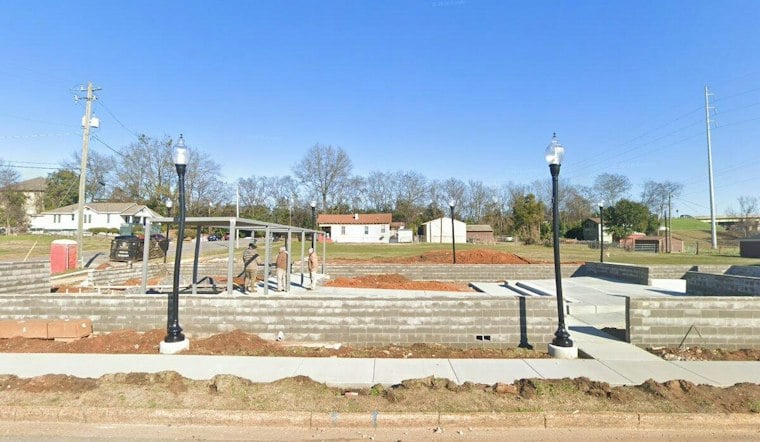
Tuscaloosa is set to cut the ribbon Wednesday morning on the new Linton Barbershop Plaza, transforming the site of a barbershop that once sheltered civil rights activists into a public space meant to keep that history visible for generations to come. The ceremony is scheduled for 10 a.m. at 1305 T.Y. Rogers Avenue, the same stretch where Rev. Thomas Linton ran his shop for decades.
The city is scheduled to hold the ribbon-cutting ceremony for the plaza on Oct. 28, marking the formal debut of a project years in the making. As reported by WBMA, city leaders described the plaza as a way to preserve and share the legacy of Rev. Thomas Linton, a figure the outlet calls significant to Tuscaloosa's civil rights history. Mayor Walt Maddox said the plaza celebrates Dr. Linton's life, legacy and meaning to Tuscaloosa, according to the same report.
From Working Barbershop to Civil Rights Landmark
The shop that once stood on the site originally opened in 1951 on T.Y. Rogers Jr. Avenue, according to WVTM 13. During some of the city's most violent civil rights confrontations, the shop became a refuge for foot soldiers assaulted during Bloody Tuesday and a safe haven for Autherine Lucy, the station reports. WBMA notes that the barbershop served as a key location during the civil rights movement and provided safe shelter for many people during that era.
Felicia Linton, Rev. Thomas Linton's daughter, said the plaza will keep her father's story accessible to the community, per WBMA's reporting. District 1 Councilman Joseph Eatmon said the project is personal to him, having grown up near the barbershop and spent time with Linton himself, the outlet notes. City leaders have said historical storytelling in public spaces can make local history more accessible, especially for younger generations, and that they aim to ensure the history tied to Linton's barbershop is not left behind as Tuscaloosa changes.
What the New Plaza Includes
The finished plaza includes story panels, a central walkway featuring a historical timeline, and a mural wall, per WBMA. The City of Tuscaloosa had described the design in similar terms ahead of construction, saying the project would include edged story panels with a central walkway and timeline, a mural wall, and enhanced lighting and security features. Tuscaloosa Thread reported that the investment also includes an art installation by Caleb O'Connor alongside the story panels and walkway.
Visitors can see artifacts, panels and stories at the plaza, WBMA reports, and WVTM 13 similarly notes that people can come any time to see the artifacts, panels and stories on display. City leaders intend the plaza to be a place for gathering, learning and community connection, according to WBMA.
A Years-Long Path, and a Cost Figure That Doesn't Quite Match
The path to Wednesday's opening stretches back years. After Rev. Thomas Linton died in 2020, the City of Tuscaloosa acquired the barbershop property from his family, according to the Tuscaloosa Civil Rights History and Reconciliation Foundation. By 2023, the city's request for qualifications laid out a first phase calling for restoration of Linton's Barbershop and Beauty Salon along with design work to transform the surrounding space into a park. An inventory project cataloging items from the shop, including 60 furniture pieces, wrapped up in August 2022, the foundation's records show.
The city and its partners, working with the Linton family and the foundation, broke ground on the plaza on Aug. 14, 2025, with construction expected to finish in early 2026, the city said at the time. WBMA's headline describes the finished project as a $1 million effort, while the City of Tuscaloosa and Tuscaloosa Thread have both referred to it as a $1.4 million investment through the Elevate Tuscaloosa program. The discrepancy between those figures has not been publicly reconciled.
Part of a Broader Civil Rights Trail
The new plaza joins a wider network of civil rights sites across the city. The Tuscaloosa Civil Rights Trail, a self-guided tour covering 18 sites tied to the city's history of segregation and the civil rights struggle, officially opened on June 10, 2019, according to the Encyclopedia of Alabama. That trail already uses historic markers and interpretive panels at several of its stops, a format echoed in the new plaza's story panels and timeline walkway.


