

























































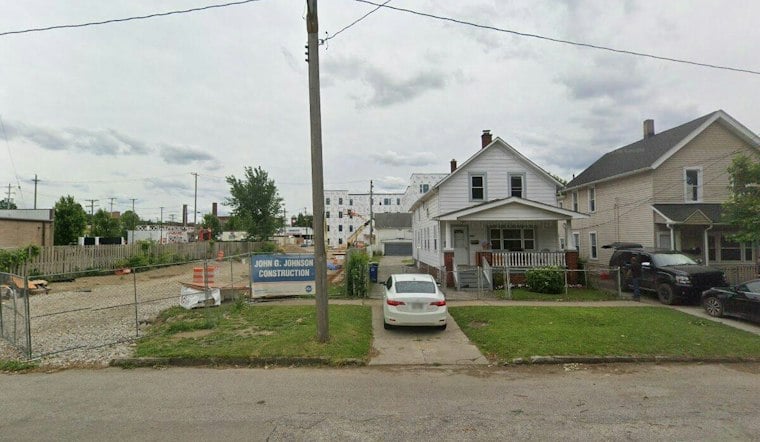
Fifty-five new homes are rising across Glenville, Hough and Buckeye, and 52 senior apartments are planned for Clark-Fulton, both marketed as affordable housing in a city that badly needs it. But ask what a tenant will actually pay each month at either site, and the answer depends on a maze of federal formulas that most renters have never had to parse.
Parkside Homes East and Walton Senior Apartments became the first two developments to benefit from the Cleveland Housing Investment Fund's initial funding commitment, according to Cleveland.com. The fund launched in 2025 to help finance affordable, workforce and mixed-income housing across the city, per the same report. Both projects carry the affordable-housing label, yet the mechanics behind each tenant's rent bill are built on very different foundations.
A Lease-Purchase Path in Three Cleveland Neighborhoods
Parkside Homes East is a single-family development spread across three neighborhoods, comprised of 55 homes, according to CHN Housing Partners. The project includes 49 three-bedroom, two-story homes and six three-bedroom, one-story accessible homes, built for families at or below 60% of the area median income. The $22 million investment is primarily funded by the new Ohio Low Income Housing Tax Credit and the 4% Low Income Housing Tax Credit from the Ohio Housing Finance Agency, with additional funding from the City of Cleveland, Citizens Bank and Local Initiatives Support Corporation through the Cleveland Housing Investment Fund, per CHN's announcement.
Construction began by October 2025 and was expected to be completed in fall 2026, per CHN Housing Partners. CHN is the majority owner of Parkside Homes East, with Famicos Foundation and Burten, Bell, Carr Development, Inc. holding minority stakes, the nonprofit says. The Ohio Housing Finance Agency had earlier approved a $2 million Housing Development Loan and $10 million in Ohio Low-Income Housing Tax Credits for the project, according to the agency's own funded-projects release.
The homes use CHN's Lease Purchase Program, which offers eligible residents an opportunity to become homeowners rather than guaranteeing one. Under the federal tax-credit rules governing the project, residents are offered the opportunity to buy in Year 16, after the 15-year compliance period during which the properties must remain rental housing, according to an Ohio Housing Finance Agency study. That ownership path is an opportunity for qualifying residents, not an automatic transfer after 15 years, per Cleveland.com's reporting. CHN's Lease Purchase Program has successfully transferred more than 1,800 homes to income-eligible buyers over the years, the nonprofit says, and the Ohio study found 72% of CHN units in its sample were eventually sold to a previous CHN tenant, compared with just 14% of non-CHN lease-purchase units. The design is meant to closely resemble Hope Homes, CHN's most recent prior lease-purchase development, according to Crain's Cleveland Business.
Why ‘60% of Area Median Income’ Doesn't Set the Rent
Here's the catch that makes ‘affordable’ a slippery word: tax-credit eligibility and actual rent are not the same calculation. The federal Low-Income Housing Tax Credit program ties maximum gross rent to 30% of the apartment's designated income limit — not to what a specific tenant earns, per Cleveland.com. That means a Parkside household earning less than the 60% AMI ceiling could still end up spending more than 30% of its own income on rent, since tax-credit rent does not automatically decrease when a tenant earns less. Landlords may choose to charge less than the maximum allowed rent, but nothing requires it. The Parkside tax-credit restriction itself does not establish an income-based tenant payment, the outlet notes — it only fixes a ceiling tied to the broader area median income, a regional benchmark used by housing programs to set eligibility limits that vary by household size.
Walton Senior Apartments Adds Vouchers to the Mix
Across town in Clark-Fulton, Walton Senior Apartments is planned to include 52 apartments for adults aged 55 and older. The four-story development consists of 52 senior apartments for households earning 30-70 percent of AMI, according to Cleveland Magazine. Local leaders announced in October 2025 that the project would be among the first to benefit from the Cleveland Housing Investment Fund's initial commitment, the magazine reported, after the Ohio Housing Finance Agency announced a conditional tax-credit commitment for Walton back in May 2024.
Twenty of Walton's apartments will carry long-term Section 8 project-based vouchers, per Cleveland.com's reporting on a February 2026 announcement, which described the vouchers as additional assistance layered onto 20 apartments rather than a replacement of the underlying tax-credit restrictions. That distinction matters because project-based vouchers add rental assistance to apartments already subject to tax-credit income limits — they don't erase those limits, they stack on top of them.
Under project-based voucher assistance, a household's contribution is generally based on 30% of adjusted income, according to federal guidance described by the U.S. Department of Housing and Urban Development. Other federal payment rules include additional calculations and minimum-rent requirements, and a utility allowance factors into the rental assistance math — though that allowance does not guarantee coverage of every actual utility bill a resident might face. When an assisted resident moves out, the voucher assistance stays with the building and becomes available to the next eligible household, rather than following the departing tenant.
The Deeper Shortage Driving the Need
Ohio has a statewide shortage of more than 265,000 affordable and available rental homes for extremely low-income households, according to the National Low Income Housing Coalition's 2026 Ohio housing profile. The Coalition on Homelessness and Housing in Ohio's 2026 Gap Report found that nearly 45% of Ohio's 1.58 million renters are paying more than they can afford on rent, and 73% of the state's extremely low-income renters are spending over half of their income on housing. Cleveland alone lacks about 54,000 affordable units, with only 36 affordable units available for every 100 extremely low-income renters in the city, per the same report.
The squeeze extends to homeownership, too. Ohio experienced the nation's largest decline in homeownership affordability between 2020 and 2025, with Cleveland ranking eighth among metropolitan areas nationwide for lost affordability, Cleveland.com reported separately. The share of occupations in Ohio metro areas paying enough for a typical home fell from about two-thirds in 2020 to just 26% in 2025, according to that analysis.
What Prospective Residents Should Actually Ask
For anyone eyeing a unit at either development, or any tax-credit property across Cleveland, the fine print is the whole story. Prospective Walton or Parkside residents should ask what rent would be charged, which utilities are included, and whether rental assistance applies to their specific home, per Cleveland.com. Those answers won't come from the AMI percentage alone — they depend on household size, the specific unit's designated income tier, and whether a voucher happens to be attached.
Nationally, the full-time hourly wage needed to afford a two-bedroom home at fair market rent without spending more than 30% of income on housing — known as the housing wage — stands at $24.60 an hour in Cleveland's HUD-defined rental market area, according to figures attributed to the National Low Income Housing Coalition. That benchmark underscores why the difference between a tax-credit ceiling and an actual voucher-backed rent can matter enormously to a family or senior deciding whether a unit at Parkside or Walton is truly within reach.





