

























































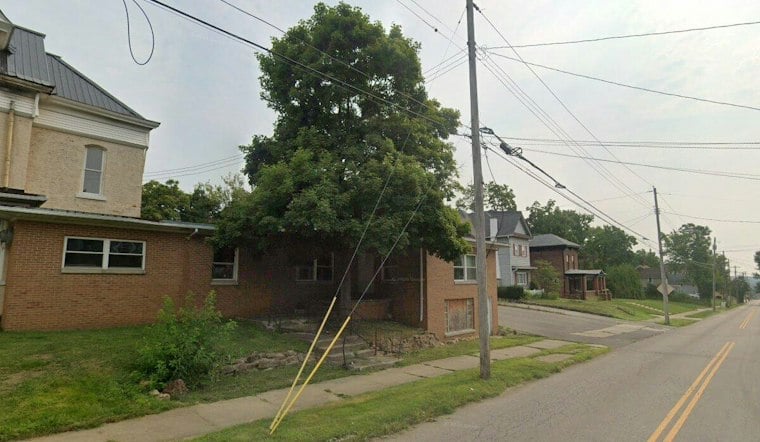
Anthony Brown spent 23 years without a permanent place to sleep, from age 14 to 37, and now he is pouring his own money and years of labor into turning an abandoned Mansfield mansion into a home for people living through what he once survived. The 10-bedroom property, which he calls Brown Manor, is still under construction, missing the finishing touches and the official sign-off it needs before anyone can move in.
“I was homeless for 23 years, from age 14 to 37,” Brown said, according to News 5 Cleveland. He said he bought the property after seeing just how badly Mansfield needed more housing options for people without a stable place to live. Brown Manor is designed to be a transitional care home, giving residents a stable roof while they work toward rebuilding their lives, and Brown's goal is to let people stay up to a full year as they gain the skills and resources to live independently.
The renovation has been underway for roughly two years, and Brown says he has personally put approximately $150,000 into the property himself, per the same News 5 Cleveland report. The house currently has running water, electricity, a working bathroom and some finished bedrooms, but the station notes it still needs additional work before residents can move in, and it cannot open until it meets required conditions and receives an occupancy permit. A $354,000 grant intended to help finish the job is pending, but it is reimbursable, meaning project costs have to be covered upfront before that money comes back.
A Childhood on the Run, a Career in Behavioral Health
Brown's path to this project began with a childhood he has described as abusive, which led him to run away from home at 14. He struggled with addiction and incarceration for years before entering treatment at 37, after which he earned a master's degree in behavioral health and became a nurse practitioner, rising from psychiatric technician to director of nursing services at a psychiatric hospital in Orange County, California. He has said he slept in abandoned houses during his years without stable housing and felt compelled to help the people he saw still living on the streets.
That clinical background shapes how he wants Brown Manor to run. According to his own project materials at anthonyhowardbrown.com, the home is designed around a five-phase cognitive-based peer support system, and Brown wants to weave in behavioral health principles while connecting residents with outside support and resources. He has said homelessness does not define a person's future, and that people can make a real difference when they work together.
Mansfield's Housing Gap, by the Numbers
City leaders say the shortage Brown is trying to address is real and acute. Mansfield City Councilman Aurelio Diaz said the city has food pantries and clothes closets but lacks housing resources, telling News 5 Cleveland that Mansfield has just one homeless shelter with space for about 60 people. When that shelter fills up, or when its restrictions keep someone from qualifying, people can be left with nowhere to go. Councilwoman Crystal Davis Weis added that social services often are not available when people need them most, noting that “social services goes home at 5 o'clock in the afternoon sometimes.”
The city created a Homeless Response Task Force in 2020 that works alongside Mansfield police and social service partners to connect people with resources rather than simply making arrests, the station reports. The scale of the broader problem is reflected in statewide figures from the Ohio Housing Finance Agency, which found more than 1.2 million Ohioans, or 11% of the state's population, spend at least half their income on housing. A January 2024 point-in-time count tallied 11,759 people experiencing homelessness statewide, a 14% jump from 2019 and the highest figure in a decade, while the same count found only 5,701 year-round shelter beds for 8,338 homeless adults, a shortfall of 2,637 beds. Ohio schools separately reported that 31,883 students lacked a fixed, regular and adequate place to sleep during the 2023-2024 school year.
Richland County's own homelessness counts have shifted over time. A point-in-time survey conducted Jan. 27-28, 2015, found just two unsheltered men, ages 25 to 60, and 78 people living in shelters, according to Richland Source. That same report noted Harmony House, located at 124 W. Third St., could house 60 people and offered emergency shelter for up to 90 days, according to the facility's director at the time.
Community Support and a Model for Other Houses
Brown says Brown Manor has gotten positive feedback from the city and has established a partnership with Third Street Clinic. Community members have donated both items and time to the project, and Brown has directed supporters toward the Jeannette Jones Safford Foundation online, which he says is connected with Richland Gibbs. He is still seeking financial support, skilled volunteers, sponsorships and community partnerships to get the house across the finish line.
Brown hopes to complete the project by the winter of next year, though he has said the timeline depends on funding and available resources. He envisions Brown Manor as just the first step for residents, who would eventually move into their own homes, with a smaller shared house serving as an intermediate stop for those who need more time. Ultimately, Brown wants to use the mansion as a model, saying that once it is finished, the same approach could be applied to other abandoned houses across Mansfield.
How Other Cities Are Tackling the Same Problem
Mansfield's effort echoes a larger transitional-housing project completed this year in Chicago, where officials converted the former Diplomat Motel into the 37-room Haven On Lincoln, spending $14 million to renovate a property the city acquired in 2024, according to Block Club Chicago. Unlike congregate shelters, Haven residents get private rooms with full bathrooms, full-sized beds and TVs, with health and social services provided on-site by the nonprofit Cornerstone Community Outreach. Chicago's Department of Housing financed the project with $8.42 million in Chicago Recovery Plan bond funds and a $103,660 grant from the city's health department. The outlet also reported that a COVID-era pilot of non-congregate shelter found 60% of residents moved into permanent housing or residential treatment programs, with 62% reporting improved mental health, though that figure describes a different program rather than Brown Manor itself.



