

























































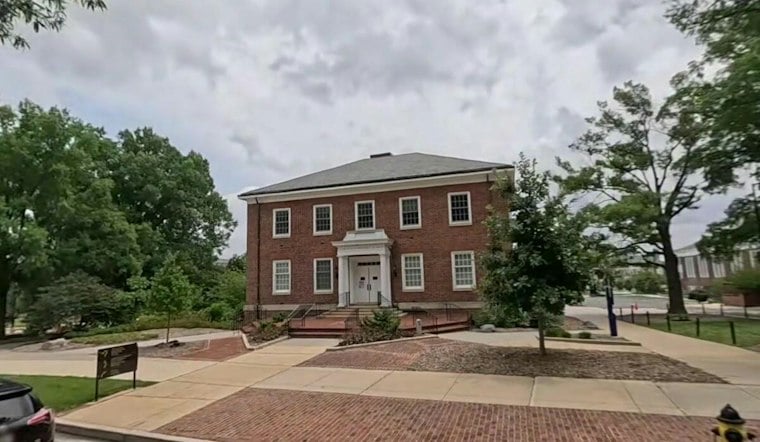
The University of Maryland Athletics Department has agreed to undergo First Amendment training after a staffer called campus police on two student journalists who were trying to interview football players outside the team’s facility. The agreement comes days after officers approached Testudo Times editors Nolan Rogalski and Jude Wilkenfeld, recorded their student ID numbers, and told them to leave — an encounter that unfolded just as head coach Mike Locksley was parting ways with the university.
The Foundation for Individual Rights and Expression, known as FIRE, will lead the training at the College Park campus, according to The Baltimore Banner. The nonprofit, founded two decades ago to defend free-speech rights on college campuses, said Maryland Athletics showed a willingness to address the concerns it raised. The department’s decision follows an Oct. 21 incident that drew national attention to how the football program handles reporters seeking comment.
What Happened Outside Jones-Hill House
Rogalski, a junior, and Wilkenfeld, a sophomore, went to Jones-Hill House that day hoping to get reaction from players following news that Locksley was leaving as head coach. Instead, per the same Banner account, University of Maryland police approached the pair, recorded their identification numbers and encouraged them to leave the area. No police report was filed, and neither student was cited or arrested.
Maryland Athletics confirmed it had contacted police about two individuals standing outside the football facility, attributing the report to concerns over “suspicious activity.” A department spokesperson said security around athletics facilities had increased because of heightened worries about the safety of football staff and players. According to Daily Voice, no arrests were made and no further police action was reported once officers checked the students’ identification.
A Pattern of Access Complaints
Rogalski told the Banner that Maryland football has recently tightened its posture toward reporters, denying interviews with assistant coaches and coordinators and barring media from practices altogether. Daily Voice reported that the athletics department had also faced criticism over restrictions during Locksley’s press conferences that prevented reporters from asking follow-up questions. Baltimore Sun reporter Taylor Lyons described a more physical version of that friction to Daily Voice, saying, “I've had staffers come up and actually grab the microphone out of my hand multiple times.”
The Oct. 21 encounter was not an isolated flashpoint for campus press freedom at Maryland. A year earlier, on Oct. 21, 2025, university police detained student journalist Rumaysa Drissi while she covered a pro-Palestinian protest on campus, according to the U.S. Press Freedom Tracker. Drissi and fellow student journalist Riona Sheikh were released after about an hour without being processed. The Banner also noted that the football facility encounter followed a separate incident in which U.S. Rep. Andy Harris threatened to prosecute student reporter Cat Murphy for recording him at a news conference.
FIRE’s Response and What the Training Covers
FIRE said seeking interviews in a public space is protected by the First Amendment and argued that student reporters should be able to do their jobs without unnecessary police encounters. The organization said public universities and their athletic departments have a duty to protect press freedom rather than intimidate those exercising it. Maryland’s own campus policy, as outlined by the university’s facilities and outdoor spaces policy, states that campus facilities and outdoor spaces must support freedom of expression and comply with the First Amendment, applying to students, faculty, staff and other users of university property.
Maryland’s provost office has separately affirmed that the university does not discriminate against expressive activity based on content or viewpoint in designated campus spaces, while noting that protected expression does not extend to disrupting campus operations or unlawfully harassing, threatening or physically abusing others, according to a statement posted by the provost’s office. It remains unclear whether the Oct. 21 encounter at Jones-Hill House will prompt any changes beyond the agreed-upon training.





