

























































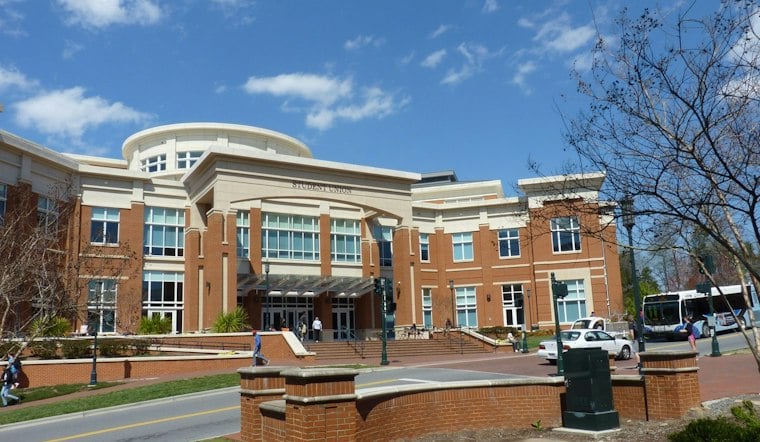
UNC Charlotte says its participation in a shared camera network does not require it to provide access to outside law-enforcement agencies. But searches by other agencies can include detections from campus cameras. In a statement to WBTV, the university said the network involves about 1,600 agencies and that a search for a particular plate may return the place and time a participating camera detected it. WBTV reported that the university declined its request to interview Police Chief Jeffrey Baker.
Records show the reach of the shared system
The records show how often an out-of-state agency’s searches included UNC Charlotte’s camera network. Records obtained from the university and reported by WBTV show that Houston Police Department searches included the campus network more than 183,000 times from March through May 2026. Charlotte-Mecklenburg police ranked 30th among agencies, while UNC Charlotte Police ranked 1,491st, with 229 searches. WBTV reported that Houston officers often searched more than 6,000 networks in a single plate lookup. Other agencies recorded as searching the UNC Charlotte network included CSX Railroad Police and Toledo’s parks department.
The university told WBTV that it does not provide network access to non-law-enforcement organizations such as homeowners associations or private businesses, and that it can choose whether to share access with outside police agencies. It also cited a larceny case involving more than $100,000 in equipment taken from an on-campus construction site as an example of how the cameras have assisted investigations. WBTV reported that the university had not provided the arrest record nearly a month after the outlet requested it.
Houston Police told WBTV by email that it regularly reviews officers’ use of automated license plate recognition systems and is investigating the activity identified in Charlotte.
State rules and oversight
North Carolina law generally limits how long captured plate data collected by or for law enforcement may be retained: it must be deleted within 90 days unless an authorized preservation request or warrant applies. The law also bars selling the data, according to North Carolina General Statute § 20-183.32. Attorney Mark Williams, who runs a website opposing Flock cameras and similar technology, told WBTV that agencies in other states may operate under different rules, raising questions about how much control a North Carolina institution retains once its camera data is accessible through a shared network.
North Carolina also makes unauthorized access to, preservation of, or disclosure of ALPR data a Class 1 misdemeanor, as described by the North Carolina Criminal Law Blog. But the state does not require agencies to report misuse of the system. WBTV reported that earlier cases involving Charlotte-Mecklenburg and Mooresville police became public after officers were arrested or departments disclosed the conduct. WBTV also reported no accusations of misuse involving UNC Charlotte’s network and said university officers must enter a case number when they search it.
A pattern beyond North Carolina
Houston’s activity has also featured in records from Utah. The Utah News Dispatch reported that Houston Police accounted for more than one-third of the 5.1 million searches of records from Weber County’s 10 Flock cameras between February 2022 and July 2026, based on findings by the Utah Civic Compact. That separate example illustrates the reach of cross-jurisdictional searches, while the UNC Charlotte records remain the basis for the figures in this story.
How widespread is plate-reader use?
A national survey found that at least two-thirds of larger police agencies use license-plate-reader technology, according to the National Institute of Justice. That finding measures adoption of the technology; it does not establish how often agencies search camera networks operated by other jurisdictions.





