

























































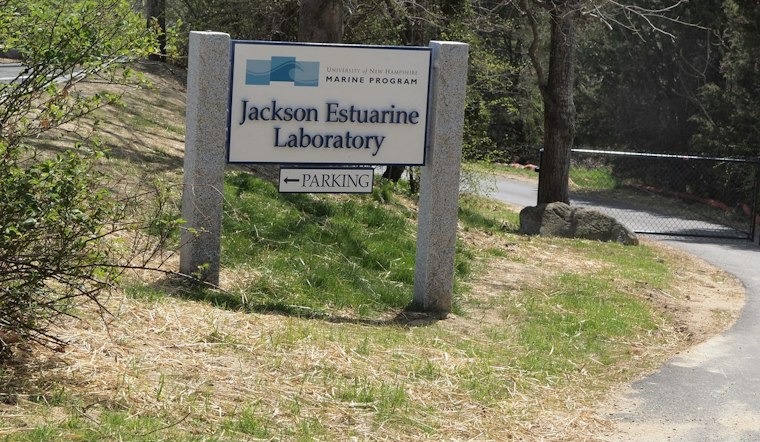
The University of New Hampshire cut the ribbon this week on a $5.2 million expansion of its Jackson Estuarine Laboratory, a research outpost on Great Bay that has been studying New Hampshire's coastal waters since 1970. The new 4,500-square-foot addition brings dive lockers, boat storage and a dedicated meeting space to a facility perched on Adams Point, about five miles from UNH's Durham campus.
UNH held the ribbon-cutting ceremony at the laboratory on Great Bay, according to the New Hampshire Union Leader. U.S. Sen. Jeanne Shaheen joined UNH and state leaders at the event, the paper reports, marking a milestone for a lab that was among the nation's first academic facilities dedicated solely to studying estuaries. Great Bay itself is sometimes referred to as New Hampshire's hidden coastline, and the lab also studies the Hampton-Seabrook estuary further south.
Shaheen called the laboratory's work “indispensable to advancing research on coastal ecosystems in New Hampshire and around the world,” per the Union Leader's reporting, and said the upgraded facility will support breakthroughs in building resiliency in estuarine and coastal systems. The senator helped secure more than $3 million in federal funding for the project, though a separate 2023 announcement from her office described $3.8 million heading to UNH to launch what it called a state-of-the-art water quality lab — the two figures were not reconciled in the available record.
What's New Inside the Expanded Lab
The addition includes a dedicated space for community partners and collaborators, a 36-person meeting room with an adjacent office, and a new entryway, according to the Union Leader. It also adds two high bays for working on vessels, buoys, and aquaculture and remote-sensing equipment, plus dive lockers with showers and room to store and repair scuba gear. The station already keeps three 19-foot outboard-powered center console boats on hand for fieldwork, per the UNH School of Marine Science and Ocean Engineering, and the building and its adjoining greenhouse run on full seawater capability year-round.
Erik Chapman, director of UNH's School of Marine Science and Ocean Engineering and N.H. Sea Grant, said the project modernizes and expands the nearly 60-year-old laboratory and increases UNH's capacity for research, teaching and public service, the Union Leader reports. The Turner Group handled architecture and engineering for the project at an estimated cost of $5.2 million, while Tighe & Bond provided civil engineering and Milestone Construction took part in building the addition. The National Institute of Standards and Technology funded the expansion, with UNH contributing additional funding, and a second phase of renovations to the original building is still planned.
A Permanent Home for Bay-Wide Monitoring
The laboratory will serve as the permanent home of the Piscataqua Region Estuaries Partnership and is set to host community collaborators including N.H. Fish and Game, the N.H. Department of Environmental Services, The Nature Conservancy N.H., and the Northeastern Regional Association of Coastal Ocean Observing Systems, according to the Union Leader. UNH also plans to provide a new minivan to improve collaborator and student access to the site across disciplines.
That collaborative footprint matters because the bay itself is under strain. Eelgrass acreage in the Great Bay Estuary has faced decades of decline and took a significant drop in 2025, according to the Piscataqua Region Estuaries Partnership. In response, PREP this year launched Great Bay's first seed-based eelgrass restoration effort, holding reproductive shoots in flowing seawater tanks at the Jackson lab. PREP and its partners collect more than 1 million data points annually to gauge the estuary's health.
Swings in Salinity and Nutrients
Water-quality data gathered through the lab's network show just how variable conditions in the bay have become. The Great Bay National Estuarine Research Reserve found that heavy winter precipitation lowered spring salinity in 2024, while a prolonged summer and fall drought pushed the estuary into high-salinity conditions, with measurements peaking at 31 parts per thousand in October of that year. Nutrient concentrations followed a similarly erratic pattern, running high through spring before hitting historic lows in summer and late fall, the reserve reported.
The reserve's monitoring program is designed to track those kinds of shifts, identify new threats and measure whether management efforts are working. Its staff monitors saltmarsh health annually and works with partners to track mudflats, eelgrass and oyster beds — part of a System-Wide Monitoring Program that all 30 National Estuarine Research Reserves nationwide use to collect comparable data. The reserve also operates four water-quality stations and a weather station in coordination with the Jackson lab, while PREP sponsors additional monitoring stations, a coastal watershed data portal and a periodic State of Our Estuaries Report.
Why the Research Reaches Beyond Durham
UNH President Elizabeth Chilton said marine science and sustainability are longstanding strengths at the university and that UNH is committed to expanding its impact, according to the Union Leader's account of the ceremony. Chilton added that the expansion creates opportunities for students to work directly alongside scientists and gain hands-on experience. Research and monitoring tied to the laboratory focuses on water quality, environmental toxins, habitat restoration and aquaculture, and UNH frames that work as delivering economic and quality-of-life benefits for Granite Staters.
The lab's reach extends well beyond New Hampshire's coastline. Estuaries, where rivers meet the ocean in partially enclosed brackish water, serve as sheltered spawning and feeding grounds that support nearly 70 percent of the nation's commercial fish catch, per UNH's marine science school. They also absorb floodwater and blunt the force of storms to protect property. Federal agencies including the EPA, U.S. Fish and Wildlife Service, Army Corps of Engineers, USGS and NOAA all rely on the Jackson lab in their coastal resilience work, and local collaborators range from individual coastal towns to regional planning offices and groups like the Conservation Law Foundation and The Nature Conservancy.
Over more than five decades, research tied to the laboratory has covered oysters, lobsters, horseshoe crabs and eelgrass, deepening understanding of coastal ecosystems, environmental quality and the links between watersheds and human health, according to UNH's marine science program. The facility also facilitates investment supporting New Hampshire's emerging aquaculture industry. With the new high bays, dive lockers and meeting space now in place, UNH officials say the Durham lab is positioned to keep expanding that body of work on a changing bay.





