

























































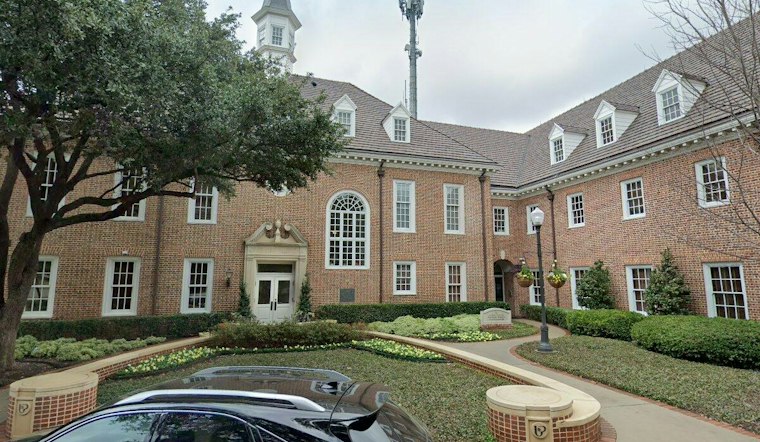
University Park residents are being asked this election season to approve a property tax rate increase that would fund four new police patrol officers, two additional firefighters, a pension adjustment for the city's firemen's retirement fund, and new residential parking enforcement technology. Early voting is already underway, and the outcome will determine whether the city's tax rate climbs to $0.220055 per $100 valuation or reverts to a lower, state-capped rate.
Proposition A would push the city's current rate up from the base FY2027 budget rate of $0.209534 per $100 assessed value, a figure the University Park City Council adopted on August 17, 2026, according to the City of University Park. As reported by NBC 5 Dallas-Fort Worth, the proposition exceeds the voter-approval tax rate by $0.009665 per $100 valuation.
For most homeowners in University Park, the dollar impact is far from abstract. City tax impact estimates show that for a median taxable residence valued at $1,836,884, annual city property taxes would rise by roughly $193 — from $3,848 under the base rate to $4,041 if Proposition A passes, per the same city account. That contrasts with the generic statewide ballot language citing a hypothetical $300,000 home facing a $29 annual increase, a figure NBC 5 Dallas-Fort Worth also noted in its coverage of the measure.
Where the Extra Money Would Go
City budget documentation specifies that $601,560 of the additional revenue generated by Proposition A is earmarked specifically to recruit, hire, and equip four new police patrol officers, the city's materials show. The remaining funds are tied to additional firefighter staffing and a pension adjustment for the University Park Firemen's Relief and Retirement Fund, which was closed to new hires in 2017. City officials included that pension fix in the proposition to address retention concerns and provide more comparable retirement benefits among Fire Department personnel, per the city's newsflash detail.
Proposition A also includes funding for residential parking district technology. In an interview with city leaders published October 15, the system was described as using license plate recognition software, operating independently of Flock license-plate cameras, and not storing enforcement images, according to a report from the Proposition A explainer podcast.
Why a Vote Is Required at All
University Park officials cited Texas Senate Bill 2, passed in 2019 to cap municipal property tax revenue growth at 3.5% annually without voter approval, as the primary legal restriction preventing the city from funding new public safety positions within its standard annual budget. Under that law, cities cannot expand property tax revenues beyond the cap without holding a Voter-Approval Tax Rate Election, forcing University Park to put the police officers, firefighters and pension adjustments directly before voters rather than folding them into the baseline FY2027 budget.
If Proposition A fails, the tax rate automatically reverts to the state-calculated maximum of $0.210390 per $100 valuation without voter approval, according to VOTE411. That rollback would force city leadership to forgo the planned public safety additions, the same election materials note.
How the Proposed Rate Compares Historically
Even with the increase, University Park's proposed $0.220055 rate would remain below its 2024 and 2023 rates, though it is higher than the 2025 rate. Dallas County tax records show the city's ad valorem tax rate was $0.218565 per $100 valuation in 2025, $0.229964 in 2024, and $0.236226 in 2023, according to the Dallas County Tax Office. The proposed rate under Proposition A would still sit below what the city levied just two years ago.
This isn't the first time University Park voters have weighed in on municipal revenue tradeoffs shaped by state tax caps. In May 2026, residents faced a separate ballot measure on continued participation in the Dallas Area Rapid Transit system, a debate that centered on whether to keep dedicating 1% of local sales tax to transit while property tax growth remains capped by state law, according to the Dallas County Elections Department.
Voting Logistics and Polling Locations
Early voting runs from Monday, October 19 through Friday, October 30, with Election Day falling on Tuesday, November 3, per NBC 5 Dallas-Fort Worth's reporting. University Park United Methodist Church is an early-voting location. Election Day polling locations include the SMU Hughes-Trigg Student Center, Highland Park Middle School, and University Park Elementary, according to the Dallas County Elections Department.
Election Day polling locations will be open from 7 a.m. to 7 p.m., and any eligible voter already in line by 7 p.m. may still cast a ballot. The vote on Proposition A will determine not just a tax rate, but whether University Park's police and fire departments see the staffing additions city officials say current state law otherwise makes impossible to fund.





