

























































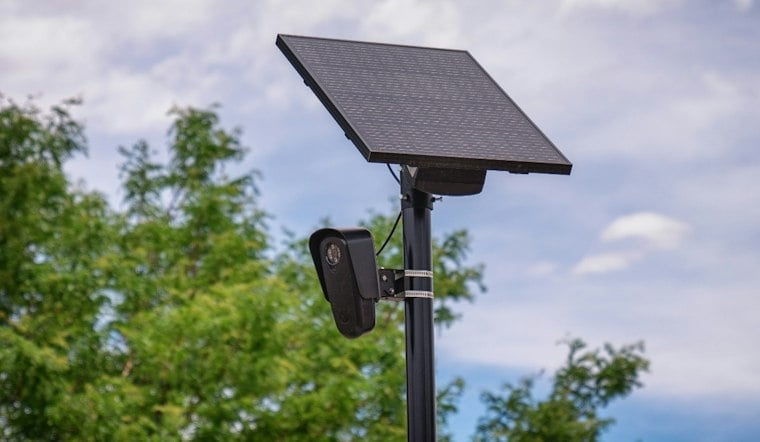
Upper Arlington City Council spent nearly two hours Monday night debating new restrictions on how police can search data from the city's 20 Flock license plate reader cameras, then adjourned without taking a vote. The proposal would require judicial approval before officers could search camera data older than nine days, a rule aimed at curbing the kind of unchecked access that has triggered scandals across Central Ohio in recent months.
According to WSYX, officers would need to submit a form requesting judicial approval to search any data older than nine days under the rule being debated. During the meeting, Upper Arlington police described the cameras as a key tool in solving crimes, while some residents pushed back, with one resident telling council their concern centered on the collection, processing and use of data gathered through surveillance networks operated by a for-profit company, the station reported.
A separate draft reviewed by Pique describes a differently structured tiered system under proposed Ordinance No. 38-2026, which would create Section 143.39 of the city code: officers could query scans from the past 48 hours without oversight; searches from days three through eight would require specified supervisor approval or CIB involvement; and searches nine or more days old would require approval from a Mayor's Court magistrate or judge under a probable-cause search-warrant standard. City Attorney Darren Shulman and Police Chief Keith Hall drafted that proposal, per Pique, to balance investigative speed against Fourth Amendment privacy protections.
A Contract With Costs on Both Sides
The financial stakes of walking away from Flock are notable. Upper Arlington's current contract covers the 20 cameras for five years, running from 2024 through 2029, with annual costs of $54,500 after the first year, WSYX reported. The city could terminate the agreement with 30 days' written notice and no penalty if funding isn't appropriated, but Flock could challenge an early termination — and if the company prevailed, the city could owe the remaining contract balance, roughly $50,000 for each year left on the deal.
Before council took up the ordinance, the Upper Arlington Police Division had already moved to get ahead of public concern. In July, the department launched an online Flock Camera Safety Transparency Portal, publishing department ALPR policies, usage statistics and privacy safeguards for residents. The division has said it operates the camera network for authorized law enforcement purposes, including tracking hotlisted stolen or wanted vehicles.
Regional Scandals Are Driving the Urgency
Upper Arlington isn't debating these rules in a vacuum. Next door, Columbus suspended its entire 66-camera Flock network in September and relieved an officer of duty after data analysis showed he had searched a single license plate more than 270 times for non-official reasons, according to The Columbus Dispatch, which reported that Mayor Andrew Ginther paused the program pending an independent audit.
That same month, a Franklin County Sheriff's detective was fired for using Flock cameras to track a private citizen. Pique reported that Reynoldsburg ended its program and Worthington halted Flock license-plate data sharing with outside police agencies. In southwestern Ohio, Monroe's city council went further still, voting unanimously in September to terminate its Flock Safety contract and deactivate all 23 of its cameras after public backlash, as reported by WKRC — part of a wave in which more than 50 agencies or jurisdictions nationwide had canceled, suspended, rejected or deactivated Flock contracts or cameras in 2026.
A Sharonville police lieutenant was indicted on a fifth-degree felony charge of unauthorized computer use, according to WVXU, which reported he had run 29 personal Flock searches on someone he knew. Unauthorized access to law enforcement databases carries potential felony penalties under Ohio law.
State Law Offers Few Guardrails
Part of what makes local ordinances so consequential is the thin statewide framework surrounding this technology. Under Ohio Revised Code Section 149.43, images and data captured by automated license plate recognition systems in law enforcement databases are explicitly exempt from public records disclosure, and state law currently lacks comprehensive limits on how long police can retain the data or who can authorize a search.
Ohio lawmakers introduced House Bill 725 in March to restrict commercial use and sales of ALPR data, and state legislators and top law enforcement officials have since drafted separate proposals to criminalize surveillance camera misuse statewide. The Toledo Blade described a felony proposal from Faber and a privacy-law proposal from Democratic nominee John Kulewicz.
What Happens Next
For now, Upper Arlington's rules remain unresolved. A city spokesperson told WSYX that discussion is expected to continue at the Nov. 9 city council meeting, and city leaders plan to keep talking with residents and community groups about their concerns and the city's options.





