

























































The clinics once known as UT Health Austin now carry a new name on their buildings: UT Dell Medicine. Workers hung new signage on the clinic building on Trinity Street as part of a system-wide rebrand that ties the medical school's clinical practice, its growing hospital campus and its name into a single identity.
University of Texas President Jim Davis announced that the clinical arm of Dell Medical School had been renamed UT Dell Medicine, according to the Austin American-Statesman. The practice’s get-care page identifies UT Medicine as the clinical practice of Dell Medical School at The University of Texas at Austin. The organization says the rebrand will not change how patients are treated, or its commitment to personalized, whole-person care focused on what matters most to patients.
What patients should know
The practice says the name change will not alter how patients are treated. For insurance questions, UT Medicine says it participates with many major insurance plans in Central Texas, but advises patients to confirm that their specific plan covers their care, according to its billing guidance.
Dell Medical School Dean Claudia Lucchinetti, who is also UT Austin’s executive vice president for medical affairs and UT Dell Medicine’s executive leader, said the shared name is intended to connect the clinical practice, medical school and future hospital, according to the Statesman. She called the renaming “the next chapter of a long book,” framing it as a continuation of the system’s development rather than a fresh start.
A New Shield for a New System
The logo’s shield combines burnt orange and gold with a white or clear center, according to the Statesman. Lucchinetti said the orange connects the system to the university, the gold signals movement toward the future, innovation and education, and the center represents the patient.
The rebrand comes as UT Medicine's clinical footprint has expanded substantially since its founding. The practice initially opened with three specialty clinics in 2017 and has grown to include more than 60 primary care, walk-in and specialty clinics, according to utmedicine.org. Dell Medical School itself welcomed its first class in 2016, per the Statesman, and the clinical practice now runs established adult and pediatric programs in partnership with Ascension Seton and Dell Children's Medical Center, the same source notes.
The Hospital Behind the Name
Central to the rebrand is the UT Dell Medical Center, the new hospital being built on Braker Lane and MoPac Boulevard in Austin, first announced in 2022, according to the Statesman. The project is set on 27 acres southwest of West Braker Lane and MoPac, according to KUT, and will include a hospital of between 300 and 500 beds along with outpatient facilities and a full-service emergency department, the station reported. The center is scheduled to open in 2030, with the full scope of specialty programs phased in by 2032, KUT reported.
The hospital's name followed a $750 million gift from the Michael & Susan Dell Foundation, which made the couple the first donors to surpass $1 billion in lifetime giving to UT Austin, according to KUT. The Statesman separately reported that Michael and Susan Dell have given $1 billion to the university across scholarships, research and medical centers. Phase I of the project is expected to cost up to $1 billion and will be funded through the university's revenue financing system bonds, according to Community Impact.
The Statesman describes the planned hospital as a specialty facility that will focus on five areas: cancer treatment in partnership with MD Anderson, cardiovascular care, neurology, transplants, and advanced intensive care. The hospital may provide new liver and lung transplant care that Austin currently does not have, the paper reported, and it will also provide advanced intensive care for people with complex conditions or no diagnoses.
Filling a Gap in Austin Medicine
Michael Ryan said academic medicine brings together the pieces needed to advance better treatments — something Austin has lacked, according to the Statesman's reporting. That framing echoes language from UT Medicine's own materials, which describe Austin as a city that, until now, has been the largest U.S. city without an academic medical center. The organization says it is focused on expanding local access while also building what it calls internationally renowned specialty programs.
By 2035, the system and clinics are expected to double clinical capacity, measured by the number of doctors and other advanced practice specialists, while UT Dell Medicine expects to triple the number of patients seen, the Statesman reported. Michael Ryan said the hospital’s planning has included a two-year effort to rethink the patient experience, with reducing confusion during admission among its aims, according to the newspaper.
The Statesman reported that planners have considered caregiver needs, patient-room and waiting-area design, campus connections, and ways to make electronic health records and artificial intelligence more useful to patients, caregivers and staff. Ryan said patient rooms will have windows and natural light, which he connected to the hospital’s mission of bringing hope, health and healing.
Existing Campus Ties
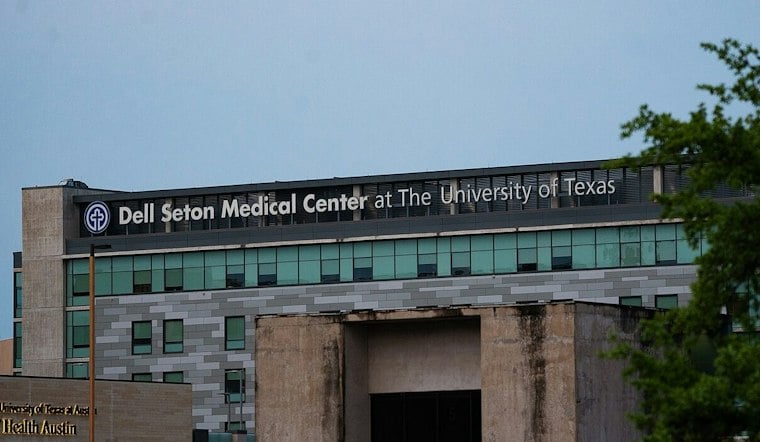
Medical school students, residents and fellows already practice at Dell Seton Medical Center and other Ascension hospitals, according to the Statesman. Dell Seton Medical Center is described as an Ascension Texas hospital located next to Dell Medical School that also serves as Austin's safety-net hospital and Level 1 trauma center. Dell Children's Medical Center, meanwhile, opened in 2007 in the Mueller neighborhood of East Austin, the paper noted.
Other campus institutions carry the Dell name as well, including the Dell Pediatric Research Institute, a center across from Dell Children's where pediatric disease research is conducted, and the Michael & Susan Dell Center for Healthy Living, a center on the UT Austin campus that is part of UTHealth Houston's School of Public Health and focuses on encouraging health at the community level, according to the Statesman's reporting. Together, the network illustrates how deeply the Dell name is already woven into Austin's medical landscape even before the new hospital opens its doors.





