

























































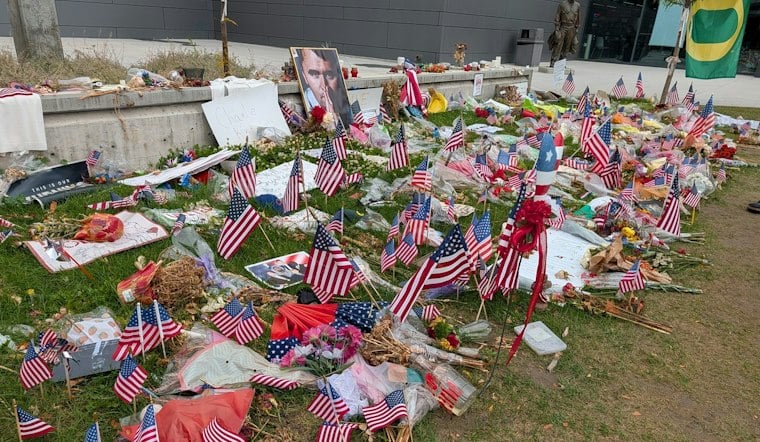
More than a year after Charlie Kirk was assassinated at Utah Valley University, the Utah Board of Higher Education has approved a sweeping package of campus safety recommendations for every public college and university in the state. The board voted Friday to adopt the changes and ordered school presidents to start putting them into action, while also moving to seek money from state lawmakers to help pay for it all.
What the Board Approved
The board signed off on more than 25 recommendations covering everything from how schools assess potential threats to how they plan security for major events, according to a statement from the Utah Board of Higher Education. A separate university account described the vote as recommending 25 changes to improve campus safety, per the University of Utah, though the precise tally differs slightly between the two accounts. Either way, the board directed institutional presidents to implement the key actions and begin preparing a funding request for the 2027 legislative session.
That funding request, the University of Utah reported, will ask state lawmakers for $5 million during the 2027 General Legislative Session to help carry out the changes. The recommendations were developed by the Utah System of Higher Education's Campus Safety Task Force, which built on each institution's existing safety efforts by pushing for consistent policies, shared resources, and tighter coordination with local law enforcement and emergency responders, the board said. As reported by FOX 13 Salt Lake City, the task force's work also included recommendations for better coordination between campus police, outside law enforcement agencies, and private security contractors.
Training, Threat Assessment and Shared Standards
Utah students across public campuses will be required to complete shared safety training under the new framework, the University of Utah reported. The goal, per that account, is for all of Utah's campuses to use the same processes, trainings and language rather than each school operating under its own patchwork of rules. The recommendations touch on behavioral intervention and threat assessment, standardized emergency-response and communication protocols, and event planning, according to the same report.
The plan also calls for standard safety-personnel ratios at campus events, formal mutual-aid agreements between schools and local agencies, and regular joint training exercises, the University of Utah noted. Campus safety liaison officers are expected to meet monthly to discuss threat assessment collaboratively and share information about incidents that could affect more than one institution. The task force drew on national models in shaping its approach, including the I Love U Guys Foundation's Standard Response Protocol and Texas State University's Avoid, Deny, Defend framework, per the university's report.
FOX 13 Salt Lake City, in reporting by Ben Winslow, noted that the report also includes better information sharing about pending threats and standardized methods for evaluating and providing security at on-campus events. The outlet reported that the Utah System of Higher Education plans to seek at least $5 million from the Utah Legislature and hire a statewide campus safety coordinator to help fund security fixes at individual schools. USHE Commissioner Geoffrey Landward said institutions are already doing some safety work well, and that exceptional practices at one school could benefit others, according to that report.
Not Every Campus Starts From the Same Place
Not all of Utah's colleges are equally equipped to carry out the new standards. Salt Lake Community College raised concerns that some of the recommendations lack current capacity or funding to implement, FOX 13 Salt Lake City reported, with SLCC President Greg Peterson saying as much directly. Snow College, meanwhile, has fewer resources than some of the state's larger universities, though Snow College President Stacee McIff said the school is excited about the recommendations and plans to accelerate its own campus safety work, per the same report.
The University of Utah already leans on police officers and security personnel from other departments to help staff football-game security, FOX 13 Salt Lake City reported — an example of the kind of cross-agency coordination the task force wants formalized statewide. Landward also said the public will likely not notice many of the changes day to day, even as they reshape how campuses prepare behind the scenes, according to the outlet. Amanda Covington said higher education leaders, law enforcement officials and emergency management professionals worked together to develop the recommendations, while Keith Squires said the changes will enable real-time information sharing and the development of best practices across institutions, per the same report.
What the UVU Review Found
The push for statewide standards follows an independent review commissioned after Kirk's Sept. 10, 2025, assassination at Utah Valley University. Utah Valley University released a report examining the issues surrounding the shooting, and it found inconsistencies in how law enforcement and the university responded, FOX 13 Salt Lake City reported. The review drew on site visits, more than 70 interviews, and an examination of university policies, training materials, operational records, digital evidence and dispatch records, according to the Utah News Dispatch.
The review concluded that UVU had a strong foundation of policies and procedures in place, but that implementation was significantly inconsistent before and during Kirk's speaking event, the Utah News Dispatch reported. It also found that at no time leading up to or after the shooting did any employee or agent of UVU act in bad faith or in willful and wanton disregard for the safety of others, according to the same report. The review further concluded that high-profile event planning requires a more formal and integrated security framework going forward, per the Utah News Dispatch.
In response, UVU said it plans to hire a chief public safety officer later this year to coordinate campus safety functions, the Utah News Dispatch reported. The university also said it is strengthening safety training, event-security planning, ticketing procedures, and coordination with outside law enforcement agencies, according to the same report. That independent review built on earlier reporting that a statewide task force was evaluating higher education and public safety policies with the eventual goal of standardizing practices across Utah's public colleges, the Utah News Dispatch reported in late 2025.
Reporting Deadlines Still Unsettled
Institutional presidents will eventually have to show their work. The University of Utah reported that presidents are required to report back to the board on their institutions' progress by June 2027, while a separate account from the Utah Board of Higher Education stated that presidents will report their progress to the board by July 2027 — the two sources differ on the exact deadline. Either way, the coming months are expected to bring the real test of whether more than two dozen new safety recommendations translate into consistent practice across a system of campuses that, as officials themselves acknowledge, don't all start from the same resources or capacity.





