

























































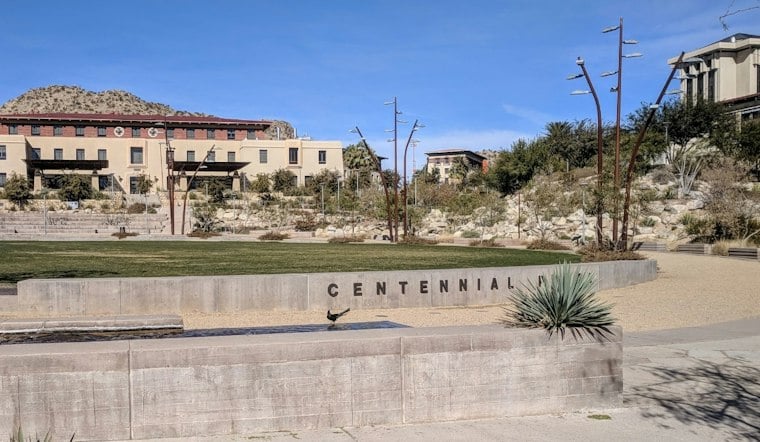
A top U.S. Department of Energy official toured the University of Texas at El Paso this week to spotlight the school's relaunched Mining Engineering program, the only one of its kind in Texas, as the department works to close a widening gap in American mining talent. DOE had announced a Notice of Intent for up to $100 million on August 7, 2026, before Robertson's UTEP visit reported in October. Audrey Robertson, assistant secretary of energy, visited UTEP as part of the rollout of the department's new PROSPECT initiative, which aims to double the number of U.S. graduates in mining engineering, metallurgy and critical minerals supply-chain fields within two years.
According to KVIA, Robertson and officials from the department's Office of Critical Minerals and Energy Innovation discussed national efforts to strengthen the mineral workforce during their stop in El Paso. Robertson told the station that UTEP is one of 14 schools nationwide offering mining engineering and supply-chain degrees, and that the country is expected to graduate up to 100 mining engineers annually from the El Paso program according to the DOE. She framed the stakes in blunt terms, saying the ability to harvest raw materials domestically and turn them into the products that power modern life has largely left the United States, arguing the country deindustrialized over the past three decades and must rebuild domestic material production to reindustrialize.
A Proposed Investment of Up to $100 Million in Rebuilding the Pipeline
The Department of Energy's PROSPECT initiative was announced as a Notice of Intent for up to $100 million aimed at strengthening the critical-minerals workforce and domestic supply chains, according to me.smenet.org. The department estimates the country will need roughly 6,000 new mining-sector engineers over the next decade, and the publication notes the program's stated goal is simply to double the number of graduates entering the field. A separate DOE effort tied to the same push, the PROSPECT Planning Prize, carries a total pool of $16 million, with individual winners eligible for up to $1 million, per the same outlet's reporting.
UTEP's own relaunch predates the federal announcement but now sits squarely inside that national strategy. The university appointed George Luxbacher, Ph.D., to lead the program's revival, according to UTEP, which describes the program as the only one of its kind in Texas and projects it will produce up to 100 mining engineers annually once fully established. The relaunch is backed by more than $52 million in combined investments: the University of Texas System Board of Regents committed $20 million in September 2024, the Texas Legislature appropriated another $20 million in May 2025, and Freeport-McMoRan and other industry partners contributed an additional $12 million, UTEP reports. Students are expected to begin classes in the relaunched program in fall 2027.
Why the Workforce Gap Keeps Growing
UTEP's own announcement points to the scale of the shortfall driving the investment, noting that U.S. universities graduated only 312 mining engineers in a recent year despite an estimated 500 annual job openings projected over the coming decade. Other figures in circulation vary: West Virginia Public Broadcasting reported that the U.S. produces fewer than 200 mining engineers per year compared with China's 3,000, while a 2005 Deseret News account put the domestic figure closer to 100 annually. The dossier does not reconcile these differing counts, but together they underscore a long downward trend.
That decline has been documented over decades. The number of U.S. mining and mineral engineering programs fell from 25 in 1982 to just 15 in 2023, according to the Center for Strategic and International Studies. The Society for Mining, Metallurgy & Exploration has reported that graduate numbers dropped about 43 percent since 2015, alongside declining enrollment. CSIS also notes that more than half of the current domestic mining workforce, roughly 221,000 workers, will need to retire and be replaced by 2029.
Texas Joins a Global Scramble for Talent
Until UTEP's relaunch, no universities in Texas offered a mining engineering program, according to a 2024 account from the University of Texas System. The gap isn't unique to Texas or even the U.S. Canada is projected to face a mining workforce shortage of roughly 80,000 to 120,000 workers by 2030, while Australia will need 24,400 new mining workers by 2026 but is forecast to supply only about 16,000, per the CSIS analysis. Penn State, meanwhile, is cited as one of just 14 ABET-accredited programs nationwide training the next generation of mining engineers, according to reporting from Penn State.
For El Paso, the federal attention adds weight to a years-long local effort that began before PROSPECT existed. With classes still roughly a year out and the broader federal funding still in the notice-of-intent stage, the real test of whether UTEP and programs like it can meaningfully dent the national shortage won't arrive until the first new cohorts actually walk through the door.


